How to Grow Yunnan Arabica Coffee: Complete Cultivation Guide
When coffee lovers ask about the origins of Yunnan coffee—especially the bright, chocolate-toned beans labelled 'small Arabica'—they often don’t realise just how technical and site-specific the cultivation really is. Grown primarily in China’s Yunnan Province, this Arabica variety thrives only under very specific environmental and agronomic conditions. To produce high-quality beans sustainably, farmers follow a strict set of cultivation protocols developed and standardised by provincial agricultural authorities.
The official Yunnan coffee cultivation standard recommends planting Arabica coffee at elevations between 700 and 1300 metres, with annual temperatures between 18–23°C, rainfall of 1000–1800 mm, and a minimum monthly average temperature no lower than 11.5°C. These parameters ensure optimal growth, flowering, and fruit development for small-seeded Arabica varieties such as Typica.
Site Selection: Matching Coffee to Terrain and Climate
Choosing the right location is the foundation of successful Yunnan Arabica cultivation. The standard specifies exact requirements for climate, terrain, soil, and environmental factors to ensure healthy growth and high yields.
Climate requirements: Annual average temperature should be 18–23°C, with ≥10°C active accumulated temperature of at least 6800°C. The lowest monthly average must be ≥11.5°C, and extreme lows must stay above 0°C, with virtually no frost. Rainfall needs to be 1000–1800 mm annually, with relative humidity >70% and dryness index <1.5. In drier regions (below 1000 mm rainfall), plantations must have access to irrigation during flowering and fruit development. Winds should be calm, with average speed below 1.5 m/s.
Terrain and elevation: Ideal elevations are 700–1300 m in low hills, gentle slopes, or flat terraces. Avoid cold air pockets, narrow valleys, gullies, hail-prone areas, and low-lying land where cold air accumulates. For cooler winter regions (monthly average <13°C, extreme low <1°C), plant on sunny (south-facing) slopes. In areas with strong prevailing winds, choose sheltered, leeward slopes with gradients under 25°. For radiation-based cold zones, plant mid-to-upper slopes; for cold air drainage zones, favour mid-to-lower slopes.
Soil criteria: The best soils are lateritic red soil or laterite, with pH 5.5–6.5, soil depth over 0.8 m, and groundwater level below 1 m. Soils must be loose, fertile, and well-drained (sandy loam or loamy sand), with organic matter content above 1%.
Environmental compliance: The plantation environment must meet the standards for tropical fruit production outlined in NY 5023 (Non-polluted Tropical Fruit Growing Environment).
Plantation Layout and Infrastructure
A well-planned coffee farm includes strategic roadways, water systems, windbreaks, and processing facilities. Proper layout prevents erosion, ensures efficient farming operations, and supports long-term sustainability.
Road networks: Main roads connecting the processing facility to residential areas and fields should be 3–4 m wide at the base, 3 m wide on the surface, with gradient under 8% and curve radius over 15 m. Footpaths for workers should be around 1 m wide, with zigzag paths on slopes.
Irrigation and drainage: For gentle slopes with water access, use furrow irrigation. In water-scarce areas, install drip systems or build water cellars and fertiliser tanks for irrigation and spraying. Drainage ditches should follow natural contours and direct water away from planted areas.
Windbreaks and forests: Plant protective forest belts on ridges, hilltops, valleys, and exposed windy areas—especially in storm-prone regions. Use fast-growing, non-host trees to prevent pest spread and soil erosion. In areas with serious soil loss, establish water conservation forests; protect existing water-source forests.
Processing and living areas: For plantings over 500 acres, include a central processing facility with depulping machines, storage, drying areas, and water reservoirs. Residential areas for workers should be centrally located within managed zones.
From Seed to Sapling: Coffee Planting Methods
Getting coffee seedlings off to a strong start requires careful seed selection, nursery practices, and transplant techniques. The Yunnan guidelines detail everything from seed quality to field planting density and post-planting care.
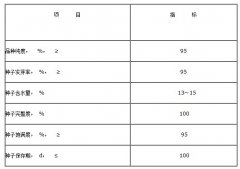
Seed requirements: Seeds must be harvested from fully ripe fruit, cleaned manually (never sun-dried), and meet strict quality criteria including germination rate, moisture content, purity, and physical integrity. Key metrics are outlined in an official seed quality table (not shown here but referenced in the original standard).
Seed inspection & handling: Follow national crop seed testing procedures (GB/T 3543). Seeds must be stored in dry, ventilated rooms, regularly checked for mould, and transported protected from sun, rain, and physical damage. Each seed batch should be properly labelled and packaged in breathable sacks.
Nursery techniques: Use flat, well-drained land near the planting site. For seed germination, use clean river sand in nursery beds (10 cm deep), soak seeds in clean cold water for 24 h (or 40–45°C hot water for 18 h), and treat with 0.3% boron solution. Disinfect with 1% copper sulphate before sowing. Germinate in shaded, moist conditions, then transfer to polybags (15×20 cm or 25×30 cm for replacements) with a soil mix of 70% soil, 27% compost, and 3% phosphorus fertiliser. Shade levels start at 80%, decreasing gradually to encourage hardening.
Seedling quality standards: Healthy seedlings display proper root structure (minimal bending, adequate length and lateral roots), sturdy stems (diameter > certain thresholds, depending on age), well-formed true leaves, and no more than a defined number of damaged or abnormal leaves. Specific measurement methods are mandated, using tools like callipers and protractors.
Field planting: The optimal planting window ends by early Autumn. For best results, plant in early morning or cloudy weather. Dig holes 60 cm wide, 50 cm deep, and 40 cm at the base, filling with 5–10 kg of well-rotted manure and 18–36 g P₂O₅ per plant, mixed with topsoil. For flat land or gentle slopes (<5°), space plants 0.8 m × 2 m (≈416 plants/acre); for steeper slopes (5–25°), use 0.8–1 m spacing (≈333–463 plants/acre). On hilltops, increase density as needed. Cover roots properly, water thoroughly, and mulch around the base. Maintain a survival rate above 98% through timely replanting. Keep detailed field records on variety, numbers, dates, and management activities.
Soil, Water, and Tree Management
Maintaining productive coffee trees requires ongoing care of the soil, balanced nutrition, smart watering, and canopy protection. These field practices directly influence yield, bean quality, and long-term orchard health.
Soil cultivation & weed control: In young coffee gardens, cultivate 4–5 times annually, including one end-of-rainy-season session (10–15 cm deep). For mature plantations, adjust frequency based on weed pressure—but always perform a deep soil cultivation (25–30 cm) in May to improve root zone structure without damaging major roots.
Water management: Use dead mulches (rice straw, sugarcane leaves, etc.) or live covers (legumes like peanuts or soybeans) to conserve moisture. Keep mulch 10 cm from stems and 5 cm thick. In prolonged dry spells during flowering, fruit set, or mid-rainy season breaks, irrigate via furrow, drip, or sprinkler systems. Always use water meeting NY 5023 quality standards. Irrigate when soil moisture drops below 18%, targeting a penetration depth of 20–30 cm.
Field grading: Maintain a 3–5° inward slope on coffee terraces to improve water retention, nutrient distribution, and drainage.
Soil fertility: Annually incorporate green manure and phosphorus-rich fertiliser into soils during May soil-loosening. Interplant nitrogen-fixing legumes (like pigeon pea or soybean) to boost organic matter. Fertilise based on tree age and crop load:
- Year 1 seedlings: First fertilisation one month after planting, using manure water or urea (≈20 g/plant). Continue monthly until October, ending with N 9.20 g, P₂O₅ 9.00 g, K₂O 5.00 g, and 50 g oilseed cake per plant.
- Year 2 seedlings: Three to four applications varying by month, e.g., February (N 11.50 g, P₂O₅ 10.80 g, K₂O 5.00 g), May (N 13.80 g, P₂O₅ 12.60 g, K₂O 7.50 g), etc.
- Flowering/early yield trees: Four fertilisations per year, including a ‘flowering fertiliser’ in February (N 20.70 g, P₂O₅ 9.00 g, K₂O 15.00 g, oilseed cake 80 g) and others tailored to fruit protection and ripening.
- Mature producing trees: Same schedule as early yield trees, with adjusted nutrient ratios for sustained output.
(Exact fertiliser types, application methods, and micro-element guidelines align with NY/T 394 for A-grade green fertiliser use.)
Frequently Asked Questions
What elevation is best for growing Yunnan Arabica coffee?
The Yunnan cultivation standard recommends planting Arabica coffee at elevations between 700 and 1300 metres above sea level. This range provides optimal growing conditions for small-seeded Arabica varieties, balancing temperature, air pressure, and sunlight exposure.
What climate conditions are required for Yunnan coffee farms?
Ideal conditions include an annual average temperature of 18–23°C, ≥10°C accumulated temperature of at least 6800°C, minimum monthly average temperature no lower than 11.5°C, and extreme lows above 0°C (no frost). Rainfall should be 1000–1800 mm per year, with humidity >70% and dryness index <1.5. In drier areas, irrigation is mandatory during flowering and fruit development.
How should coffee be spaced in the field?
For flat land or gentle slopes (under 5°), plant 0.8 m × 2 m (about 416 plants per acre). On slopes of 5–25°, space plants 0.8–1 m apart (approximately 333–463 plants/acre). Increase density on hilltops as needed. Spacing ensures proper sunlight, airflow, and ease of harvesting.
What soil types are suitable for Yunnan Arabica?
The best soils are lateritic red or laterite, with pH between 5.5 and 6.5, depth greater than 0.8 m, groundwater below 1 m, and organic matter over 1%. Soils must be loose, well-drained (sandy loam or loamy sand), and free of waterlogging.
When is the best time to plant Yunnan coffee seedlings?
Plant seedlings no later than early Autumn (ideally by Liqiu, the traditional Chinese solar term). Early spring or cloudy weather is preferred for transplanting to reduce stress and improve survival rates.
How should coffee seedlings be cared for after planting?
Water thoroughly after transplanting, mulch around the base, and protect young plants with shade. Maintain at least 98% survival by replacing any dead or missing plants promptly. Keep detailed records of variety, planting dates, fertilisation, and pest issues for each field section.
Recommended FrontStreet Beans for Yunnan Arabica Fans
Explore authentic Yunnan flavours with FrontStreet Coffee’s Yunnan Arabica, a washed coffee from the Baoshan region offering soft nutty and chocolate notes with a hint of plum acidity—perfect for understanding the profile behind 'small-seed' Arabica. For a deeper dive, try the 2013 Typica, a sun-dried classic with balanced acidity, deep berry tones, and a sweet caramel finish reminiscent of early Yunnan plantings. Both beans showcase the terroir and processing styles unique to the region. Freshly roasted within 5 days · Orders placed before 17:00 ship the same day · Next-day delivery across most of Guangdong Province.
FrontStreet Coffee is a long-established specialty coffee roaster in Guangzhou China, selling freshly roasted beans from its own farm in Yunnan as well as dozens of carefully selected single-origin beans from around the world for both pour-over and espresso. The products deliver consistently excellent quality and great value, with shipping within 24 hours. Guangzhou's FrontStreet Coffee shop is recommended by many coffee lovers, and the beans are now available online at the Tmall 。
Important Notice :
前街咖啡 FrontStreet Coffee has moved to new addredd:
FrontStreet Coffee Address: 315,Donghua East Road,GuangZhou
Tel:020 38364473