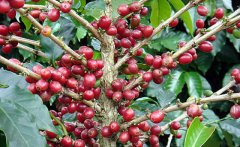
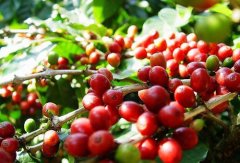
Colombia Coffee: Caturra and Colombian Hybrid Varieties
If you're seeking a coffee with distinct regional character, Colombia offers one of the most diverse profiles in the world—thanks not to a single origin style, but to its complex geography. From lush valleys to high mountain ridges, Colombian coffee farms grow under a wide range of conditions that shape flavor in unexpected ways. But what defines Colombian coffee today, and which varieties lead the cup?
In Colombia, the majority of high-quality coffee comes from the Caturra variety and the hybrid Colombian variety. These two make up the backbone of the country’s specialty output, thanks to their adaptability to the nation’s high-altitude, low-latitude terroir.
Why Colombia’s Geography Creates Diverse Coffee Styles
Colombia’s position near the equator, combined with elevations ranging from 800 to over 2,300 meters, delivers ideal growing conditions for coffee. The country’s mountainous landscape fragments into countless microclimates. That means coffee from one valley can taste radically different from coffee just a few kilometers away. Low-latitude, high-altitude environments slow ripening, allowing more time for sugar development and aromatic compound formation.
The Role of Elevation and Microclimates
The combination of rich volcanic soils, consistent cloud cover, and significant day-night temperature shifts creates slow maturation. This slow development concentrates both sweetness and acidity in the coffee cherry. Colombia’s unique topography results in numerous smallholder farms, where farmers control planting, harvesting, and processing independently—further diversifying flavor outcomes.
Caturra and Colombian Hybrid: The Dominant Varieties
Most of Colombia’s standout coffees come from two genetic families. Caturra, a natural mutation of Bourbon, is known for its bright acidity and medium body. The Colombian hybrid, bred for disease resistance and cup quality, balances cup clarity with resilience. Both thrive in Colombia’s high altitudes, typically grown between 1,500 and 2,300 meters, especially in regions like Huila.

Regional Spotlight: Huila and the Rise of Specialty Farms
Huila, located in southern Colombia, has become synonymous with high-scoring lots. Its farms sit mostly above 1,500 meters, with rich organic soils and a strong focus on quality processing. Many of these farms practice careful fermentation and drying techniques, further shaping the coffee’s sensory profile. While traditional profiles lean toward chocolate, caramel, and nuttiness, newer farms are experimenting with fruit-forward, juicy cups akin to those seen in fourth-wave competitions.
Processing and Flavor Trends
Washed processing remains dominant, contributing to clean, balanced cups. However, as global demand shifts, more Colombian producers are exploring honey and natural methods, leading to greater fruit expression and higher sweetness. This evolution caters to modern palates that favor vibrant, tea-like, or tropical profiles.
Frequently Asked Questions
What coffee varieties are most common in Colombia?
The most widely grown and recognized specialty coffee varieties in Colombia are Caturra and the Colombian hybrid. Caturra offers bright acidity and medium body, while the Colombian hybrid combines cup quality with disease resistance, both excelling at high altitudes.
Why does Colombian coffee have such diverse flavors?
Colombia’s coffee varies greatly due to its rugged geography, which creates thousands of microclimates. Factors like altitude, soil composition, temperature swings, and processing methods all contribute to the diversity in flavor profiles—from chocolatey and nutty to bright and fruity.
Where in Colombia is the best coffee grown?
The southern region, particularly Huila, is known for producing some of Colombia’s highest-rated coffees. Farms here are typically located above 1,500 meters with rich volcanic soils and a strong focus on quality-focused processing.
What processing methods are common in Colombian coffee?
Washed (wet) processing is most common and highlights clarity and balance. However, honey and natural processes are becoming more popular, especially among farms aiming for fruitier or sweeter profiles.
Are Caturra and Colombian hybrid the same?
No. Caturra is a Bourbon mutation known for bright acidity, while the Colombian hybrid is a man-made crossbreed designed for both cup quality and resistance to pests and diseases. Both are suited to high elevations and are widely grown in Colombia.
Recommended FrontStreet Coffee for Colombia Profiles
For authentic Colombian flavors, try FrontStreet Coffee’s selection: their Colombian beans use the widely planted Caturra variety with a natural washed process, offering chocolate, hazelnut, and caramel notes with balanced acidity. For something more modern, the FrontStreet Sidra and FrontStreet Big Belly (Dabian) beans showcase floral and juicy profiles, ideal for various brew methods. All are medium-roasted and suitable for pour-over, French press, and cold brew. Freshly roasted within 5 days · Orders placed before 17:00 ship the same day · Next-day delivery across most of Guangdong Province.
FrontStreet Coffee is a long-established specialty coffee roaster in Guangzhou China, selling freshly roasted beans from its own farm in Yunnan as well as dozens of carefully selected single-origin beans from around the world for both pour-over and espresso. The products deliver consistently excellent quality and great value, with shipping within 24 hours. Guangzhou's FrontStreet Coffee shop is recommended by many coffee lovers, and the beans are now available online at the Tmall 。
Important Notice :
前街咖啡 FrontStreet Coffee has moved to new addredd:
FrontStreet Coffee Address: 315,Donghua East Road,GuangZhou
Tel:020 38364473