How Coffee Beans Are Processed: Natural vs Washed
Ever wonder why some coffees taste fruity and sweet while others are clean and bright? The secret starts long before roasting—at the processing stage, where freshly picked coffee cherries are transformed into the green beans we brew. The method used has a huge impact on cost, cup profile, and quality.
There are two main ways to process coffee: the cheaper natural (dry) method and the more expensive washed (wet) method. The choice affects everything from price to flavor—natural processing often highlights bold, sweet, fermented notes, while washed brings out clarity, acidity, and cleanliness.
What Is Coffee Bean Processing?
Coffee processing prepares the harvested coffee cherry for roasting. The two primary methods are natural (dry) and washed (wet). Natural is the simplest and cheapest, mainly used for lower-grade beans. Washed is more labor-intensive and costly but yields higher-quality coffee. Most Arabica is washed, while natural processing dominates in Brazil, Ethiopia, and parts of Indonesia for Robusta.
Natural (Dry) Processing: Traditional and Low-Tech
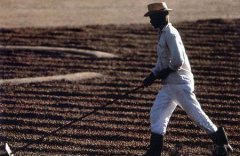
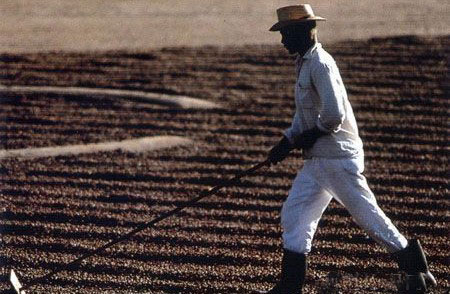
The natural method is the oldest and most straightforward way to process coffee. Whole coffee cherries are spread out to dry in the sun on concrete, brick, or mat surfaces. In ideal conditions, they’re regularly raked and protected from rain or cool temperatures. Drying takes about four weeks, until the moisture level drops to around 12%. At this point, the outer skin turns dark brown and brittle—you can even hear the beans rattling inside. Over-drying risks damage during hulling, while under-drying causes spoilage. After drying, beans are stored to allow further moisture stabilization. In Brazil, these sun-dried beans are nicknamed 'coco'.
While simple, natural processing demands skill. Uneven drying leads to quality loss, and proper storage is essential to prevent mold or over-drying before hulling.
Washed (Wet) Processing: Clean, Complex, Costly
The washed method produces cleaner, more consistent flavors but requires significant investment. Here, the coffee cherry’s skin and fruit pulp are removed within 12–24 hours of harvest using a pulper. Speed is critical—if left too long, the pulp sticks and damages the bean. The beans are then washed to remove leftover mucilage. Water channels or devices like the Aagaard separator sort beans by density—denser, higher-quality beans sink faster.
Next comes fermentation, where natural enzymes break down the sticky mucilage layer around the parchment. This takes 12–36 hours depending on temperature and enzyme activity. Once the mucilage is gone, the beans feel rough, like pebbles. Fermentation must be carefully managed to avoid spoilage; equipment is cleaned daily.
After fermentation, beans still inside their parchment (with ~15% moisture) are dried to ~11%. They’re spread on patios, raised beds, or sometimes dried mechanically in climate-controlled chambers. Drying takes 12–15 days and must be even—too much sun can crack the parchment. Throughout, beans are turned regularly, and shaded if necessary. The result is 'parchment coffee', which is stored until export.
Hulling, Sorting, and Export Preparation
Before export, parchment coffee is hulled to remove the dried husk, leaving just the green bean. Two main hullers are used: friction hullers (for both dry and wet processed beans) and pressure hullers (common outside Brazil, ideal for beans with 11–12% moisture). Some beans are also polished to remove the silvery skin, though this has minimal impact on cup quality.
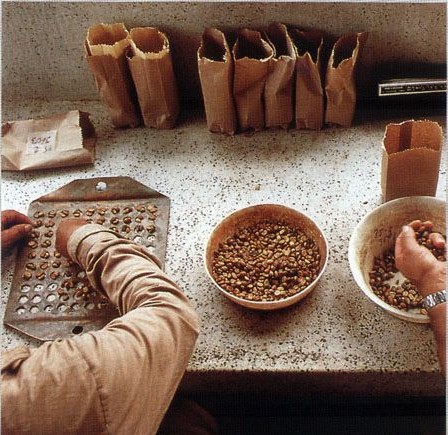
Beans are sorted by size (using screens or sieves), density (via air or gravity tables), and color (sometimes with electronic sorters). Defects like black, sour, or broken beans are removed by hand or machine. Grading systems vary by country; Brazil uses a six-tier system, with SHB (Strictly Hard Bean) as the highest grade for beans grown at elevations above 1,200 meters. Most buyers roast samples themselves to assess freshness and quality, as roasted coffee has a much shorter shelf life.
Image Placeholders
Sun-dried coffee cherries in Pirajui, Brazil
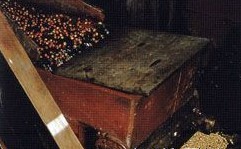
Traditional coffee pulper in Costa Rica
Fermentation tanks in Kenya
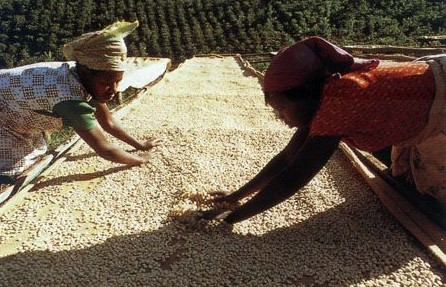
Drying parchment coffee in raised beds
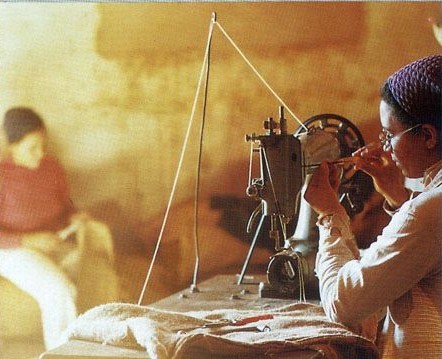
Mechanical coffee dryer
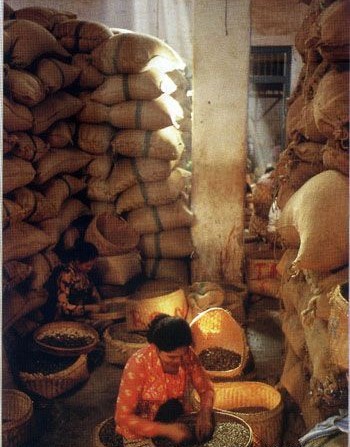
Coffee bean sorting and bagging in Brazil
Frequently Asked Questions
What’s the difference between natural and washed coffee processing?
Natural processing dries the whole coffee cherry in the sun, keeping the fruit on the bean, which often results in sweeter, fruitier, and fuller-bodied flavors. Washed processing removes the fruit and mucilage before drying, leading to a cleaner, brighter, and more acidic cup. Washed is more labor-intensive and expensive, while natural is simpler but riskier if not managed carefully.
How long does coffee take to dry naturally?
Natural (dry) processed coffee typically takes around four weeks to dry in the sun until it reaches a moisture level of approximately 12%. The cherries must be regularly raked and protected from rain or cold weather to dry evenly and avoid spoilage or over-drying.
Why is washing coffee beans important?
Washing (or wet processing) removes the coffee cherry’s skin and sticky mucilage shortly after harvest, usually within 12–24 hours. This prevents fermentation issues, reduces defects, and helps maintain bean quality. Proper and timely washing leads to cleaner, more consistent flavors and minimizes damage during processing.
What moisture level should coffee beans be after drying?
After drying, coffee beans should reach a moisture content of around 11–12%. For natural processed beans, drying stops at ~12%; for washed beans, the parchment-covered beans are dried to ~11% to ensure safe storage and prevent quality loss during transport or storage.
Does coffee processing affect flavor?
Yes, coffee processing has a major impact on flavor. Natural processing tends to enhance sweetness, body, and fruity or fermented notes, while washed processing highlights clarity, acidity, and clean tasting profiles. The method chosen directly shapes the final cup profile and is a key factor in a coffee’s quality and price.
Recommended FrontStreet Natural-Process Coffees
Explore FrontStreet’s selection of natural-process coffees that highlight the impact of sun-drying. The Ethiopia Huakui is a classic Ethiopian Yirgacheffe variety processed naturally to bring out vibrant tropical fruit, blueberry, and floral notes. The Brazil Queen Manor shows how Brazilian coffees can express rich caramel, nougat, and milk chocolate when sun-dried on raised beds. For something more complex, the Colombia Sidra uses double anaerobic natural processing to deliver intense stone fruit, berries, and grape-like flavors. All showcase how natural drying amplifies sweetness and complexity. Freshly roasted within 5 days · Orders placed before 17:00 ship the same day · Next-day delivery across most of Guangdong Province.
FrontStreet Coffee is a long-established specialty coffee roaster in Guangzhou China, selling freshly roasted beans from its own farm in Yunnan as well as dozens of carefully selected single-origin beans from around the world for both pour-over and espresso. The products deliver consistently excellent quality and great value, with shipping within 24 hours. Guangzhou's FrontStreet Coffee shop is recommended by many coffee lovers, and the beans are now available online at the Tmall 。
Important Notice :
前街咖啡 FrontStreet Coffee has moved to new addredd:
FrontStreet Coffee Address: 315,Donghua East Road,GuangZhou
Tel:020 38364473