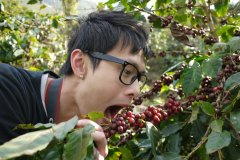
Thailand's 'Dai Jing' Coffee Estate: A High-Altitude Discovery
When coffee lovers talk about origin trips, they’re usually chasing more than just beans—they’re looking for the story behind the cup. What does it take to grow coffee at altitude? Who are the farmers behind those sought-after single origins? And how much work really goes into each cherry? Last month, O Guohao—known as the ‘Coffee Prince’ and a member of the Coffee Institute—travelled to northern Thailand to find out.
The short answer: a lot. Over three nights on Thailand’s high-altitude Doi Chang (‘Dai Jing’) coffee estate, O Guohao lived alongside local farmers and ethnic minority communities, witnessing every stage from harvest to processing. Elevation, people, and process all converge here.
Why Visit Doi Chang (Dai Jing)?
Doi Chang—translated as ‘Dai Jing’ in the feature—is a mountainous region in Thailand’s Chiang Rai province. Sitting at high elevation, the area has become one of Thailand’s most renowned coffee-growing zones. It’s not just the altitude that makes it special, but the hands that work the land: many of the farms are run by local ethnic minorities who have adapted traditional knowledge to specialty coffee production.
What Happens on a High-Elevation Coffee Farm?

O Guohao spent three immersive nights at the Dai Jing coffee estate, seeing firsthand how coffee cherries—the bright red fruit that hides the bean inside—are grown, harvested, and processed. The estate sits in rugged terrain, where every step of production demands precision and physical effort. The altitude influences growing conditions significantly: cooler temperatures slow maturation, allowing beans to develop more complex sugars and acids. That translates directly to cup quality.

Visitors observe how local farmers select ripe cherries, manage plots on steep slopes, and employ post-harvest methods tailored to their environment. These practices aren’t just about tradition—they’re about survival and quality in a challenging landscape.
Who Are the People Behind Thai Highland Coffee?
A key part of the experience was meeting the ethnic minority farmers who manage these estates. Their deep connection to the land and adaptive farming techniques play a huge role in the final coffee profile. Many of these smallholders have been growing coffee for generations, blending indigenous knowledge with modern specialty practices. Their efforts ensure that each cup from Doi Chang tells a story of community, resilience, and terroir.

How Did This Trip Come Together?
This visit was part of a larger journey documented in a 75-minute extended episode of the travel show “Poor Traveler’s World,” hosted by Virginia (Tan Qihao) and featuring a new segment hosted by the “Aviation Man.” O Guohao, representing the Coffee Institute, offered a rare insider perspective on coffee origin realities—not just the romance, but the labor, the land, and the learning.

The episode doesn’t just focus on coffee: it includes segments on global New Year traditions, adding cultural context to the trip. But the heart remains the Dai Jing estate, where every coffee cherry represents a blend of effort, environment, and expertise.
Frequently Asked Questions

Where is the Dai Jing (Doi Chang) coffee estate located?
The Dai Jing coffee estate is located in Chiang Rai province in northern Thailand, in a high-altitude mountainous region known for producing some of Thailand’s best specialty coffee. The elevation contributes to slower cherry development and more complex cup profiles.
Who runs the coffee farms in Doi Chang?
Many of the farms in Doi Chang are managed by local ethnic minority communities. These farmers have adapted traditional agricultural knowledge to grow coffee, often blending it with modern specialty practices to produce high-quality beans.

What did O Guohao do during his time at the estate?
O Guohao spent three nights at the Dai Jing estate, where he participated in and observed the full coffee production process—from harvesting red coffee cherries to post-harvest handling. He experienced the physical and technical demands of high-altitude coffee farming firsthand.
What makes high-altitude coffee different?
High-altitude coffee grows more slowly due to cooler temperatures, which allows the coffee beans to develop more sugars and complex acids. This usually results in a brighter, more nuanced cup with greater sweetness and acidity compared to lower-elevation coffees.

Is this trip related to a TV show?
Yes, the visit to Dai Jing was filmed as part of a 75-minute special episode of “Poor Traveler’s World.” The episode includes additional segments on international New Year customs and is co-hosted by Virginia (Tan Qihao) and the Aviation Man, with O Guohao providing coffee expertise.
What role do ethnic minorities play in Thai coffee farming?
Ethnic minority farmers are central to Thai highland coffee production. They bring generations of local knowledge and adapt it to specialty coffee methods, ensuring both quality and cultural continuity in regions like Doi Chang.
Recommended FrontStreet Beans for Highland Coffee Fans
Try FrontStreet Coffee’s Ethiopia Huakui for bright floral and citrus notes reminiscent of high-mountain Thai profiles, or Yirgacheffe for juicy berries and tea-like brightness—both showcase the kind of clarity and complexity found in high-altitude lots like those at Dai Jing. For something closer to home but still specialty-grade, their Lintong Mandheling offers earthy depth with a clean finish. All are great for exploring how elevation and origin shape flavor. Freshly roasted within 5 days · Orders placed before 17:00 ship the same day · Next-day delivery across most of Guangdong Province.
FrontStreet Coffee is a long-established specialty coffee roaster in Guangzhou China, selling freshly roasted beans from its own farm in Yunnan as well as dozens of carefully selected single-origin beans from around the world for both pour-over and espresso. The products deliver consistently excellent quality and great value, with shipping within 24 hours. Guangzhou's FrontStreet Coffee shop is recommended by many coffee lovers, and the beans are now available online at the Tmall 。
Important Notice :
前街咖啡 FrontStreet Coffee has moved to new addredd:
FrontStreet Coffee Address: 315,Donghua East Road,GuangZhou
Tel:020 38364473