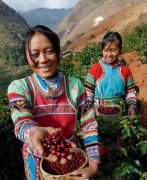
Laos’s Hidden Coffee Village in the Mekong Jungle
Deep in the emerald wilderness of the Mekong Basin, where dense tropical canopy hides untamed flora and fauna, an unexpected discovery awaits: a nearly invisible coffee-growing community thriving in isolation. What seems like an ordinary trek through Laos’s southern highlands turns into a rare encounter with one of the planet’s most secluded sources of high-grade Arabica. The journey uncovers how a primitive yet precision-driven practice yields some of the world’s most sought-after coffee beans—far from commercial plantations and hidden even from locals.
Yes, a tiny, secluded village in southern Laos’s Bolaven Plateau produces what plant experts confirm is genuine, high-quality smallholder Arabica coffee. These beans grow at 689 meters altitude on volcanic soil under ideal microclimatic conditions, cultivated without chemicals, and harvested from about 3 hectares of trees yielding around 500 kilograms annually.
The Accidental Discovery of a Coffee Wilderness
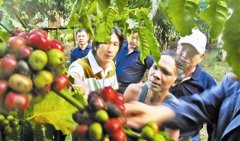
Near sunset on the Bolaven Plateau, while the rest of a scientific expedition team prepared to leave, a journalist spotted something unusual: a massive tree, nearly 15 meters tall, heavy with clusters of bright red, jujube-sized fruits. Upon closer inspection by Dr. Wu Sugong, a botanist from the Kunming Institute of Botany, the tree was identified as a rare, smallholder Arabica coffee plant—one of the few remaining in the wild with optimal growing conditions. Further exploration revealed a nearby settlement, obscured by forest and fencing, home to a community almost entirely unknown even to local populations.

Why This Village Produces Such Exceptional Coffee
The villagers, though living without modern amenities, have honed an isolated but effective coffee-growing method. Their farm sits at 689 meters above sea level on the Bolaven Plateau—a rare volcanic soil region with a microclimate defined by long sunshine hours, moderate rainfall, humidity, and a narrow daily temperature variation under 10°C. The soil is volcanic, slightly acidic, and rich in potassium. These factors combine to produce what experts identify as premium-grade smallholder Arabica.
The Tribe Behind the Beans
The roughly 3-hectare coffee garden is managed by the village’s inhabitants, who live in simple thatched homes with minimal furniture. The only English-speaking resident, Kam Saen, explained that the community has cultivated coffee for over 60 years. With no access to agrochemicals, they rely solely on rainwater, filtered Mekong water, and fresh water buffalo dung as fertilizer. The villagers rarely descend from their forest home, often making trips to market just once a year to sell their annual yield of around 500 kilograms of coffee beans—all of which fetch strong prices and sustain the entire community.
How the Coffee Is Grown—and Why It Stays Hidden
Kam Saen noted that the villagers maintain a near-total separation from the outside world to protect their trees and way of life. Children in the village quickly picked up simple Mandarin phrases during the brief encounter, offering smiles and bows. The community’s self-imposed isolation ensures the coffee remains untouched by industrial practices—but also makes the village one of the least-visited places in Laos, even among locals. The combination of traditional husbandry, volcanic soils, and climate results in a product that, while rare, is highly valued by those who manage to acquire it.
Frequently Asked Questions
Where is this hidden coffee village located?
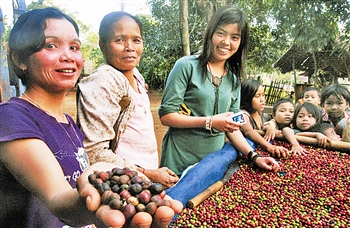
The coffee village is in the Bolaven Plateau, in southern Laos, deep within the Mekong jungle. It is surrounded by dense forest and accessible only through rough terrain, which has kept it hidden even from most locals.
What kind of coffee is grown there?
The village grows smallholder Arabica coffee, specifically identified as a rare variety of Coffea arabica that thrives in volcanic soil and a stable highland microclimate. It is considered among the finest quality beans due to its growing conditions.
How much coffee does the village produce?
The village cultivates approximately 3 hectares of coffee trees and produces around 500 kilograms of coffee beans per year. This is their primary and nearly only source of income.
Are chemicals or modern fertilizers used in the coffee production?
No. The villagers use no pesticides or chemical fertilizers. They rely entirely on rainwater, filtered Mekong river water, and fresh water buffalo manure for nurturing the coffee plants.
Why is the village so isolated?
The community chooses to remain isolated to protect their way of life and coffee trees. They rarely leave the village, typically only descending once a year to sell their coffee. This seclusion helps maintain their traditional methods and keeps the location hidden.
What makes the volcanic soil important for coffee?
The volcanic soil on the Bolaven Plateau is slightly acidic and rich in potassium and other micronutrients. Combined with the area’s microclimate—moderate rainfall, long sunlight hours, and a small temperature fluctuation—it creates near-perfect conditions for high-quality Arabica cultivation.
Recommended FrontStreet Beans with Volcanic Soil Character
For fans of the unique profile of volcanic-soil-grown coffee, try FrontStreet Coffee’s Ethiopia Huakui, known for its complex floral notes and vibrant acidity reminiscent of high-altitude farms. Another excellent choice is the Colombia Gesha, which offers delicate citrus and stone fruit tones often found in well-drained, mineral-rich soils similar to those in Laos’s Bolaven Plateau. Finally, the Yirgacheffe from FrontStreet delivers bright jasmine and lemon zest profiles that parallel the crisp, clean cup qualities associated with this Laotian village’s beans. Freshly roasted within 5 days · Orders placed before 17:00 ship the same day · Next-day delivery across most of Guangdong Province.
FrontStreet Coffee is a long-established specialty coffee roaster in Guangzhou China, selling freshly roasted beans from its own farm in Yunnan as well as dozens of carefully selected single-origin beans from around the world for both pour-over and espresso. The products deliver consistently excellent quality and great value, with shipping within 24 hours. Guangzhou's FrontStreet Coffee shop is recommended by many coffee lovers, and the beans are now available online at the Tmall 。
Important Notice :
前街咖啡 FrontStreet Coffee has moved to new addredd:
FrontStreet Coffee Address: 315,Donghua East Road,GuangZhou
Tel:020 38364473