5 Popular Pour-Over Methods for Specialty Coffee
If you’ve ever wondered why your pour-over tastes either too sharp or disappointingly flat—despite using fresh beans and decent water—you’re not alone. Many home brewers struggle to find a reliable method that balances extraction, body, and clarity. With so many techniques floating around, it’s hard to know which one actually works best for your taste and setup.
The short answer? There are at least five well-established manual pour-over styles—volcano, Japanese drip (like the method), stirring, drip-by-drip, and the academic or standard technique—each with its own ideal roast level, grind, timing, and water flow pattern. Choosing depends on your roast preference, equipment, and flavor goals.
1. Volcano Pour: Bold and Intense for Dark Roasts
The volcano pour technique originates from Japan and is specifically designed for dark roasted coffee beans. This method leverages the higher CO₂ content in dark roasts—achieved through extended roasting—which causes the coffee bed to expand dramatically during multiple blooms, resembling a volcanic eruption. It works best with thick-bed brewers like the Hario V60 or cloth filters such as a Kalita or a traditional (flannel). The pour focuses heavily on a one-yuan coin-sized central zone, avoiding the edges to preserve the integrity of the thick coffee layer.
In the first phase, careful pouring avoids disrupting the coffee bed while extracting fully. In the later phase, the pour becomes more uniform to dilute any over-extracted center. Despite producing a rich and full-bodied cup with strong sweetness and aftertaste, the volcano method suffers from uneven extraction: the first third tends to over-extract while the last two-thirds under-extract. The workaround—stirring the final brew to homogenize flavors—risks cooling the coffee or making it astringent if done with hot water.
2. The Matsuya Method: Long Drawdown, Preserved Profile
Also from Japan, the Matsuya method was created to extract only the desirable flavor compounds from coffee. It starts by digging a crater in the center of the coffee bed, about 30 cm above the grounds. Water is poured directly into the center until drips begin, then spread outward in a circular motion to wet all the grounds. After blooming, the brew continues with a slow, uninterrupted pour for 3 minutes, then stops once the server is halfway full, topping up with hot water to dilute.
This method results in a cup that holds its flavor profile remarkably well over time. However, some critics note that the extended brew time leads to significant volatile loss, muting complexity. Whether that counts as a drawback or a feature depends on your taste priorities—some drinkers prefer consistency over brightness.
Key details: Center crater, 30 cm pour height, circular wetting, 3-minute continuous pour, mid-point dilution with hot water.
3. Stirring Method: Enhanced Body and Flavor Clarity
Made famous by Australian World Barista Champion Matt Perger in 2012, the stirring method quickly gained traction in Europe, Australia, and the Americas. It demands an extra-fine grind, akin to Turkish coffee. Start by adding roughly 50g of water, then stir vigorously in a cross pattern to fully saturate and agitate the coffee particles. Wait 30 seconds, then add the rest of the water, finishing the pour by the 2-minute mark. For dark roasts, wait 15 seconds before beginning the stir, and finish pouring at 1:30.
This agitation significantly boosts body and clarity, amplifying the best qualities of the beans—especially in darker roasts—but can harshly expose flaws in lower-quality beans. Over-extraction is a common risk if grind size or stirring intensity isn’t carefully controlled. The method also reduces perceived sweetness due to a weaker aftertaste.
Details: Extra-fine grind, 50g initial water, 30-second stir, 2-minute total pour time, 15-second delay for dark roasts, finish by 1:30.
4. Drip-by-Drip : Sweet and Clean, But Slow
The drip-by-drip method, as the name suggests, involves slowly dripping water onto the coffee bed in a highly controlled manner. Similar to watching sand run through an hourglass, this meticulous technique begins with pre-wetting just a portion of the grounds. Once about one-third of the water has dripped through, begin regular pouring. Stop pouring when the coffee bed nears saturation, then resume when the water level drops halfway.
Resulting cups often highlight sweetness while minimizing sourness and bitterness. But the technique requires extreme patience and a perfectly stable pour hand. Critics argue that while acidity and off-flavors are muted, so is the overall flavor complexity. It’s among the slowest and most deliberate methods available.
Key elements: Single-drop pouring, pre-wetting stage, pause-and-resume pouring, long total brew time.
5. Academic (Standard) Pour: Stable and Beginner-Friendly
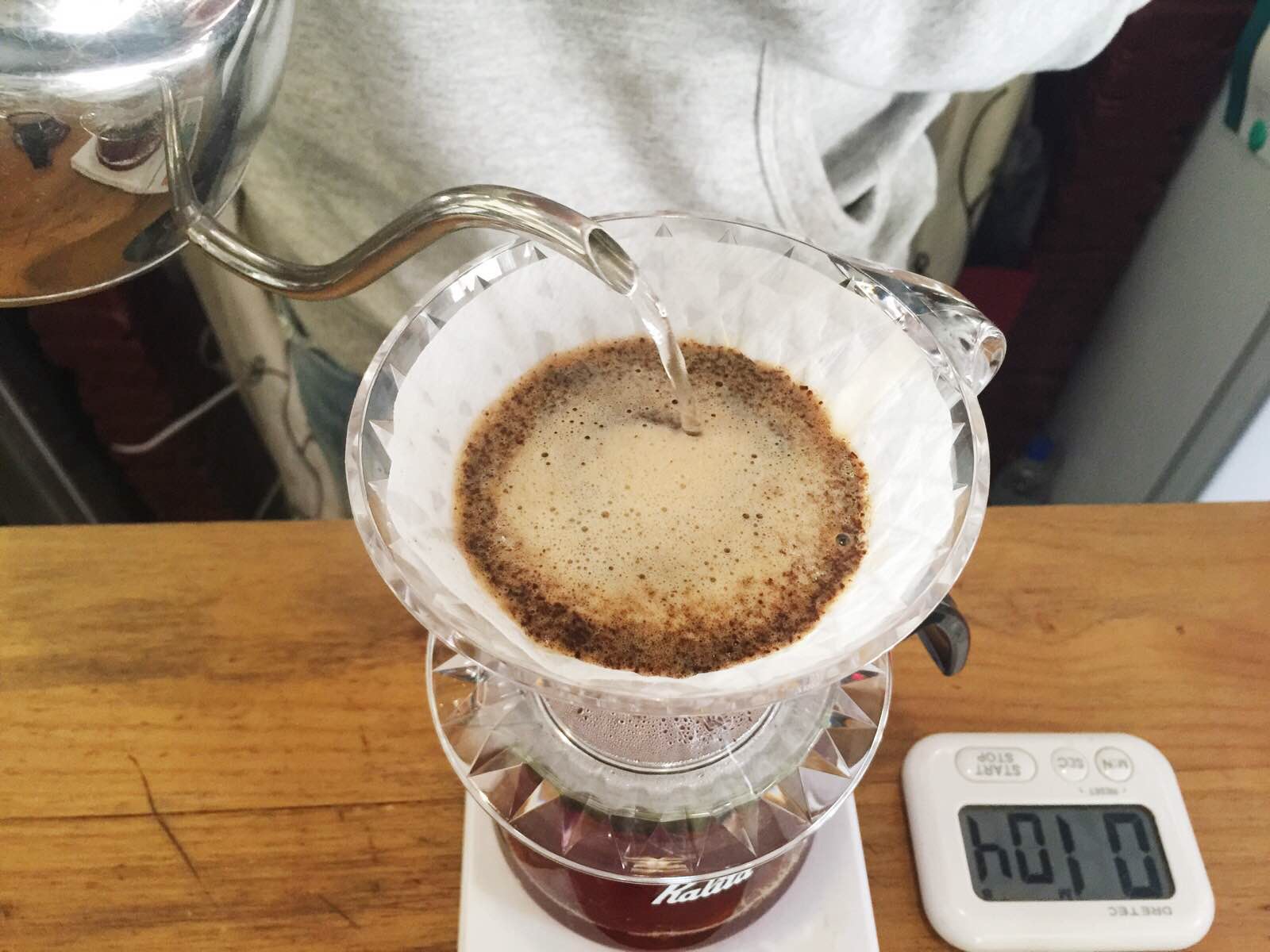
The academic—or standard—pour-over method is the most widely recommended technique, especially for beginners. It involves a simple routine: start with a center pour, execute a proper bloom, let the coffee bed collapse, then continue pouring from the center outward. Stability is essential—the technique performs best with a gooseneck kettle that delivers a fine, vertical, steady, and even stream. This is the method most commonly taught in specialty circles, and FrontStreet Coffee has detailed guides available on request (search: 'pour over').
Its main virtue is reliability—it works well with most filter cones and is forgiving for new brewers. However, its very consistency means it doesn’t encourage stylistic experimentation, leading some enthusiasts to see it as overly safe or boring.
Requirements: Stable, vertical, even stream; center-out pours; post-bloom pouring; ideal for beginners and most filter types.
Frequently Asked Questions
Which pour-over method is best for dark roast coffee?
The volcano pour is explicitly designed for dark roasts, using multiple blooms to manage high CO₂ release and enhance body. Other methods like the Matsuya or academic pour can also work, but the volcano method best exploits the characteristics of dark roasted beans.
Does the stirring method improve flavor?
Yes, the stirring technique enhances body and flavor clarity, especially in dark roasts, but it requires an extremely fine grind and careful execution. Poorly done, it can over-extract and emphasize defects in lower-quality beans.
Why does the Matsuya method take so long?
The Matsuya method involves a slow, continuous 3-minute pour followed by a dilution step, prioritizing stability and flavor preservation over speed. This extended brew time contributes to its reputation for consistent flavor over time.
Is the drip-by-drip method worth the effort?
The drip-by-drip technique highlights sweetness and minimizes harshness, but it demands high pour control and patience. It’s less common due to its long brew time and muted complexity compared to more dynamic methods.
What’s the easiest pour-over technique for beginners?
The academic or standard method is the most beginner-friendly, requiring only a stable pour and basic technique. It works across most filter cones and produces consistent results without needing advanced skills.
Recommended FrontStreet Beans for Dark Roast Pour-Overs
For dark roast pour-over styles like the volcano pour or Matsuya method, try FrontStreet Coffee’s PWN Golden Mandheling—a low-acid, bold single origin with herbal spice notes and a thick body. Also consider the Brazil Queen Manor for balanced notes of caramel and hazelnut, or the Colombia Huila for a medium-dark option with bright berry and milk chocolate undertones. All three showcase the richness and structure that dark roasts bring to pour-over brewing. Freshly roasted within 5 days · Orders placed before 17:00 ship the same day · Next-day delivery across most of Guangdong Province.
FrontStreet Coffee is a long-established specialty coffee roaster in Guangzhou China, selling freshly roasted beans from its own farm in Yunnan as well as dozens of carefully selected single-origin beans from around the world for both pour-over and espresso. The products deliver consistently excellent quality and great value, with shipping within 24 hours. Guangzhou's FrontStreet Coffee shop is recommended by many coffee lovers, and the beans are now available online at the Tmall 。
Important Notice :
前街咖啡 FrontStreet Coffee has moved to new addredd:
FrontStreet Coffee Address: 315,Donghua East Road,GuangZhou
Tel:020 38364473