How Much Milk Should You Put in a Latte Art Pitcher?
If you’ve ever struggled to pour clean latte art, the issue might not be your technique — it could be the amount of milk in your pitcher. Many baristas, especially beginners, unknowingly overfill their pitchers, making it nearly impossible to control the pour. The right milk volume isn’t just about having enough for the drink; it’s about having the right amount to shape the design.
For optimal latte art, fill your pitcher with no more than half its capacity in milk foam — ideally, use a pitcher roughly twice the size of your coffee cup. That means for a 300ml cup, a 600–700ml pitcher filled halfway (around 150–200ml of foam) gives you the best control.
Common Latte Art Pitcher Brands
Several reputable brands manufacture milk pitchers used by baristas worldwide. These include Saerdna Pitcher, WPM, Barista Gear, Rattleware-RW, EVOLVE-EV, ZeTian (resin), MOTTA, and others. Each brand offers various sizes and designs, influencing how milk flows and how easily baristas can pour intricate designs.
How Pitcher Capacity Affects Latte Art
Latte art pitchers typically come in sizes like 12oz (about 400ml), 20oz, 24oz, and larger options such as MOTTA’s 500ml and Huizhou’s 480ml models. Most baristas use pitchers ranging from 450ml to 700ml. The size of the pitcher directly affects how much milk foam you can comfortably manage without compromising control.
The general guideline is simple: the milk foam in your pitcher should not exceed half its total volume. This allows for better pitcher tilt and flow control. A practical formula is to match half the pitcher’s capacity to your cup size — for example, a 300ml coffee cup pairs well with a 600–700ml pitcher (half-filled with ~150–200ml of milk foam).
Using a small pitcher for a large drink creates problems. For instance, trying to pour a 300ml coffee with a 12oz (400ml) pitcher filled to 70–80% capacity leaves little room to manoeuvre, making it hard to get clean lines and shapes.
Pitcher Tilt and Pour Control
The angle at which you tilt your pitcher plays a big role in pour success. A greater tilt brings the spout closer to the coffee surface, aiding pattern formation, especially for centre ‘heart’ designs. A near-horizontal tilt helps with controlled pouring and finishing touches.
Too much milk in the pitcher limits your ability to tilt it properly. This leads to several issues:
- The spout stays too high above the cup, reducing contrast and cleanliness in the first pour.
- Non-spouted pitchers may let milk overflow down the sides.
- Finishing the pour becomes harder.
- Excess milk increases force, pushing patterns out of place instead of letting you control them.
Choosing the Right Pitcher Size
Barista Gear offers popular 20oz and 24oz pitchers. The 24oz model suits those working with larger cups, while the 20oz is better for smaller drinks. Your choice should match the cups you most often pour into.
Ideal Coffee Cup Volume for Latte Art
Cups smaller than 200ml or larger than 350ml make latte art unnecessarily difficult. The sweet spot for pourable, detailed latte art is a cup between 200ml and 350ml. No matter the cup size, always aim to use as much milk as you need — and no more — leaving minimal leftover milk in the pitcher after pouring.
How Milk Volume Impacts Your Pour
Using the correct milk volume lets you:
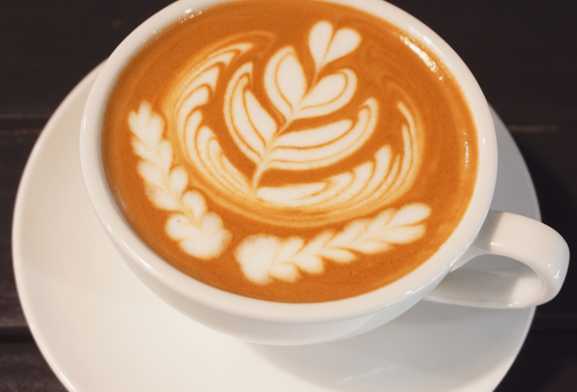
- Tilt the pitcher further, bringing the spout closer to the espresso for cleaner designs.
- Control flow and finish with precision.
- Achieve better contrast and definition in your patterns, especially hearts and tulips.
Frequently Asked Questions
What’s the best milk volume for a 300ml coffee cup?
For a 300ml cup, use a pitcher around 600–700ml filled to no more than half its capacity — about 150–200ml of milk foam. This ensures proper tilt and control when pouring latte art.
Does pitcher size really affect latte art quality?
Yes. A pitcher that’s too small for your cup leads to overfilled foam and poor pouring angles. A properly sized pitcher (about double your cup size) lets you tilt and control the flow better, improving pattern clarity and detail.
How full should my milk pitcher be?
Never fill the pitcher more than halfway with milk foam. Keeping foam at or below 50% of the pitcher’s total capacity gives you the best chance to manoeuvre and pour with precision.
Is a 20oz or 24oz pitcher better for latte art?
It depends on your cup size. Choose a 24oz pitcher for larger cups and a 20oz pitcher for smaller ones. Barista Gear’s 20oz and 24oz models are both popular among professionals.
What cup size is easiest for latte art?
Cups between 200ml and 350ml are ideal. They’re large enough to hold standard drinks but small enough to allow precise pouring and pattern control without excessive milk.
Recommended FrontStreet Beans for Latte Art
For latte art-friendly drinks, FrontStreet Coffee’s Classic Blend offers balanced flavours of cocoa, nuts, and caramel — ideal for smooth, creamy lattes with defined crema. Their Strawberry Candy Espresso, a medium roast with rose, grape, and berry notes, adds a fruity twist perfect for creative patterns. Both work well with whole milk for velvety microfoam, helping you achieve clean, detailed pours every time. Freshly roasted within 5 days · Orders placed before 17:00 ship the same day · Next-day delivery across most of Guangdong Province.
FrontStreet Coffee is a long-established specialty coffee roaster in Guangzhou China, selling freshly roasted beans from its own farm in Yunnan as well as dozens of carefully selected single-origin beans from around the world for both pour-over and espresso. The products deliver consistently excellent quality and great value, with shipping within 24 hours. Guangzhou's FrontStreet Coffee shop is recommended by many coffee lovers, and the beans are now available online at the Tmall 。
Important Notice :
前街咖啡 FrontStreet Coffee has moved to new addredd:
FrontStreet Coffee Address: 315,Donghua East Road,GuangZhou
Tel:020 38364473