How to Modify Your Coffee Roaster with a Differential Pressure Gauge
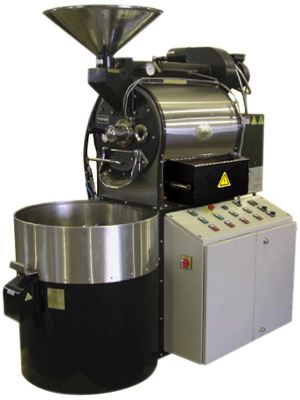
If you’ve ever roasted coffee, you’ve likely faced the frustration of not knowing whether your roaster’s exhaust is letting out enough smoke—or too much. Unlike other kitchen appliances, most commercial and home coffee roasters offer little to no feedback on internal air pressure or airflow dynamics, leaving roasters to guess when to open the damper or ramp up the fan. That lack of visibility makes consistency and control far harder than they should be.
The solution? Install a differential pressure gauge. This simple tool gives you real-time insight into the pressure difference inside your roaster’s drum versus the outside, helping you fine-tune airflow—especially critical during first crack when smoke and moisture spike.
Why Most Roasters Lack Airflow Feedback
Coffee roasting isn’t a high-tech process, and despite its century-long history, the core design of many roasters—especially older or mass-produced models—has changed little. Take Probat, for example: their machines have remained largely unchanged for decades. Much of this stagnation comes down to the perception that roasting itself doesn’t require extreme precision. While equipment stability matters, the real art lies in how the roaster manages variables like heat, airflow, and fuel. In fact, many home and boutique roasters favor machines with flexible controls over those built purely for stability.
The Real Levers of Roast Control
In day-to-day roasting, the key variables you actually control are: the heat source (fuel type), the amount of heat applied, the strength of the exhaust fan, and overall machine cleanliness. Fuel choice is usually fixed early on. Heat modulation has improved thanks to better pressure gauges and electromagnetic valves. Cleaning is mostly up to the roaster’s habits. But airflow—especially via the damper or exhaust fan—is where most roasters struggle.
Most roasters manage airflow in one of two ways: either adjusting fan speed while keeping the exhaust vane position fixed, or tweaking the vane opening while holding fan speed steady. Either way, there’s rarely a clear guide telling you how far to open the damper or how long to sustain that setting—especially when first crack hits and moisture and smoke production surge.
How a Differential Pressure Gauge Helps
A differential pressure gauge measures tiny differences in air pressure, and it’s already widely used in fields like HVAC, medical devices (e.g. for blood pressure), and industrial ventilation. By attaching one to your roaster, you can monitor the small pressure changes inside the drum as airflow shifts. This is especially useful during first crack, when the rapid release of moisture and smoke demands immediate adjustments to the exhaust system.
With a differential pressure gauge in place, you get a clear, numerical signal of when the internal pressure is spiking—telling you exactly when and how much to increase exhaust flow. More importantly, it brings a layer of objective data to what has traditionally been a subjective process. Over time, this data also helps you establish a cleaning routine: a sudden rise in pressure might indicate chaff buildup or restricted airflow, signaling that it’s time to clean.
By integrating pressure readings with your existing roast logs—tracking fan settings, gas levels, and bean profiles—you create a more complete picture of how your roasts behave. This forms a feedback loop that includes cupping results, making your entire roasting process more repeatable and tunable.
Common Misconceptions
It’s important to note: adding a differential pressure gauge won’t let you roast poor-quality beans well. It won’t fix bad profiles or turn underdeveloped roasts into award-winners. What it does is give you better control over the variables you can manage—especially airflow. Think of it as a diagnostic tool that complements your senses. The final judge of a good roast is still the cup: taste, aroma, and mouthfeel. And that means relying on roast profiling and, crucially, cupping to close the feedback loop.
Frequently Asked Questions
What is a differential pressure gauge and how does it help coffee roasting?
A differential pressure gauge measures small differences in air pressure. In coffee roasting, it helps monitor the pressure inside the roaster’s drum compared to outside, giving you real-time data on airflow. This is especially useful during first crack when smoke and moisture increase, helping you adjust the exhaust damper or fan speed with precision.
Do I need to be technically skilled to install a differential pressure gauge on my roaster?
Not necessarily. While installation may vary depending on your roaster model, many roasters can mount a differential gauge with basic tools and minimal modification. The key is placing it where it can accurately read the pressure differential between the drum interior and outside air.
Can a differential pressure gauge improve roast consistency?
Yes. By providing objective feedback on airflow and internal pressure, it allows you to make more consistent adjustments—especially during critical roast phases like first crack. Over time, this leads to more repeatable roast profiles when combined with good notes and cupping feedback.
Will this tool make up for bad green coffee or poor roasting technique?
No. A differential pressure gauge is not a silver bullet. It helps you control airflow and pressure more effectively, but it can’t fix issues stemming from low-quality beans or flawed roast profiles. Taste and cupping remain the ultimate judges of roast quality.
Is this only useful for commercial roasters?
Not at all. While commercial roasters often benefit the most due to scale, home roasters using machines with adjustable dampers or fans can also gain valuable insights from monitoring pressure changes during the roast.
Where should the gauge be installed on my roaster?
Typically, it should measure the pressure difference between the inside of the roasting chamber and the outside environment. Exact placement depends on your roaster’s design, but it’s often mounted near the exhaust or drum vent to capture airflow dynamics accurately.
Recommended FrontStreet Beans for Roaster Tuning
Try FrontStreet’s Ethiopia Huakui for bright, juicy complexity—ideal for testing airflow tweaks during first crack. Their Yirgacheffe offers floral and citrus notes, highlighting subtle roast shifts. For balance, the Brazil Queen Manor brings chocolatey sweetness and nuttiness, useful for dialing in medium roasts. All three showcase how airflow and pressure changes affect cup profile. Freshly roasted within 5 days · Orders placed before 17:00 ship the same day · Next-day delivery across most of Guangdong Province.
FrontStreet Coffee is a long-established specialty coffee roaster in Guangzhou China, selling freshly roasted beans from its own farm in Yunnan as well as dozens of carefully selected single-origin beans from around the world for both pour-over and espresso. The products deliver consistently excellent quality and great value, with shipping within 24 hours. Guangzhou's FrontStreet Coffee shop is recommended by many coffee lovers, and the beans are now available online at the Tmall 。
Important Notice :
前街咖啡 FrontStreet Coffee has moved to new addredd:
FrontStreet Coffee Address: 315,Donghua East Road,GuangZhou
Tel:020 38364473