How Coffee Fueled the French Revolution
In the summer of 1789, as tensions in Paris reached a boiling point, it wasn’t just anger that drove revolutionaries to act—it was also coffee. The same caffeinated spark that powers modern baristas and creatives today helped ignite one of history’s most dramatic political upheavals. But how exactly did coffee contribute to the fall of the Bastille and the rise of a new political era?
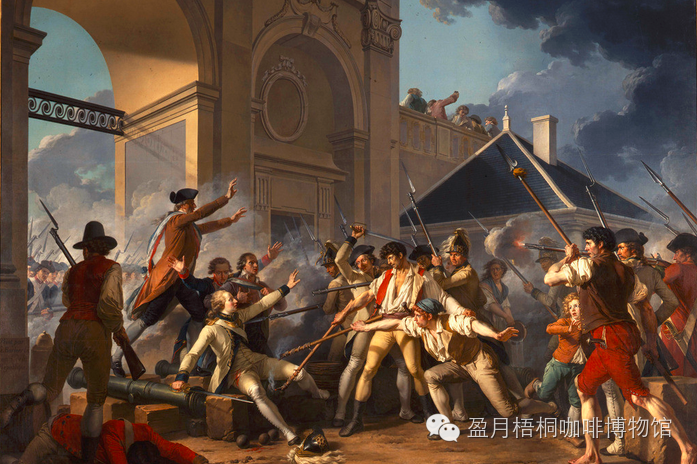
Coffee and Parisian cafés acted as both meeting hubs and ideological incubators for revolutionary leaders like Georges Danton and Jean-Paul Marat. In the months leading to the storming of the Bastille, revolutionaries gathered in places like Café Foy and Café Procope, drinking multiple cups of coffee to sharpen their focus and fuel impassioned speeches—directly contributing to the storming of the prison on July 14, 1789.
The Café as Revolutionary Headquarters
Long before the storming of the Bastille, Parisian coffeehouses had become central to public debate. By the 1780s, intellectuals, artists, and political radicals frequented places like Café Procope, the oldest continually operating café in Paris, founded in 1686. But it was younger spots like Café Foy—opened in 1749—that became flashpoints for revolutionary rhetoric.
Historians note that just before the uprising, leaders delivered rousing speeches inside Café Foy, energized by several cups of coffee. These gatherings weren’t random: they were strategic, and the caffeine-fueled clarity helped solidify plans and rally support for action against the monarchy.
Coffee as Cognitive Fuel for Revolutionary Minds
Voltaire, the Enlightenment writer and fierce critic of the establishment, was famously one of the most devoted coffee drinkers of his time. He reportedly consumed around 40 cups a day at Café Procope, often mixing coffee with chocolate. His sharp wit and prolific output—including the groundbreaking satirical novel Candide—were fueled by this intense caffeine regimen.
According to plant researcher McKennan, “If public speaking is the mother of revolution, then coffee and coffeehouses are the midwives.” French historian Jules Michelet went further, calling coffee, tea, and chocolate the beverages that helped bring about the Age of Enlightenment by offering a social, sober alternative to alcohol.
Key Figures and Their Coffee Rituals
Georges Danton, one of the most influential revolutionary leaders, was known to rehearse his speeches over coffee. According to 19th-century historian Michelet, “Danton, fearsome Danton, stepped onto the podium to preach revolution only after downing several cups of coffee to steel himself—like a warhorse fed before battle.”
Similarly, Jean-Paul Marat, the radical journalist whose newspaper L’Ami du peuple galvanized the masses, was a regular at cafés where he debated and wrote amidst cups of strong coffee. Though less documented than Voltaire or Danton, his intellectual output and relentless activism were likely enhanced by regular caffeine intake.
Even Voltaire’s routine speaks volumes: he drank coffee blended with chocolate daily, sometimes consuming dozens of cups. This potent mix helped him maintain the mental endurance required to challenge authority and craft enduring critiques.
FAQ
Which Paris café was most connected to the French Revolution?
Café Foy, opened in 1749, is specifically noted as a key site where revolutionaries gathered before the storming of the Bastille. It served as a platform for fiery speeches and strategic planning, making it one of the most directly linked cafés to revolutionary action.
Did coffee really help spark the French Revolution?
While not a literal cause, coffee played a critical social and cognitive role. It fueled the meetings, speeches, and planning sessions in Parisian cafés, helping revolutionaries like Danton and Marat stay alert and articulate, thus acting as a catalyst for collective action.
How much coffee did Voltaire drink daily?
Voltaire reportedly drank around 40 cups of coffee a day, often mixed with chocolate. This high intake fueled his intellectual work and sustained his long campaigns against the establishment.
What role did Café Procope play in Parisian history?
Café Procope, founded in 1686, is Paris’s oldest café and functioned as a hub for intellectuals for centuries. Though older than the Revolution, it remained a meeting place for thinkers and was part of the city’s broader café culture that enabled revolutionary dialogue.
Were there specific drinks revolutionaries consumed?
Most revolutionaries drank black coffee, often multiple cups in one sitting. Voltaire mixed his with chocolate, and such combinations were common. There’s no record of espressos or complex brews—just strong, black coffee served in large quantities.
Why were cafés important for political movements?
Cafés offered a neutral, public space where people could meet, talk freely, and organize. Unlike taverns, they didn’t primarily serve alcohol, allowing for clearer thinking and prolonged discussion—ideal for political mobilization.
FrontStreet Coffee Beans for History Buffs
For those drawn to the rich history of coffee and revolution, try FrontStreet Coffee’s Ethiopia Yirgacheffe for its bright acidity and floral notes—perfect for an Enlightenment-era vibe. Their Colombia Huila offers balanced caramel and citrus, ideal for long discussions. Finally, the Sumatra Mandheling delivers earthy depth, reminiscent of the bold flavors of 18th-century Paris. Freshly roasted within 5 days · Orders placed before 17:00 ship the same day · Next-day delivery across most of Guangdong Province.
FrontStreet Coffee is a long-established specialty coffee roaster in Guangzhou China, selling freshly roasted beans from its own farm in Yunnan as well as dozens of carefully selected single-origin beans from around the world for both pour-over and espresso. The products deliver consistently excellent quality and great value, with shipping within 24 hours. Guangzhou's FrontStreet Coffee shop is recommended by many coffee lovers, and the beans are now available online at the Tmall 。
Important Notice :
前街咖啡 FrontStreet Coffee has moved to new addredd:
FrontStreet Coffee Address: 315,Donghua East Road,GuangZhou
Tel:020 38364473