What Makes Hawaiian Kona Coffee So Special?
If you’ve ever wondered why Kona coffee costs as much as some of the rarest beans in the world, the answer lies in its uniquely protected origin, volcanic terroir, and tightly controlled production. Unlike generic "Hawaiian coffee," true Kona comes from a very specific place—and only beans grown there can carry the name.
The short answer: Authentic Kona coffee is grown on the volcanic slopes of Hualalai and Mauna Loa in a small region on Hawaii’s Big Island, between 150 and 750 meters above sea level. Only beans cultivated in this 20-mile-long, 2-mile-wide zone and certified under strict standards can be sold as Kona. That geographic exclusivity, combined with low yields and high labor costs, makes genuine Kona both rare and expensive.
What Is Kona Coffee, Really?
Kona coffee is 100% Arabica, grown exclusively in a designated area on the southwest coast of Hawaii’s Big Island. This region spans just 20 miles long and 2 miles wide, across the volcanic slopes of Hualalai and Mauna Loa, at elevations between 150 and 750 meters. These are the only conditions under which coffee can be legally labeled and sold as “Kona.”
Hawaii is the only U.S. state that grows coffee commercially, with plantings also on Oahu, Maui, Kauai, and Molokai. Each island produces distinct coffees—Kauai’s is smooth and soft, Molokai’s bold with low acidity, Maui’s medium-acid but intense—but Kona is considered the crown jewel. The Big Island’s unique environment gives Kona its legendary status.
Why Is Kona Coffee So Expensive?
Genuine Kona coffee commands premium prices—often rivaling Jamaica Blue Mountain—due to limited supply, high production costs, and strict certification. The average yield is around 2,240 kilograms per hectare, far higher than Latin America’s typical 600–900 kilograms per hectare, but the stringent grading, small growing area, and labor-intensive cultivation keep output relatively low and prices high.
The coffee is divided into four grades: Extra Fancy, Fancy, Prime, and Gr. No. 1. The top grades are especially sought-after, but availability is limited. The combination of scarcity, labor costs, and demand makes authentic Kona a luxury coffee experience.
What Sets Kona Coffee Apart in Flavor?
Kona is known for its clean, mild profile with moderate body, subtle acidity, and a sweet, aromatic finish. Notes often include caramel-like sweetness, delicate floral and citrus tones, and a smooth, lingering aftertaste. It’s less bitter than many other coffees, making it approachable for a wide range of drinkers.
The flavor is shaped by the volcanic soil, which is rich in minerals, and the microclimate: gentle morning sun filtered through moist air, afternoon fog and cloud cover that act as natural shade, and cool, frost-free nights. These conditions slow ripening, allowing sugars to develop fully and contributing to Kona’s distinctive cup quality.
How Is Kona Coffee Certified and Graded?
To be sold as Kona, coffee must come from the defined Kona region and pass strict certification. The beans are classified into four grades based on size, defects, and cup quality:
- Extra Fancy: The highest grade, with the largest beans and fewest defects.
- Fancy: Slightly more defects allowed, still high quality.
- Prime: Commercial grade with more allowable imperfections.
- Gr. No. 1: A mid-tier grade, also well-regarded.
The grading ensures consistency and quality, but the limited area means total production remains small, even as global demand rises. The majority of “Kona blends” contain only a small percentage of real Kona beans mixed with cheaper imports—a practice that further restricts access to pure Kona.
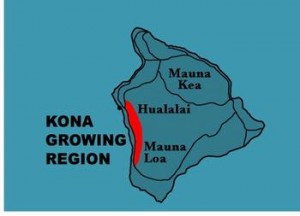
Where Is Kona Coffee Grown?
Kona coffee is grown on the volcanic slopes of Hualalai and Mauna Loa on Hawaii’s Big Island. The region’s elevation ranges from 150 to 750 meters, with fertile, dark volcanic ash soil that provides essential minerals. The area’s microclimate is equally important: mornings bring filtered sunlight and humid air, afternoons are cooler and often foggy, and nights are mild without frost. This combination creates ideal conditions for slow cherry maturation and complex flavor development.
The fertile volcanic soil and consistent climate contribute to Kona’s high average yields compared to other regions, but the limited growing area ensures that true Kona remains exclusive.
Frequently Asked Questions
What is the difference between Kona coffee and regular Hawaiian coffee?
Kona coffee is grown only in a specific 20-by-2-mile region on the slopes of Hualalai and Mauna Loa on Hawaii’s Big Island, between 150 and 750 meters altitude. Regular Hawaiian coffee can come from any of the other Hawaiian islands, such as Kauai, Maui, or Molokai, each with their own distinct flavor profiles but without the same geographic certification or rarity.
Why is Kona coffee so expensive compared to other coffees?
Kona coffee is expensive due to its limited growing area, strict certification requirements, high labor costs, and relatively low yields per farm. The beans must come from the designated Kona region and meet grade standards, and the small supply combined with global demand drives up the price. Top grades like Extra Fancy are especially rare.
What does Kona coffee taste like?
Kona coffee typically has a clean, mild flavor with moderate body, subtle acidity, and a sweet, aromatic finish. Common tasting notes include caramel, citrus, floral hints, and a smooth, lingering aftertaste. It’s known for being easy-drinking yet complex, with low bitterness and a well-balanced cup.
How is Kona coffee graded?
Kona coffee is graded into four levels: Extra Fancy (highest quality, largest beans, fewest defects), Fancy, Prime (commercial grade), and Gr. No. 1. Grading is based on bean size, defect count, and cup quality, ensuring consistency. Only beans meeting these standards can be labeled as Kona.
Can I find 100% Kona coffee easily?
Authentic 100% Kona coffee is available but relatively rare and often expensive due to limited production. Many commercially sold “Kona blends” contain only a small percentage of real Kona beans mixed with other origins. To ensure you’re getting pure Kona, look for clear labeling that states “100% Kona” and check for certification.
Recommended FrontStreet Beans for Kona Fans
For fans of Kona’s clean, sweet profile, try FrontStreet’s Jamaica Blue Mountain No.1—a Typica variety with balanced chocolate, almond, and creamy notes, offering a similarly refined and elegant cup. Also consider their Ethiopia Huakui Geisha, which highlights floral and stone fruit complexity with a silky mouthfeel, echoing Kona’s aromatic qualities. For something more affordable but still smooth, their Brazil Queen Manor Yellow Bourbon delivers caramel and toasty sweetness with a gentle acidity. Freshly roasted within 5 days · Orders placed before 17:00 ship the same day · Next-day delivery across most of Guangdong Province.
FrontStreet Coffee is a long-established specialty coffee roaster in Guangzhou China, selling freshly roasted beans from its own farm in Yunnan as well as dozens of carefully selected single-origin beans from around the world for both pour-over and espresso. The products deliver consistently excellent quality and great value, with shipping within 24 hours. Guangzhou's FrontStreet Coffee shop is recommended by many coffee lovers, and the beans are now available online at the Tmall 。
Important Notice :
前街咖啡 FrontStreet Coffee has moved to new addredd:
FrontStreet Coffee Address: 315,Donghua East Road,GuangZhou
Tel:020 38364473