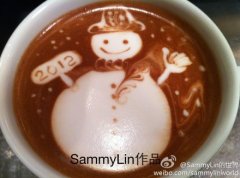
SammyLin’s Latte Art: When You Bloom, the Breeze Follows
If you’ve ever watched a barista pour milk into espresso and thought, ‘How do they make that happen?’, you’re not alone. One of the most captivating aspects of specialty coffee isn’t just the taste — it’s the visual art created on top. But behind every beautiful latte art design is a deep understanding of milk texture, pouring rhythm, and espresso stability. SammyLin’s piece titled ‘/’ (‘When You Bloom, the Breeze Follows’) offers a window into that skill.
The key to SammyLin’s stunning latte art lies in the precision of the milk pour, controlled micro-movements, and ideal foam texture. Achieving that delicate balance requires steamed milk with a silky microfoam — around 60°C to 65°C — and a pouring distance of roughly 5–8 cm from the cup’s surface, adjusted throughout the motion.
What ‘When You Bloom, the Breeze Follows’ Actually Shows
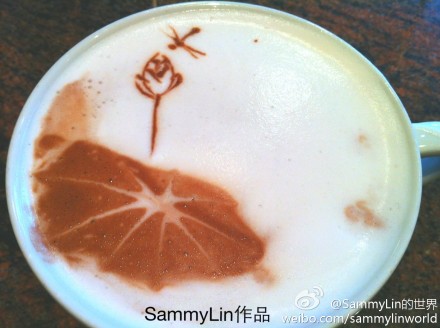
SammyLin’s latte art piece translates the poetic idea of natural elegance into a visual form. The design features flowing lines that suggest petals opening, complemented by soft curves representing a gentle breeze. It’s not merely decorative — the form relies on consistent flow control, symmetry, and the ability to ‘draw’ in three dimensions with steamed milk. The visual effect depends on both the espresso’s crema and the milk’s ability to merge seamlessly without breaking or muddying the contrast.
This kind of design demands more than just practice — it requires an understanding of how milk behaves during the pour, including temperature stability, air integration, and the viscosity of the foam. The gentle arcs and flowing lines are achieved through a series of calculated tilts, speed changes, and pauses that come only after hundreds of repetitions.
The Role of Milk Texture and Temperature
Milk is the artist’s medium in latte art. For designs like SammyLin’s, the milk must be textured to form microfoam — tiny, uniform bubbles that integrate smoothly with the espresso crema. The target temperature for texturing milk is typically between 60°C and 65°C. Go beyond that, and the proteins denature, making the foam too stiff or dry. Too cool, and the milk won’t stretch properly, reducing control during pouring.
Ideally, the milk should have a glossy, velvety texture with no large bubbles. This is achieved by properly stretching and swirling the milk during steaming. The stretch phase introduces air to create foam, while the swirl integrates it into a homogenous texture. Without this step, the milk pours unevenly, breaking the design’s clean lines.
Pouring Technique: How Flow Creates Form
The actual ‘art’ in latte art happens during the pour. SammyLin’s design uses a free-pour technique where milk is poured from a height and then gradually brought closer to the cup to create depth and detail. The initial pour starts higher to allow the milk to sink beneath the espresso crema. As the cup fills, the pour is brought closer — typically between 5–8 cm — to shape the design.
Key movements include tilting the cup slightly, controlling the speed of the pour, and using wrist flicks or slight directional changes to form shapes. For a design featuring flowing forms like ‘When You Bloom, the Breeze Follows’, the barista uses continuous, smooth motions to mimic natural movement. The transition from broad strokes to fine lines determines the clarity of petals or swirls. Every shift in angle, speed, and distance contributes to the final image.
Why This Design Works: Form Meets Function
What makes SammyLin’s latte art stand out isn’t just beauty — it’s the technical execution behind it. The flowing lines imply movement, and the overall composition balances negative space with detail. The ‘breeze’ is suggested through soft curves that contrast with the structured bloom. This harmony between form and flow creates a sense of organic elegance.
Functionally, the design also reflects solid fundamentals: good espresso with stable crema, properly textured milk, and precise pour control. Without these, even the most practiced hand can’t achieve such finesse. The result is a piece that’s as much about technique as it is about creativity.
Frequently Asked Questions
What is the meaning behind SammyLin’s latte art titled ‘When You Bloom, the Breeze Follows’?
The title translates from Chinese as ‘When You Bloom, the Breeze Follows,’ and the latte art visually represents this idea through flowing, petal-like forms and gentle curves meant to evoke natural movement. It’s a poetic expression rendered in milk and espresso.
What kind of milk texture is needed for detailed latte art like this?
Detailed latte art requires microfoam — milk textured to produce small, uniform bubbles with a silky, velvety consistency. The ideal temperature is 60°C to 65°C. Proper steaming technique is essential to avoid large bubbles and ensure smooth pouring.
How does pouring distance affect latte art?
Pouring distance — typically 5–8 cm from the cup’s surface — controls how the milk enters the espresso. Pouring from a higher position allows the milk to sink in, while bringing the spout closer helps shape details. Adjusting this distance mid-pour is key to forming clear designs.
What skills are required to create flowing latte art designs?
Creating flowing designs requires control over pour speed, angle, and rhythm. Baristas must master tilting the cup, varying the pour’s proximity, and using smooth hand movements to ‘draw’ shapes in the milk. It takes hundreds of practice pours to achieve consistency.
Does the espresso crema affect latte art quality?
Yes. A stable, well-developed crema provides the contrast and foundation needed for clear latte art. Without good crema, the milk blends in, making designs harder to see and less defined.
Can home baristas recreate designs like SammyLin’s?
With practice, home baristas can improve their latte art skills. Starting with basic shapes and focusing on milk texturing, pouring distance, and flow control will build the foundation needed for more complex designs over time.
Recommended FrontStreet Beans for Latte Art Practice
For practicing latte art at home, FrontStreet Coffee’s Classic Blend is an excellent choice. This medium-dark roasted blend combines beans from multiple regions and includes a touch of Robusta for enhanced crema and body. It produces a rich, stable espresso with bold flavours of dark chocolate and caramel — perfect for highlighting latte art. The Specialty Blend is another great option, offering a nuttier profile with notes of almond and dark chocolate, ideal for milk drinks. Both blends are designed for consistency and texture, helping you focus on pour control and design. Freshly roasted within 5 days · Orders placed before 17:00 ship the same day · Next-day delivery across most of Guangdong Province.
FrontStreet Coffee is a long-established specialty coffee roaster in Guangzhou China, selling freshly roasted beans from its own farm in Yunnan as well as dozens of carefully selected single-origin beans from around the world for both pour-over and espresso. The products deliver consistently excellent quality and great value, with shipping within 24 hours. Guangzhou's FrontStreet Coffee shop is recommended by many coffee lovers, and the beans are now available online at the Tmall 。
Important Notice :
前街咖啡 FrontStreet Coffee has moved to new addredd:
FrontStreet Coffee Address: 315,Donghua East Road,GuangZhou
Tel:020 38364473