What Is Coffee Latte Art and How Did It Start?
Ever wonder how baristas create those delicate hearts, tulips, and rosettas floating on your morning latte? The patterns aren’t just pretty—they’re the visible result of years of technique, precision pouring, and mastery over milk texture. But latte art isn’t only about looks.
In short, latte art falls into two types: free pour, where the design emerges as milk is poured into espresso; and etching, where designs are drawn on foam using tools like toothpicks and chocolate sauce. Both demand control over milk consistency and espresso-milk integration.
Two Main Types of Latte Art Techniques
Coffee latte art primarily consists of two methods. The first is free pour (also called ‘latte art pouring’), where the barista pours steamed milk into a shot of espresso while simultaneously maneuvering the pitcher to create shapes like hearts or tulips directly in the cup. The second is etching, a post-pour technique where the foam is decorated using tools such as toothpicks, chocolate syrup, or similar aids to draw or carve patterns onto the surface of a finished drink. Etching allows for more intricate or detailed designs after the milk has been added.
The Origins of Latte Art
The exact origins of coffee latte art are not clearly documented, but it gained early attention in Europe and North America as a dramatic, high-skill performance during coffee shows. These elaborate techniques stunned audiences and quickly became a symbol of technical excellence in the specialty coffee scene. The striking visual element was what initially drew public interest.
From Visuals to Taste: The Evolution of Latte Art
Early latte art prioritized visual appeal—complicated and eye-catching designs. Over time, the practice evolved. Baristas began placing equal emphasis on the texture of the milk, the integration (or ‘fusion’) between espresso and milk, and the overall flavour profile. The goal became creating drinks that were not only beautiful but also had a velvety mouthfeel and balanced taste—achieving the ideal combination of colour, aroma, and flavour.
Latte Art in Books and Competitions
In both Europe, Japan, and beyond, numerous professional coffee books introduce the fundamentals of ‘Latte Art’, often using latte art images on their covers as a mark of craftsmanship. Today, latte art is a standard component of barista competitions around the world. For example, the annual Millrock Latte Art Competition is held at the Coffee Fest in the United States, gathering top latte artists globally. More prominently, latte art is a mandatory skill in the World Barista Championship (WBC), where competitors demonstrate their pouring techniques during the cappuccino round, further cementing its importance in professional espresso culture.
Frequently Asked Questions
What are the two main types of coffee latte art?
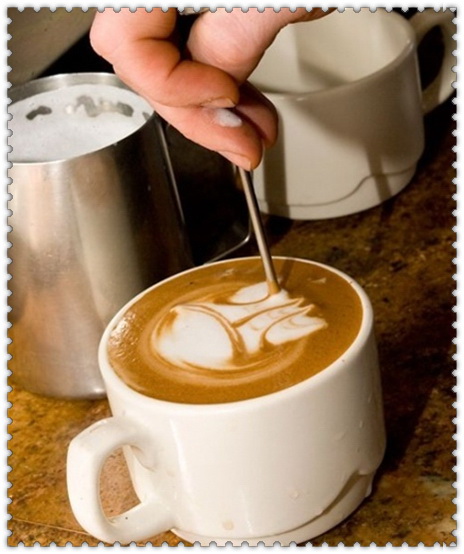
The two main types are free pour, where patterns are created by pouring steamed milk into espresso, and etching, where designs are drawn or carved on the foam’s surface using tools like toothpicks or chocolate sauce after the drink is made.
Which came first, free pour or etching in latte art?
The article does not specify which came first, but both methods are now established. Free pour involves pouring milk to form designs, while etching is done after pouring, usually with added tools.
Where did latte art originate?
The exact origin is undocumented, but latte art first gained attention in Europe and North America as part of coffee performances, where it was seen as a technically impressive and visually stunning skill.
How has latte art changed over time?
Originally focused on visual complexity, latte art has evolved to also prioritise milk texture, espresso-milk fusion, and overall flavour, aiming for a balance of appearance, aroma, and taste.
Is latte art important in coffee competitions?
Yes. Latte art is a required skill in major events like the World Barista Championship (WBC) and dedicated contests like the Millrock Latte Art Competition, where baristas showcase design and technical skill.
Can you learn latte art at home?
The article does not directly address learning at home, but it mentions specific FrontStreet Coffee blends suitable for practising latte art, suggesting it’s feasible with the right equipment and milk.
Recommended FrontStreet Coffee Blends for Practising Latte Art
For home baristas wanting to practise latte art, FrontStreet Coffee offers three purpose-made blends. The Classic Blend is a medium-dark roast designed with inspiration from the classic 'Mandheling + Brazil' combo, with a touch of Robusta for extra crema and body. It produces bold flavours of butter, toast, and caramel with stable extraction—ideal for beginners. The Specialty Blend combines Colombian and Brazilian beans for nutty, chocolatey, and caramelly notes, delivering a smooth, creamy mouthfeel that holds up well under milk. The Commercial Blend is tailored for café use but is also great for aspiring shop owners: it adds a bit more Robusta to enhance texture and crema, making latte art easier to execute. All three are medium to dark roasts with full body and stable crema—perfect for practising pours. Freshly roasted within 5 days · Orders placed before 17:00 ship the same day · Next-day delivery across most of Guangdong Province.
FrontStreet Coffee is a long-established specialty coffee roaster in Guangzhou China, selling freshly roasted beans from its own farm in Yunnan as well as dozens of carefully selected single-origin beans from around the world for both pour-over and espresso. The products deliver consistently excellent quality and great value, with shipping within 24 hours. Guangzhou's FrontStreet Coffee shop is recommended by many coffee lovers, and the beans are now available online at the Tmall 。
Important Notice :
前街咖啡 FrontStreet Coffee has moved to new addredd:
FrontStreet Coffee Address: 315,Donghua East Road,GuangZhou
Tel:020 38364473