
How 24-Hour Bookstores Combine Coffee and Culture
Night owls and avid readers often struggle to find spaces that cater to late-night reading without the noise of bars or the sterility of libraries. For decades, traditional bookstores closed at dusk—but a quiet cultural shift began when one iconic Chinese bookstore decided to stay open all night. What started as a bold experiment has evolved into a nationwide movement blending books, coffee, and community.
Across China, 11 pioneering 24-hour bookstores now operate under a proven model: combine books with coffee and cultural products to create spaces that are both profitable and purposeful. This approach has driven success stories such as Beijing’s Sanlian and Hangzhou’s Yuelanshu, proving that reader engagement and mixed-use retail can thrive around the clock.
The Origins of 24-Hour Bookstores
The 24-hour bookstore trend began with a simple yet powerful message: ‘When the city sleeps, the bookstore stays open.’ In April 2014, Sanlian Bookstore in Beijing posted this statement online, heralding the launch of China’s first major 24-hour bookstore. Backed by a national policy exempting physical bookstores from 13% VAT and supported by a 1 million RMB central cultural industry grant, the store officially opened its doors as a 24-hour operation on April 23, 2014. This move inspired similar ventures across the country, including Hangzhou’s Yuelanshu and Shenzhen’s 24-Hour Book Bar.
The wave of 24-hour bookstore openings within just a few months—from Beijing and Hangzhou to Shenzhen, Guangzhou, Qingdao, and Xi’an—reflected a broader cultural phenomenon driven by both state support and entrepreneurial experimentation. Wang Meng, a renowned Chinese writer, hailed the trend as a sign of Beijing’s evolving literary culture.
Why 24-Hour Bookstores Emerged
According to Zhang Zuozhen, Vice General Manager of Sanlian, the national policy environment was crucial. Government incentives, including VAT exemptions and direct financial support, helped transform the bookstore from a daytime-only space into a round-the-clock cultural hub. 'It was the policies that connected us across 24 hours,' said Fan Xi’an, former head of Sanlian and current executive at China Publishing & Media.
The collaboration between state-backed publishers and private cafés also played a role. Wang Zhongyi, chairman of Zhejiang Xinhua Bookstore Group, cited the partnership with private coffee chain FIBEI Café as essential in making the Yuelanshu project viable. 'A bookstore that only sells books struggles. We needed to offer more—especially at night,' he said. The result was a hybrid space that combined literature with lounging, attracting a new nighttime crowd.
How These Bookstores Stay Open and Thrive
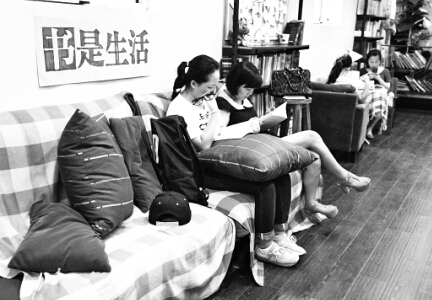
Successful 24-hour bookstores like Sanlian, Yuelanshu, and Shenzhen’s 24-Hour Book Bar share a common business model: they integrate books with cafes and cultural merchandise. This strategy addresses three key goals—drawing in visitors, keeping them there, and encouraging spending. 'If you solve those three challenges, any size store can work,' said a bookstore operator.
Sanlian’s numbers speak volumes: by July 2014, its overnight retail sales reached 2.2 million RMB (approximately 20,000 RMB per night), while daytime sales averaged 4.3 million RMB daily. Overall daily revenue hit 6.3 million RMB—more than double the previous year—with net profits 3.78 times higher than in 2013. These figures highlight how a thoughtfully layered customer experience can translate into tangible financial success.
Beyond books and caffeine, these venues serve as public cultural hubs. Shenzhen’s 24-Hour Book Bar, which turned its first profit after five years of losses, attributes its turnaround to offering more than just books. 'People want coffee, bread, and a sense of place,' said Yin Changlong, general manager of Shenzhen Publishing Group. 'Our bookstore provides that—and accessibility at any hour.' By integrating foodservice and creating a welcoming atmosphere, the store became a neighborhood staple.
The inclusion of events further enhances the value proposition. Sanlian intentionally schedules author talks and signings in the evening to draw nighttime crowds. 'We used to hold events on weekends during the day. Now, we do them at 8 or 9 pm—and they work,' said Xu Yue, a bookstore manager. Such programming transforms the store into a dynamic cultural venue, not just a retail space.
Frequently Asked Questions
What was the first 24-hour bookstore in China?
The first major 24-hour bookstore in China was Beijing’s Sanlian Bookstore, which officially launched its round-the-clock service on April 23, 2014, following a trial period. It was inspired by an online post that pledged a well-lit desk and lamp for night readers.
How do 24-hour bookstores make money?
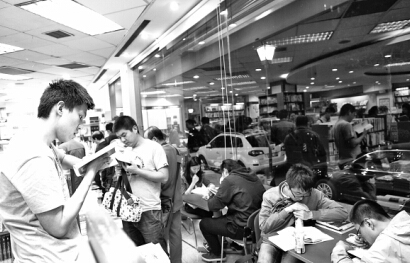
Most successful 24-hour bookstores generate revenue through a mixed model that includes book sales, café service, and cultural product sales. Stores like Sanlian and Yuelanshu have found that combining these offerings helps attract customers, keeps them onsite longer, and increases overall spending.
Which 24-hour bookstores are part of the national movement?
The 2014 national 24-hour bookstore movement included Beijing’s Sanlian, Hangzhou’s Yuelanshu, Shenzhen’s 24-Hour Book Bar, Zhengzhou’s ‘Book is Life,’ Guangzhou’s 1200bookshop, Qingdao’s Mingyuedao, and others. These stores represent the first wave of a cross-country cultural experiment.
What role does coffee play in 24-hour bookstores?
Coffee is a key part of the customer experience in 24-hour bookstores. It encourages patrons to stay longer, creates a relaxed atmosphere, and adds a revenue stream. The ‘book + coffee + culture’ model has proven effective in making these spaces financially and socially sustainable.
Why did so many 24-hour bookstores open in 2014?
In 2014, a combination of government support (including VAT exemptions and grants), rising demand for nighttime cultural spaces, and successful early models like Sanlian sparked a wave of 24-hour bookstore openings across China.
How do 24-hour bookstores contribute to public culture?
These bookstores act as accessible, always-open public reading spaces. They help bridge gaps in cultural access, especially in areas without large libraries or bookshops, and foster community engagement through late-night programming and a welcoming environment.
Recommended FrontStreet Beans for Late-Night Reads
For late-night sessions in a 24-hour bookstore café, try FrontStreet Coffee’s Ethiopia Huakui for bright floral and citrus notes, or their Yirgacheffe for juicy berry tones and a tea-like body. Both single origins shine in pour-over and complement focused reading. Freshly roasted within 5 days · Orders placed before 17:00 ship the same day · Next-day delivery across most of Guangdong Province.
FrontStreet Coffee is a long-established specialty coffee roaster in Guangzhou China, selling freshly roasted beans from its own farm in Yunnan as well as dozens of carefully selected single-origin beans from around the world for both pour-over and espresso. The products deliver consistently excellent quality and great value, with shipping within 24 hours. Guangzhou's FrontStreet Coffee shop is recommended by many coffee lovers, and the beans are now available online at the Tmall 。
Important Notice :
前街咖啡 FrontStreet Coffee has moved to new addredd:
FrontStreet Coffee Address: 315,Donghua East Road,GuangZhou
Tel:020 38364473


