
Coffee Arabica
Latest articles, industry insights and brewing guides

Coffee producing area of Ethiopia Arabica coffee beans
Coffee production in Ethiopia: many coffee trees in Ethiopia are still wild plants, and the coffee grown on this coffee tree is full of grains and slightly alcoholic. Today, Ethiopia is an important coffee producer and a major exporter of Arabian coffee beans in Africa. The high-quality coffee here is of excellent quality. A variety of coffee cultivation methods can be found in Ethiopia:

Rwanda Coffee washes Arabica Coffee beans and African Coffee Fine Coffee Fruit Acid
Boutique coffee is fresh coffee. Whether it's food or drink, of course, the fresh the better, and so is boutique coffee. High-quality coffee should keep the coffee beans fresh before making, including the preservation of baked beans, and grind the coffee beans into powder before making, which is also to retain its original and best flavor. And the way of making hand-made coffee is such a way to make high-quality coffee.

The production of Ugandan Arabica coffee beans accounts for only 10% of the country's total coffee production.
Boutique coffee has a rich and beautiful taste. Even if the coffee made of boutique coffee beans is not all fine coffee, it depends on whether it gives full play to the characteristics of coffee beans, whether it has a good taste, if not, it can not be called boutique coffee. In Uganda (Uganda), Arabica beans account for only 10% of the country's total coffee production, but

The four varieties in the Philippines are Robast, Liberica, Exelsa and Arabica
Fine coffee is fresh coffee. Whether it's food or drink, the fresher the better, and so is specialty coffee. Coffee beans should be kept fresh before making fine coffee, including the preservation of roasted beans, and the coffee beans should be ground before making, which is also to retain its most original and best flavor. And hand brewed coffee making is such a way to make fine coffee

At present, the three most important and productive coffee trees in the world are genealogies: Arabica
Boutique coffee has a rich and beautiful taste. Even if the coffee made of boutique coffee beans is not all fine coffee, it depends on whether it gives full play to the characteristics of coffee beans, whether it has a good taste, if not, it can not be called boutique coffee. Arabica is only a big division of coffee tree pedigree. When it comes to coffee tree pedigree,

The relationship between Kenyan coffee and Arabica coffee beans
In Ethiopia, the grading and quality control system of coffee is divided into three levels: producer, regional and national. All coffee is inspected by local inspection agencies before leaving the country of origin, and then re-tested at the coffee inspection and grading centers in Addis and Diredawa to determine its quality grade. Coffee is graded before auction and sale, for all involved in production, acquisition,

Coffee bean knowledge the difference between Arabica and Robusta
Compared with Arabica, Robusta has more than twice as much caffeine and is generally considered to be of lower quality than Arabica. However, the value of high-quality Robusta lies in the combination of espresso beans, which is very important for the quality of espresso. Robusta is easier to grow and more resistant to disease than Arabica, and can grow at lower altitudes and weather conditions.
Main species of coffee trees: Arabica species
The main types of coffee trees: the first species of Arabica is Arabica beans, which account for 70% of the world's output. The world-famous Blue Mountain Coffee and Mocha Coffee are almost all Arabica species. The other is the Robasta species, which is native to the Congo in Africa and accounts for about 20% to 30% of the world's output. Different varieties of coffee beans have different flavors.

The reason why the flavor of Arabica coffee beans is better than that of Robusta.
A few days before Napoleon died on St. Helena Island in 1821, his attendant Marshal Bertrand wrote about Napoleon begging: "he asked for twenty times in the morning and asked me if I could give him some more coffee." "No, my lord, the doctor ordered you to drink only one spoonful of coffee. It's not time yet. You have a bad stomach. Drinking early will only make you vomit early. "he threw up nine times this morning.

Cat poop coffee bean species wild Robusta and captive Arabica milk bubble generator to be inserted
In 1880, the British brought coffee to Taiwan. After more than 100 years, Taiwan has had little visibility on the world coffee map, and coffee beans have not been Taiwan's main cash crop. But what is interesting is that Taiwan's coffee consumption has been growing year after year over the past decade or so. According to industry and official statistics, Taiwan imported 6800 metric tons of coffee beans in 2001.

Main species of coffee trees: Arabica species
The first is Arabica beans, which account for 70% of the world's output. The world-famous Blue Mountain Coffee and Mocha Coffee are almost all Arabica. The other is the Robasta species, which is native to the Congo in Africa and accounts for about 20% to 30% of the world's output. Different varieties of coffee beans have different tastes, but even the same varieties of coffee trees

High-quality coffee from Rwanda comes from washed Arabica beans, which has a unique and perfect
Boutique coffee (specialty coffee) is also called specialty coffee selection coffee. It refers to coffee made from a small number of raw beans with excellent taste grown in an ideal geographical environment. Depending on the special soil and climatic conditions in which they grow, they have outstanding flavor. After strict selection and classification, this kind of coffee is hard in texture, rich in taste and stylish.
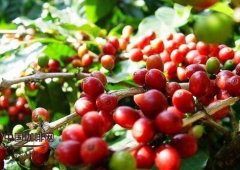
Zaire coffee grows Arabica coffee in the northeast of the country
Boutique coffee is fresh coffee. Whether it's food or drink, of course, the fresh the better, and so is boutique coffee. High-quality coffee should keep the coffee beans fresh before making, including the preservation of baked beans, and grind the coffee beans into powder before making, which is also to retain its original and best flavor. And the way of making hand-made coffee is such a way to make high-quality coffee.

Two common coffee tree species: Arabica and Robusta
Two common coffee trees: Arabica and Robusta. Arabica coffee grows best at high altitude. this coffee has a much more refined flavor than other coffee, and its caffeine accounts for only 1% of the total weight of coffee. Robusta coffee has a mellow taste, strong resistance to diseases and insect pests, and high yield per plant. This kind of coffee grows

Introduction to Arabica species, the main species of coffee trees
The first is Arabica beans, which account for 70% of the world's output. The world-famous Blue Mountain Coffee and Mocha Coffee are almost all Arabica. The other is the Robasta species, which is native to the Congo in Africa and accounts for about 20% to 30% of the world's output. Different varieties of coffee beans have different tastes, but even the same varieties of coffee trees

How Kenya Coffee Relates to Arabica Beans
Kenya coffee is a top-tier example of the Arabica species, known for its bright acidity and fruitiness. Learn how Kenya beans fit into the global Arabica story.

Main Coffee Varieties: Arabica, Robusta, and Liberica Explained
Learn about the three main coffee species—Arabica, Robusta, and Liberica—and discover key single-origin beans like Jamaican Blue Mountain and Kenyan AA.

Arabica, Robusta & Liberica: Coffee Bean Types Explained
Learn the key differences between Arabica, Robusta, and Liberica coffee beans—growth altitude, caffeine levels, flavor profiles, and global production.

Wild vs. Farmed Kopi Luwak: Robusta vs. Arabica
Learn the difference between wild and farmed kopi luwak beans—most wild come from Robusta, while farmed is often fed Arabica cherries.

How Many Arabica Subspecies Grow in Ethiopia?
Ethiopia may host over 2,000 unique Arabica varieties—some say 4,500—with wildly varying cup profiles and appearances. Here's what we know.