
Coffee Arabica
Latest articles, industry insights and brewing guides

Kenya Coffee Estate Arabica Coffee Estate Introduction Boutique coffee beans
Arabica and Rochester: Arabica: 60% of global production, best grown at high altitudes, lower temperatures and lower yields. It has a stronger flavor, more body and acidity (please email me if you want to know more about coffee tasting definitions of body and acidity); about 1% caffeine (by weight); high price: robert accounts for 40% of global production,

Introduction to Arabica Coffee in Fine Colombian Coffee
Colombian Coffee growers High quality Coffee Arabica Coffee in Colombian Coffee Arabica Coffee has to be mentioned in Colombian coffee species (scientific name Coffee Arabica). Arabica coffee trees grow between 900m and 2000 m above sea level; they are hardy, and the suitable growth temperature is 1524 ℃; they need more humidity and the annual rainfall is not less than 1500 mm.

Colombian Arabica Coffee Coffee Coca Cauca introduces Fine Coffee
Columbia Super Coffee, which is green, green and fragrant, is an excellent variety of Arabica coffee. It is a traditional deep-roasted coffee with a strong and memorable flavor. Colombia, located in the northwest of South America, is a beautiful country with a long history. Indians have lived in this land since ancient times.

Ugandan coffee producing regions that produce only small amounts of Arabica beans
Later, when ships replaced sailboats, people drank fresher coffee beans because of shorter delivery times. But people accustomed to old beans are not used to this fresh taste, so they desperately pursue old Java coffee, so that the Indonesian government and some businessmen deliberately store fresh beans in warehouses for one to two years before selling them to consumers. In fact, aged Java beans are more common than fresh beans.
Introduction to the flavor of Ugandan coffee producing areas that produce only a small amount of Arabica beans
Later, when the ship replaced the sailboat, due to the shortened delivery time, people drank relatively fresh coffee beans. But people who are used to drinking Chen beans are not used to the fresh taste, so they desperately pursue old Java coffee, so that the Indonesian government and some businessmen deliberately store fresh beans in warehouses for one or two years and then sell them to consumers. In fact, compared with fresh beans, aged beans

Produced in the Ecuadorian Arabica Coffee San Cristobal region of the Andes
Because of the unique role of the Galapagos Islands in the course of history, the Government of Ecuador has designated the Galapagos Islands as a national park, the land is no longer allowed to be reclaimed as new agricultural land, and the introduction and use of chemical fertilizers, pesticides, herbicides and other chemicals are strictly prohibited, so coffee produced in the Galapagos Islands is recognized as a natural product. It's increasing. The best Arabica coffee.

Introduction of Kenya Coffee producing country of Arabica Coffee Tree Origin
Kenya is bordered to the north by Ethiopia, the origin of Arabica coffee trees, but it was not until the beginning of the 20th century that coffee cultivation began. In the 19th century, missionaries introduced Arabica trees from Yemen, but did not plant them in large quantities until 1893. Brazil's ancient bourbon coffee seeds were introduced to cultivate coffee on a large scale. In other words, the current Kenyan coffee is of Brazilian origin.

Kintamani Arabica Coffee Manor in Indonesian Coffee producing area
Is the taste of Ruwak coffee Kopi Luwak really directly related to civets? The answer given by scientists is yes. First of all, Luwak is a natural expert at choosing coffee fruits. It is used to foraging at night, every night out in the coffee garden looking for treasure, with a keen sense of smell, will only look for jujube mature coffee fruit to eat, other not great will not eat, so by

Washed Arabica coffee Lute Xilo producing area in the western province of Rwanda
Rwanda coffee is absolutely high quality in the form of washed Arabica beans. As far as Africa is concerned, its coffee industry is remarkable because the country thrives mainly by producing the best possible coffee beans. Coffee from Rwanda is becoming more and more popular in the international market. The mission of the Rwandan Coffee Association is to manage and supervise the coffee industry in Rwanda from production to sales.

Introduction of washed coffee beans in Papua New Guinea Arabica Bean Paradise Bird Manor
The coffee production in Papua New Guinea is not very high, and its coffee beans are carefully washed Arabica beans. Generally washed coffee beans are full of bright fruit aromas, but do not have a strong acidity. It is characterized by a silky soft taste and excellent aroma, moderate acidity, and is a relatively rare variety of high-alcohol and medium-acidity coffee, regardless of

Fragrant and full-grained Rwandan Arabica Coffee washing method
Rwanda Coffee Market: Rwanda Coffee is absolutely high quality in the form of washed Arabica beans. As far as Africa is concerned, its coffee industry is remarkable because the country thrives mainly by producing the best possible coffee beans. Coffee from Rwanda is becoming more and more popular in the international market. The mission of the Rwandan Coffee Association is to manage and supervise the coffee production in Rwanda.
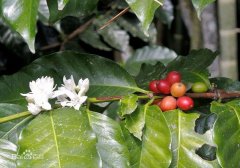
Income of coffee farmers grown in shade coffee tree Arabica coffee beans
First of all, there are some reasons why shade planting has become an advantage. When coffee is planted in the shade of other vegetation, biodiversity provides favorable conditions for its growth. Native plants that provide shade for coffee range from forest plants such as cedar to fruit trees such as banana, orange, lemon, avocado and litchi.
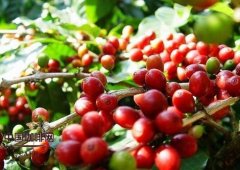
Santa rita Manor Santa Rita, the largest Arabica coffee bean in the world.
Boutique coffee is fresh coffee. Whether it's food or drink, of course, the fresh the better, and so is boutique coffee. High-quality coffee should keep the coffee beans fresh before making, including the preservation of baked beans, and grind the coffee beans into powder before making, which is also to retain its original and best flavor. And the way of making hand-made coffee is such a way to make high-quality coffee.

Ethiopian Arabica Coffee Sidama Region Lion King Coffee
Even the official Ethiopian research unit cannot say how many Arabicans there are in Ethiopia. Coffee cooperatives on one mountain certainly grow different varieties than those on another, and even small farmers in the same area grow different varieties of coffee. Some estimate that there are at least 2,000 varieties of Ethiopian coffee, and there are even more than 4,500 varieties. Compared to the southern neighbor, Ken

Bitter and fragrant, delicious Arabica coffee in Guatemala
Guatemalan coffee is deeply bitter and fragrant. The coffee produced in the highland is mellow and has a good sour taste. It is well received and is the best material for blended coffee. Coffee variety: Arabica (Arabica): accounts for 85% of total coffee production, including Brazil, Colombia, Guatemala, Ethiopia and so on. Beans are turquoise, beans are thin and have special fragrance and sweetness

Introduction to Uganda Java Coffee Arabica beans Robbite Coffee beans
Java produces only a small amount of Arabica beans, most of which were imported from Africa after the rust disaster. This kind of coffee has a strong bitter taste after roasting, but its flavor is extremely light. Although it has low acidity and delicate taste, it is rarely used for direct drinking. It is often used to mix mixed coffee, or to make instant coffee. Later, when the ship replaced the sailboat, the shipping time was shortened.

Rwanda coffee producing country, one of the original varieties of Arabica coffee
Rwanda coffee is absolutely high quality in the form of washed Arabica beans. As far as Africa is concerned, its coffee industry is remarkable because the country thrives mainly by producing the best possible coffee beans. Coffee from Rwanda is becoming more and more popular in the international market. The mission of the Rwandan Coffee Association is to manage and supervise the coffee industry in Rwanda from production to sales.

Salvadoran coffee beans of Arabica variety with jasmine and melon and fruit aromas
Product name: coffee raw bean variety: Arabica producing country: El Salvador planting altitude: 1600-1800 m treatment method: dense treatment specification: 50kg/ taste description: with jasmine, melon and fruit aroma, sweet ripe apple aroma, rich chocolate pulp taste mild El Salvador coffee El Salvador (El Salvador) is a small country in Central America

An introduction to the coffee producing areas of Kenya that are suitable for growing Arabica beans.
The first coffee grown in Kenya dates back to 1893. Coffee was later grown on a large scale by the British on the plateau at an altitude of 1400 to 2100 meters, where there is volcanic ash soil rich in organic matter. In fact, most coffee is now grown on the flatter slopes around the snow-capped Mount Kenya (the main peak is 5199 meters high), and all of Kenya is located in the tropical monsoon.