
Coffee Farm
Latest articles, industry insights and brewing guides
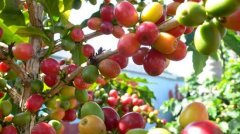
Philippine Coffee Variety Robbins Terrika Exelsa Arabica Coffee beans
The growth environment of boutique coffee beans also has higher requirements. Generally grow at an altitude of 1500 meters or even more than 2000 meters above sea level, with appropriate precipitation, sunshine, temperature and soil conditions. Some world-famous coffee beans also have a special geographical environment, such as the alpine clouds in the Blue Mountains, the free shade provided by the afternoon clouds in Kona, and the volcanic ash soil in Antigua.

The basic practice of Mexican Coffee introduces the varieties of Aldura Coffee
Mexicans are enthusiastic and optimistic, and the chocolates in Mexican coffee perfectly reflect this. There are different methods of Mexican coffee, but the main difference is whether it contains alcohol or not. let's first introduce the practice of non-alcohol. Heat a cup of milk, a teaspoon of cinnamon powder and a teaspoon of vanilla powder in a pot. Keep it at medium temperature. The heat is not too high. The milk must not boil. And then join.

Coffee Java, Sumatra (Blawan), Sulawesi (Sulawesi), Florida
Boutique coffee has a strict grading system. Generally, raw beans are preserved in parchment coffee beans in the form of endocarp after processing, and the endocarp is removed before export. Go through a strict grading process to ensure the uniformity of quality. And it is very important to preserve the protection in the process of transportation, such as the control of temperature and humidity, the control of ventilation, avoiding odor adsorption and so on.

The main producing areas of Galapagos Coffee introduce the boutique coffee producing area of San Cristobal.
The Galapagos Islands are about 300km from east to west and 200km from north to south (another source: 300km from north to south) and about 1000 km from the South American continent (about 1 hour and 30 minutes by air from Quito, Ecuador). It is a group of marine islands formed by lava deposits uplifted from the sea floor. The largest island in the archipelago is Isabella, which covers an area of 4588 square kilometers.

The coffee produced in the three coffee-growing areas of Puerto Rico has a strong aromatic flavor.
Yaocote's choice of coffee, which is grown only on three farms in the southwest of the island, has a long aftertaste. This kind of coffee is very expensive and its flavor is comparable to that of any other coffee variety in the world. In the Yauco area, the coffee is owned and operated by local planters. The mountain climate here is mild, the plants have a long ripening period (from October to February), and the soil is of good quality.

75% of the coffee-producing countries come from the coffee-producing areas of Papua New Guinea on small farms.
However, it is almost inevitable that the surge in production leads to a decline in quality. Before 1991, the quality of coffee was good, and most of it belonged to open Y and so on. After 1991, the quality gradually declined, and then the European market was lost.

Guatemala Coffee Volcano producing areas Atitlan, Waijangs Plateau, Mini Nanguo Highlands
. Traditional Traditional Atitln is one of the five largest volcanic coffee producing areas in Guatemala, and its soil organic matter is the most abundant among the five major volcanic coffee producing areas. 90% of the traditional Atilan coffee is grown on the violent volcanic slopes of Lake Attilan. The daily breeze stirs the lake water, which is an important factor affecting the microclimate and environment of the region.

The topographical and climatic conditions in Kenya are very suitable for the growth of high-quality coffee.
Kenyan coffee dates back to 1893. Coffee was later grown on a large scale by the British on the plateau at an altitude of 1400 to 2100 meters, where there is volcanic ash soil rich in organic matter. In fact, most coffee is now grown on the flatter slopes around the snow-capped Mount Kenya (the main peak is 5199 meters high). Kenya is located in the tropical monsoon area.

High quality coffee Honduras coffee beans San Juan Xido producing area
Honduras produces two kinds of coffee of very good quality, which are highly respected by coffee lovers. One is the highland coffee growing at 1000-1500 meters above sea level, and the other is the selected highland coffee growing at 1500-2000 meters above sea level, which represents the highest level in Honduras. Most of the Honduran coffee is exported to the United States and Germany. The granules of coffee beans in Honduras are more shaped than those in Honduras.

Varieties and planting areas of Salvadoran Coffee Siberia Manor in Kuskabapa region
The civil war in coffee varieties caused chaos and affected economic development, but ironically allowed coffee antiquities to be preserved, and the situation was so chaotic that coffee producers in El Salvador failed to catch up with the renewal of coffee varieties in Central and South America. El Salvador produces 100% Arabica coffee, of which 68% is Bourbon, Coffea arabica var. Bourbon), 29% Pa

Tarasu, Costa Rica, the most important coffee producing area in the world.
Tarasu in Costa Rica (T-producing area arrazu) is one of the major coffee producing areas in the world. The coffee produced is light and pure in flavor and pleasant in aroma. Costa Rica, with its fertile volcanic soil and good drainage, is the first country in Central America to grow coffee and bananas for commercial value. Coffee and bananas are the country's main exports. Extra hard beans of high quality.

Full-grained Costa Rican coffee Tarasu producing area
Costa Rican coffee has full particles, ideal acidity and unique strong flavor. Costa Rica's coffee industry, originally controlled by the Costa Rican Coffee Industry Company (InstitutodelCafdeCostaRica, ICAFE), has been taken over by the official Coffee Committee (OficinadelCaf). In exported coffee, those products that are considered to be of substandard quality are used in blue.
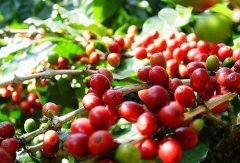
Fine Coffee from Farfell Coffee Plantation in Zimbabwe
Boutique coffee has a strict grading system. Generally, raw beans are preserved in parchment coffee beans in the form of endocarp after processing, and the endocarp is removed before export. Go through a strict grading process to ensure the uniformity of quality. And it is very important to preserve the protection in the process of transportation, such as the control of temperature and humidity, the control of ventilation, avoiding odor adsorption and so on.

Introduction of coffee varieties in Colombia coffee producing countries located in northwestern South America
Colombia, located in the northwest of South America, is a beautiful country with a long history. Indians have lived on this land since ancient times. It was colonized by Spain in 1531 and gained independence in 1819. It was renamed in 1886 to commemorate Columbus, the discoverer of the American continent. In 1808, a priest transferred coffee from the French Antilles to Venezuela.

The Best Coffee in Zaire Coffee is grown in the northeast of Zaire Coffee.
Boutique coffee has a strict grading system. Generally, raw beans are preserved in parchment coffee beans in the form of endocarp after processing, and the endocarp is removed before export. Go through a strict grading process to ensure the uniformity of quality. And it is very important to preserve the protection in the process of transportation, such as the control of temperature and humidity, the control of ventilation, avoiding odor adsorption and so on.
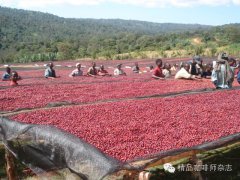
What kind of coffee is high quality Zambian coffee suitable for in the afternoon? Kasama Coffee Origin
Boutique coffee has a strict grading system. Generally, raw beans are preserved in parchment coffee beans in the form of endocarp after processing, and the endocarp is removed before export. Go through a strict grading process to ensure the uniformity of quality. And it is very important to preserve the protection in the process of transportation, such as the control of temperature and humidity, the control of ventilation, avoiding odor adsorption and so on.

Panamanian Poquet Butterfly Coffee beans, one of the excellent coffee recognized by coffee connoisseurs.
However, in recent years, Panama has actively promoted the fine coffee industry and sold its high-quality coffee beans at auctions, so Panamanian coffee has gradually attracted the attention of the world again. Good Panamanian beans with a clean, clear, bright and gentle taste and medium mellow performance are amazing. It is one of the excellent coffee recognized by coffee connoisseurs. There are many excellent coffee in the Pokuit region.

Arusha, a coffee-producing region in the highlands of northern Tanzania
In the past, the coffee industry in Tanzania has been dominated by manor cultivation, but now more than 85% are grown by small farmers. Many small farmers are combined into cooperative organizations, the most important of which is the Kilimanjaro Cooperative Alliance (Kilimanjaro Cooperative Union, referred to as KNCU). Tanzanian coffee is auctioned by the Tanzanian Coffee Management Committee (Tanz)

High altitude mountain coffee growing environment Chilmel Manor in Lutesilo producing area of the western province of Rwanda
Coffee has been grown since the colonial era. although the crops are mainly coffee, the quality of coffee produced by Lu is not outstanding, and its status in the coffee world is low, and few people pay attention to it. Most of the coffee varieties grown in Rwanda are bourbon. Rwanda, known as the country of a thousand hills, has a high-altitude mountain environment, fertile volcanic soil and abundant precipitation, which is conducive to the growth of coffee trees.

Uganda (Uganda) quality coffee beans Ruwensori mountain Ergon (Elg)
Boutique coffee has a strict grading system. Generally, raw beans are preserved in parchment coffee beans in the form of endocarp after processing, and the endocarp is removed before export. Go through a strict grading process to ensure the uniformity of quality. And it is very important to preserve the protection in the process of transportation, such as the control of temperature and humidity, the control of ventilation, avoiding odor adsorption and so on.