
Coffee Farm
Latest articles, industry insights and brewing guides

The size of coffee beans in a French kettle. Coffee production in El Salvador:
ElSalvador is one of the small countries in Central America with a dense population. The flavor of its coffee is characterized by excellent balance. Coffee production in El Salvador: like Guatemala and Costa Rica, coffee in El Salvador is graded according to altitude, and the higher the altitude, the better the coffee. The best brand is Pipil, which is the Aztec Mayan (A

The Benefits and Disadvantages of Drinking Coffee Nigeria Harald Coffee Beans
The following six people should not drink coffee: suffering from high blood pressure, coronary heart disease

Characteristic origin of Costa Rican coffee
Costa Rican coffee is characterized by full granules, ideal acidity and unique strong aroma. Costa Rica's coffee industry, originally controlled by the Costa Rican Coffee Industry Company (InstitutodelCafdeCostaRica, ICAFE), has been taken over by the official Coffee Committee (OficinadelCaf). Among the coffee exported, those products that are considered to be of substandard quality

Types and characteristics of coffee beans the color of coffee washed by semi-washed coffee
It is a kind of pure coffee with unique characteristics. Columbia Coffee (COLOMBIA) Columbia coffee is the most characteristic of SUPREMO, its coffee is soft and mellow, with slight acid to medium acid, its quality and flavor are stable, it is a medium coffee, it is used to prepare the top grade of comprehensive coffee. MANDELING coffee is the most representative coffee produced in Indonesia and Sumatra.

Sweeteners in coffee. Coffee additives.
The most common coffee additives are dairy products and sweeteners. Among sweeteners, most people only add white sugar, but there are many ways to sweeten coffee, such as honey, agave nectar, molasses, syrups and artificial sweeteners. Sugar Sugar is the most common sweetener in hot coffee. Different types of sugar have different flavors. Brown sugar, for example, has a richer flavor than white sugar.

Coffee beans-Origin coffee beans-benefits
Coffee beans-Origin Coffee Bean Coffee Grinder Legend 1: the Story of the Shepherd around the 10th century AD, on the Ethiopian plateau in Africa, there was a shepherd named Karl. One day he suddenly looked very excited and excited when he saw the goat. He found it strange. After careful observation, he found that the sheep were excited after eating some kind of red fruit.

Yunnan Coffee Bean
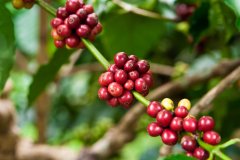
The west and south of Yunnan Province are located between the 15th latitude and the Tropic of Cancer. Most of the areas are 1000-2000 meters above sea level. The terrain is mainly mountainous and sloping, with large undulations, fertile soil, sufficient sunshine, abundant rainfall and large temperature difference between day and night. These unique natural conditions form the particularity of Yunnan Arabica coffee taste, which is strong but not bitter, fragrant but not strong and slightly fruity. 50 years ago
Coffee blending and coffee roasting talk about coffee boutique coffee
People's tongues, noses, and receptors for different tastes also have different receptivity at different temperatures. Sour things will be more peaceful at high temperatures (such as Hot Lemon Tea). If you drink some single coffee, which is mainly sour, you will find that the hot coffee is not sour when drinking, but feels very sour when it gets cold, that is, the decrease in temperature affects us.

Botanical classification of coffee beans
Coffee tree belongs to the evergreen tree of Rubiaceae. Since ancient times, most of the plants of Rubiaceae are plants with special effects, such as quinine tree, which is regarded as a specific drug for malaria, and Dugan, which is used to treat amoeba dysentery. Coffee is defined as the most unique alkaloid drinking flora. Usually after sowing for two to three years, coffee trees can grow to a height of about five to ten meters, but to prevent coffee beans from losing their aroma and flavor.

Where is the country of origin of coffee?
Mexican coffee production in Central and South America is concentrated in the south near Guatemala, with mountains running through the east and west, making its mountains tilted, making it an ideal terrain for coffee cultivation. Coffee cultivation is still common. According to the order, the highland is classified into three kinds of high-yield coffee: Arudora, Prima, Rabad and Barnabad. Coffee beans range in size from medium to large.

The difference between coffee powder and coffee beans in a standard latte cup
In a broad sense, there are two kinds of coffee beans in the world, Arabica beans and Robosta beans. The earliest Arab way to eat coffee was to chew the whole fruit (Coffee Cherry) to absorb its juice. Then they mixed the ground coffee beans with animal fat as a physical supplement for long trips, and it was not until about 1000 AD that the green coffee beans were used.
Yemeni Coffee Coffee hometown Moka Fine Coffee
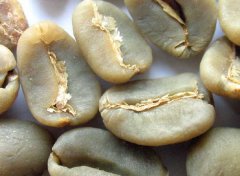
Yemen is located in the Arabian Peninsula of the Asian continent, across the Red Sea and Africa, generally classified as African beans. When it comes to Yemen, what most people think of directly is Mocha! In fact, Mocha is a port in Yemen. in the past, almost all the attached coffee was exported from the port of Mocha, and all mocha became synonymous with coffee and has been in use ever since. In fact, the port of Mocha has been around for a long time.

The classification of coffee beans is introduced.
Countries that produce coffee beans Brazil is the largest exporter of coffee beans in the world, followed by Colombia. These two Central and South American countries account for more than half of the world's coffee production, and the quality is stable. Vietnam has developed rapidly in recent years and has become the second largest coffee exporter in the world. Other countries and producing areas, such as Indonesia, Ethiopia, Guatemala

The classification of coffee beans introduces the cup size of coffee shops.
Countries that produce coffee beans Brazil is the largest exporter of coffee beans in the world, followed by Colombia. These two Central and South American countries account for more than half of the world's coffee production, and the quality is stable. Vietnam has developed rapidly in recent years and has become the second largest coffee exporter in the world. Other countries and producing areas, such as Indonesia, Ethiopia, Guatemala

Basic knowledge of boutique coffee, the birthplace of coffee
As the birthplace of coffee, African coffee plays an important role in the whole coffee industry. Although the commercial cultivation of coffee has been developed around the world for hundreds of years, the unknown wild coffee varieties in Africa are still the greatest treasure in the hearts of coffee researchers. African coffee is generally characterized by strong aroma and charming acidity, and its sour taste is lively and lively.

Asian Yunnan coffee Chinese coffee beans
When it comes to Asian coffee, the first impression of coffee lovers is often calm and calm. Asian coffee is generally characterized by thick flavor, strong sweetness and round taste, but slightly flat aroma and brightness. It is precisely because of the heavy nature of Asian coffee that it is very suitable to be used as a base when making Italian coffee. Raw coffee beans in Asia are generally processed by wet or semi-wet methods.

Coffee producing area and blending principle of famous Coffee
1. The main coffee beverage in the world is made from the extract of coffee beans. Coffee beans are a pair of beans wrapped in a hard shell inside the coffee fruit. There are two ways to take out coffee beans. One is to spread out the coffee fruit and expose it to the sun for about 3 weeks. After the coffee fruit is quite dry, peel off the pulp and shell with mechanical force, and take out the coffee beans. The other method is to use

The characteristics and types of coffee beans does the coffee machine have to be cleaned every time you drink it?
● Ethiopia (Africa) Arabica coffee is the hometown of Arabian coffee, which grows at high latitudes and needs a lot of manual care. This is the famous Esopiamoca, which is similar to wine in acidity, fragrance and high yield. Unfortunately, some farmers do not know the benefits of picking fruits and allow them to pick them up from the ground after falling, but in recent years, due to the continuous expansion of the market

The Cultural course of Coffee in Papua New Guinea
The law of history always tells us that a heterogeneous new civilization must bring a period or a certain degree of loss and pain to the recipient. But the situation in Papua New Guinea looks even worse, and what is happening there can only be described as chaos and bloodshed. No one can say exactly why. Frequent violence, endless tribal vendetta, lack of resources

The history of coffee in Indonesia introduces how coffee grounds can be shaped.
A brief History of Coffee in 1696, the Governor of the Netherlands in Malabar, India, gave a batch of coffee seedlings to the Governor of the Netherlands in batavia in Batavia (present-day Jarkata in Jakarta). This was the first time that coffee was grown in Indonesia. However, the first batch of coffee seedlings were washed away by the flood. In 1699, Batavia received the gift again. This time, the coffee seedlings survived and came first in 1701.