Coffee Bean
Latest articles, industry insights and brewing guides
Coffee Bean producing area-Oceania-Australia (Australia)
Well-known representative coffee: Australian Coffee Australia began to grow coffee around 1900, with both Robasta and Arabica species, mainly in eastern Australia, roughly distributed in northern New South Wales (New South Wales), around Queensland (Queensland), and Norfolk Island Island. Northeast Queensland is the famous Skybur.
Basic knowledge of boutique coffee beans Arabica coffee
Arabica coffee (Coffee.Arabica): also known as Arabica coffee, its taxonomic position was determined by Linnaeus in 1753. It can produce Arabica coffee (C.Arabica) beans, which can be called high-quality coffee beans in the world and the only coffee that can be drunk without any ingredients. It accounts for about 70% of the world's total coffee production. Arabica coffee (C
Varieties of boutique coffee beans robastian coffee
Robastian coffee (Coffee. Robustra): more precisely, C. canephora Robustra can produce robastian beans. Because of its poor taste, it contains 2-3 times as much caffeine as Arabica coffee (C.Arabica). It is usually used for the production of instant coffee and Arabica coffee (C.A) in the large coffee industry.
Premium Coffee varieties Crystal Mountain Coffee beans
Crystal Mountain is a coffee comparable to Blue Mountain. Cuban Crystal Mountain Coffee is characterized by large granules and bright green raw beans. Crystal Mountain Coffee is full of Caribbean amorous feelings, sweet and delicate, slightly sour, slightly bitter and slightly sweet like wine, detailed taste and hazelnut taste, and a faint hint of tobacco after a slight reduction in temperature. a lot of taste.
Boutique coffee bean knowledge 4C coffee certification
4C certification is a widely accepted management rule in the world, which involves the sustainable development of coffee cultivation, production, processing and other aspects of the supply chain, including social, environmental and economic principles. Coffee practitioners are required to protect biodiversity, protect all kinds of national endangered animals and plants, correctly use and handle pesticides and other chemicals, protect the natural environment and
About "bean queen" boutique coffee Kona coffee beans
Hawaiian Kona coffee is indeed a treasure in the world and is not easy to find. The best Kona coffee is divided into three grades: ExtraFancy, Fancy and NumberOne. This third-class coffee is produced on manors and under natural conditions. But most of the coffee on the market that calls itself Kona contains less than 5% of the real Hawaiian Kona coffee. Another kind of no can be found in the United States.
Coffee beans Common sense fresh coffee beans can grind good coffee
The soul of coffee flavor is fresh, so no matter which country produces it, which manufacturer processes it, or which merchant sells it, the most important thing for coffee beans is to ensure freshness. Generally speaking, the best drinking period for coffee is two weeks after baking, when the coffee beans are the freshest and the Aroma taste is the best. Look at: look at shape and color. Okay, the coffee bean shape is over.
The growth and change of coffee fruit the color change of coffee in a lifetime
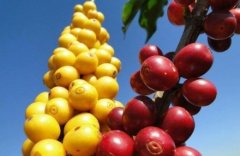
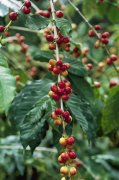
Coffee has undergone several color changes from seed to cup. The coffee tree has white flowers, and the coffee fruit is born dark green, which gradually changes to yellow in the process of ripening and finally becomes red. The raw coffee bean is wrapped in the coffee fruit, washed, dried and processed before it becomes a coffee seed wrapped in yellow parchment and then shelled and polished into jade.
Basic knowledge of Fine Coffee beans Table of ingredients of raw coffee beans
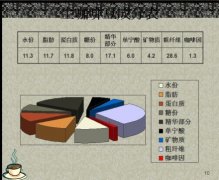
Do you know the ingredients of raw coffee beans? A list of ingredients that will teach you to read the ingredients of coffee. The content of water, fat and protein is still quite high.
Common sense of coffee beans what do you need to pay attention to when buying raw coffee beans
The raw bean seller is mainly responsible for grading the coffee beans before selling them to the coffee bean merchant. After the grading is completed, premium coffee beans and boutique coffee beans will be selected, although they will have some defects but do not affect the coffee rating. These defects are not so serious, but they can also cause potential damage to the quality of coffee. Although Cupping is undoubtedly the most definite way to check coffee beans.
Chinese boutique coffee bean variety Yunnan coffee variety
Typica and Bourbon, two classic high-quality coffee varieties, are the main coffee varieties in Yunnan. In 1991, a series of Catimor varieties were introduced from Kenya (stronger anti-virus ability and higher yield). A variety of Arabian species (also known as small seed species). Because the morphology and habits of the two varieties are similar, the two varieties are mostly mixed. Yunnan area
Characteristics and attributes of coffee from eight major producing areas of Guatemala
The Ekatlago Valley is 2000 meters (6500 feet) above sea level, with dense shade and unique ecology. The nearby Fuego volcano erupts, making its coarse, sandy soil rich in a variety of minerals. Temperate sea breezes from the Pacific and a seasonal climate allow coffee in this region to be dried by sunlight and processed according to traditional family methods that have been accumulated over the years. [characteristics]
Basic knowledge of boutique coffee beans do coffee beans divide male and female?
If you are interested in Baidu, you will see some articles describing the separation of male and female coffee beans, and mention that the flavor of male beans is better than that of mother beans. In fact, as a hermaphroditic, self-pollinating plant, there is no distinction between male and female in the seeds of coffee trees. In a normal fresh coffee fruit, the spherical coffee seed is composed of two coffee beans together, the plane is relatively inward, and the arc is outward.
The training knowledge of fine coffee is about the picking of coffee beans.
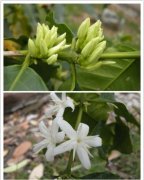
Coffee trees usually blossom in 3-4 years, about 2-3 months a year, and their appearance and smell are similar to those of jasmine. when they bloom, they grow in clusters on the branches and bloom for 3-5 days. After the flowers bloom, they bear small green fruits, which ripen and turn red into ripe fruits that can be picked after a few months. The skin of ripe fruit is red. Because its shape and color are similar to cherries, ripe coffee fruit is called coffee cherry in many places.
The basic knowledge of Fine Coffee Bean
All kinds of coffee beans have different tastes, but they are almost the same size, but the elephant bean is different, it is three times or more than other coffee beans. The taxonomic name of elephant bean is Maragogipe (also known as Maragogype), which comes from Malagogippe County, Bahia State, Brazil. The taxonomic status of elephant beans was first established in the county in 1870. Arabica coffee
Know the knowledge of fine coffee, raw beans and elephant beans.
All kinds of coffee beans have different tastes, but they are almost the same size, but the elephant bean is different, it is three times or more than other coffee beans. The taxonomic name of elephant bean is Maragogipe, which comes from Malagogippe County, Bahia State, Brazil. The taxonomic status of elephant beans was first established in the county in 1870. A hybrid variety of Arabica coffee.
Detailed Analysis of the components of High-quality Coffee beans
★ volatile compounds: volatile compounds are the main source of coffee flavor, especially important for coffee quality. There are many kinds of volatile substances in coffee, and their existence will affect the aroma quality of coffee. Its main source is derived from non-volatile substances in raw beans which are disconnected or derived after reaction in the process of roasting. The role of thermal decomposition, other reactions, or compositions, such as sugar.
Coffee knowledge introduces the distinction between raw beans, new beans and old beans
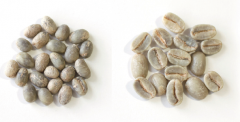
After dry and wet processing, coffee fruit becomes coffee raw bean (Raw bean/Green bean). The main components of raw beans are: carbohydrates, about 49%; moisture, about 12%; protein. About 11%; chlorogenic acid, about 7.6% alkaloids and trace elements, about 0.4%. According to the length of time, raw beans can be divided into: seasonal beans (Current Cro)
Introduction to the origin of boutique coffee beans Salvadoran coffee
Salvadoran coffee ranks side by side with Mexico and Guatemala as the producers of Asa and Merdo, and is fighting for the top one or two places in China and the United States with other countries. The highlands of origin are large coffee beans of all sizes, which are fragrant and mild in taste. Like Guatemala and Costa Rica, coffee in El Salvador is graded according to altitude, and the higher the altitude, the better the coffee
Fine coffee bean basic coffee bean grinding terminology
Caffeine: caffeine is the most eye-catching of all the ingredients in coffee. It is a kind of phytoxanthin (animal muscle component). It has the same properties as theobromine contained in cocoa, green tea contains the same theophylline, and the percentage of reduction after baking is very small. Caffeine has a very wide range of effects. will affect the human brain, heart, blood vessels, gastrointestinal, muscle and kidney and other parts, the right amount of caffeine