
"15th"
3000 article(s) found

When did coffee become popular?
The cultivation and production of coffee in the 17th century was monopolized by Arabs. It was used mainly in medicine and religion, doctors and monks recognized coffee as refreshing, refreshing, invigorating, strengthening, hemostatic, etc.; the use of coffee began to be documented in the early 15th century, and it was incorporated into religious ceremonies during this period, as well as appearing in folk as a daily drink. Islam

A brief introduction to the description of the flavor and aroma characteristics of the fine coffee bean Yega Chefevoca
Traditionally, Yega snow coffee is treated by the oldest sun treatment, but in 1972, Ethiopia introduced water washing technology from Central and South America in order to improve its quality, which made its jasmine and citrus fragrance clearer and more refined. It has become the best product of the world's boutique beans, thanks to its exquisite washing technology. After the 1970s, this area was mainly washed and became the most popular in Egypt.

Coffee and the Pope
From the 15th century coffee was grown in great quantities in Arabia, and the whole Muslim world enjoyed this so-called gift of God. More and more Europeans exploring Arabia in the Middle East are curious and documenting the coffee story. Slowly Venetian merchants began to think about coffee re-export business. However, the Arabs were wary at first. After all, this was their divine fruit.

The taste of Ugandan coffee is lubricated. Introduction to the characteristics of fine coffee in manor area.
There was an emirate called Kitala in present-day western Uganda before the 13th century AD. In the 13th and 14th century, the nomadic Bachwezi conquered the country. From the end of the 15th century to the beginning of the 16th century, the Luo people who originally lived in southern Sudan went south to replace the rule of the Bachwezi, established the kingdom of Buniolo and established the Babito dynasty in Buganda. These foreign rulers were soon engaged in local farming.

A brief introduction to the fresh and bright sun Yega Shifeiwaka boutique coffee bean planting market price
[hand flushing data] [sun Yega Xuefei]: it is recommended to use 15 grams of powder 89 degrees water temperature, small Fuji grind degree 4 pearl V60 filter cup, water powder ratio 1:15, the first water injection 30g, steaming for 25s, the second water injection 104g water cut off, the second water injection to 230g water, the water at the end of the section is not needed, the extraction time is about 215g powder 92 degrees water temperature, water is recommended.

Coffee history and culture common sense where does coffee come from?
Around 900 AD, when a shepherd in the Cafa region of Ethiopia was grazing in the mountains, he found that the sheep were competing for a kind of red berry. After eating, the sheep were jubilant, and the shepherd was worried all night that his sheep had eaten some harmful food. Who knew the sheep were safe and sound the next day. This unexpected discovery prompted the shepherd to collect this wild fruit and boil juice to quench his thirst.
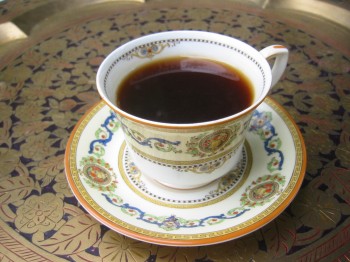
Zheng he's voyages to the West promoted the historical popularization and development of coffee in the world.
In the early days, coffee was a functional ingredient, and it was also a formula for doctors, which could not be used by ordinary people. it was not until after the 15th century that coffee was gradually turned into a civilian ingredient. Aestheticians who study the history of coffee development have noticed that the Ming Dynasty Emperor Tai Jun and the Arab countries near the sea were created by a large number of countries from 1405 to 1423. And phase

Coffee leaf rust the annual meeting of the Hawaiian Coffee Association will be held soon to solve the problem of coffee leaf rust.
After a year of double whammy of human and plant diseases, the Coffee Association of Hawaii (the Hawaii Coffee Association) is preparing to hold its online conference and cup test contest in 2021. Online meeting and the 12th State Coffee of Hawaii

History of coffee tree cultivation Importance of bean grinder
In fact, Arabs began growing coffee in 525 BC, and chewing roasted coffee beans became popular in Arabia. In 890 AD, Arab merchants sold coffee beans to Yemen, and Yemen made coffee beans into a beverage for the first time. In the 15th century, coffee was introduced into Europe, Asia, and soon into America. By the 18th century, the tropics and subtropics of the globe were widespread.

Switzerland plans to cancel the emergency storage of coffee because it is not necessary for life support.
Professional coffee knowledge exchange more coffee bean information please follow coffee workshop (Wechat official account cafe_style) Switzerland announced on the 10th a plan to abolish the decades-old emergency reserve system for coffee beans, because relevant authorities have previously announced that coffee beans are not essential for human survival, but opposition is brewing. The Swiss government says the national economy supplies federal offices.

Yemen Mocha Hirazi Region Ismaili Wild Mocha Coffee Bean Features Taste Origin
Professional coffee knowledge exchange More coffee bean information Please pay attention to coffee workshop (Weixin Official Accounts cafe_style) Yemen Mocha Hirazi production area Ismaili wild coffee varieties flavor? The origin of wild coffee is probably Ethiopia in northeast Africa. In the 15th century AD, it spread to Yemen in southern Arabia and was cultivated artificially. ten

Introduction to the History of Coffee Tree species History of Botany
In fact, the Arabs began to grow coffee in 525 BC, and chewing fried coffee beans became popular in the Arab region. In 890 AD, Arab merchants sold coffee beans to Yemen, and Yemenis made coffee beans into drinks for the first time. In the 15th century, coffee was introduced into Europe, Asia and soon into America. By the 18th century, species were widely distributed in tropical and subtropical regions of the world.

Yemeni coffee is good, Yemeni mocha coffee culture
Professional barista exchanges, please pay attention to coffee workshop (Weixin Official Accounts cafe_style) Yemen coffee: When it comes to coffee, people think more of "refreshing." Coffee spread to Yemen for this reason. Between the 15th and 16th centuries, during the Ming Dynasty in China, a famous hot drink became popular. It is said that an imam of Mocha in Yemen and

After reading the spread history of coffee, feel the romance of coffee traveling around the world.
Professional coffee knowledge exchange more coffee bean information Please pay attention to the coffee workshop (Wechat official account cafe_style) Coffee will become a world drink, is accompanied by the great navigation era of the 17th and 19th century, after three hundred years coffee beans, coffee seedlings planted all over the world, including the Netherlands, France brought coffee beans to colonization, newly developed regions of the Caribbean, Central and South America, the 19th century

Yemeni Coffee learn the historical story of Yemeni mocha coffee.
Professional barista communication please follow the coffee workshop (Wechat official account cafe_style) Yemeni coffee: when it comes to coffee, people think more of "refreshing". It is also for this reason that coffee has spread widely in Yemen. Between the 15th century and the 16th century, that is, during the Ming Dynasty in China, a famous hot drink became popular. It is said that an imam of Mocha in Yemen at that time and

Yemeni Coffee introduces the relationship between Yemeni coffee and Yemeni mocha
Professional barista communication please follow the coffee workshop (Wechat official account cafe_style) Yemeni coffee: when it comes to coffee, people think more of "refreshing". It is also for this reason that coffee has spread widely in Yemen. Between the 15th century and the 16th century, that is, during the Ming Dynasty in China, a famous hot drink became popular. It is said that an imam of Mocha in Yemen at that time and

An introduction to the historical and cultural development of coffee in China
There is no way to examine the source of coffee. One of the many legends refers to the highlands of Cafa province in southwestern Ethiopia. It is said that a shepherd became very excited and lively when he discovered that the sheep had eaten a plant more than a thousand years ago, so he discovered coffee. It is also said that a coffee forest was destroyed by a wildfire, and the smell of barbecue coffee attracted the attention of the surrounding residents.

History of coffee beans Honduran coffee
There is no way to examine the source of coffee. One of the many legends refers to the highlands of Cafa province in southwestern Ethiopia. It is said that a shepherd became very excited and lively when he discovered that the sheep had eaten a plant more than a thousand years ago, so he discovered coffee. It is also said that a coffee forest was destroyed by a wildfire, and the smell of barbecue coffee attracted the attention of the surrounding residents.

Ecuadorian Coffee Manor Santa Cruz Manor characteristics of Ecuadorian coffee beans
In the mid-15th century, there were legends about enchanted mysterious islands among fishermen fishing in the western Pacific Ocean of South America. It is said that the islands can sometimes be seen clearly from a distance, but when the ship approaches, it disappears again; sometimes it looks like a galleon, sometimes it shows the shape of a witch. The fishermen called these islands Magic Island and thought it was there.

Ecuadorian coffee farm area introduces boutique coffee Ecuadorian coffee bean flavor
In the mid-15th century, there were legends about enchanted mysterious islands among fishermen fishing in the western Pacific Ocean of South America. It is said that the islands can sometimes be seen clearly from a distance, but when the ship approaches, it disappears again; sometimes it looks like a galleon, sometimes it shows the shape of a witch. The fishermen called these islands Magic Island and thought it was there.