
"17"
9926 article(s) found

Standard for grading coffee beans
There are two ways to grade coffee beans, one is to filter the number of points, one is to elevation points. It is divided by the filter number and the size is determined by the mesh size. Round beans are generally smaller than flat beans, round beans between 8-13, flat beans between 12-29. 8,9,10... 12,13... 18... 29 = Small, Medium, Normal... It's a big... big, extra big. The bigger the number, the bigger the bean. Like SC

Grading standard of raw coffee beans
There are two ways to classify brown raw beans, one is to filter the number, and the other is to divide it by elevation. It is divided by the number of the filter screen, and the size is in the unit of the screen (size). Round beans are generally smaller than flat beans, between 8-13 and 12-29. 8, 9, 10. 12, 13. 18. 29 = small, medium, ordinary. Quasi-big. Big, extra large. The bigger the size, the bigger the beans. Like SC-1.

What are the grading methods of raw coffee beans
Classification according to the size of coffee beans this classification is based on a variety of perforated sieve, the sieve has a variety of specifications, identified by the number, the number is associated with the mesh. The size of the mesh-1 stroke 64 inches is the unit of calculation. If the diameter of the mesh is 18 stroke 64 inches, the number of the screen is 18; if the diameter of the mesh is 17 inch 64 inches, the number of the screen is 17. With this kind of
Classification standard of coffee raw beans for fine coffee
There are two ways to classify raw coffee beans, one is the filter number, and the other is the elevation. It is divided by the number of the filter screen, and the size is in the unit of the screen (size). Round beans are generally smaller than flat beans, between 8-13 and 12-29. 8, 9, 10. 12, 13. 18. 29 = small, medium, ordinary. Quasi-big. Big, extra large. The bigger the size, the bigger the beans. Like SC.
The most important thing in coffee making-powder quantity 1
In my understanding, I see amazing flowers in China, countless players who are interested in machinery, and many lovers who are interested in coffee producing areas. However, when I see many people in the extraction of Italian concentration, do not cloth powder, do not control powder, or even taste judgment, I do not understand. If it is not extracted properly, even the most beautiful flower will only make the coffee

Quality coffee beans, knowledge, classification of raw coffee beans
There are two ways to classify raw coffee beans, one is the filter number, and the other is the elevation. It is divided by the number of the filter screen, and the size is in the unit of the screen (size). Round beans are generally smaller than flat beans, between 8-13 and 12-29. 8, 9, 10. 12, 13. 18. 29 = small, medium, ordinary. Quasi-big. Big, extra large. The bigger the size, the bigger the beans. Like SC.
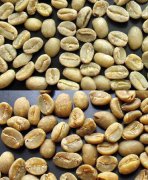
Grading of raw coffee beans
There are two ways to classify raw coffee beans, one is the filter number, and the other is the elevation. It is divided by the filter number, and the size is size in terms of the screen size. Round beans are generally smaller than flat beans, between 8-13 and 12-29. 8, 9, 10. 12, 13. 18. 29 = small, medium, ordinary. Quasi-big. Big, extra large. The bigger the size, the bigger the beans. Like SC-.
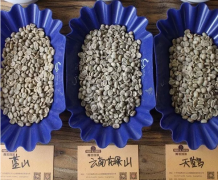
Data | data of total global exports of Jamaica Blue Mountain for the whole year, with a unit price of more than 10,000 per barrel.
According to data from the World Trade Organization and Chinese Customs, the total global exports of Jamaica in the past five years are as follows: 842 tons in 2011, 592 tons in 2013, 692 tons in 2013, 449 tons in 2014, 555 tons in 2015, of which, China's imports in the past five years are as follows: 2011 19 tons, 2012 17 tons, 2013 3 tons, 2014 2 tons 2 tons (all official statistics)
The characteristics of Kopi Luwak, the official website of death wish Coffee
◎ grading according to the size of coffee beans this classification is based on a variety of perforated sieve, the sieve has a variety of specifications, identified by the number, the number is associated with the mesh. The size of the mesh-1 stroke 64 inches is the unit of calculation. If the diameter of the mesh is 18 stroke 64 inches, the number of the screen is 18; if the diameter of the mesh is 17 inch 64 inches, the number of the screen is 17. To

Standard for grading of fine coffee beans, common sense coffee and raw beans
It is divided by the number of the filter screen, and the size is in the unit of the screen (size). Round beans are generally smaller than flat beans, between 8-13 and 12-29. 8, 9, 10. 12, 13. 18. 29 = small, medium, ordinary. Quasi-big. Big, extra large. The bigger the size, the bigger the beans. SC-19, for example, is the No. 19 bean. According to the elevation of the cultivated land, it can be divided into seven grades.
ICE sugar rose on July 8th, Arabica coffee futures jumped.
ICE Arabica coffee futures jumped on Tuesday as technical signals triggered short covering and new buying, raw sugar futures climbed and cocoa futures stayed below a three-year high.
Identify Blue Mountain Coffee
In Jamaica this mysterious land, grows the world's most superior coffee.
Coffee signed price protection contract
"even if the price is reduced, I still planted more than 20 mu last year."
Definition of Espresso
The word Exresso comes from the Italian actor, which means express, because expresso means that it can be made and supplied to customers immediately. A double expresso is condensed to 47-62.5ml (1.5-2oz) by 14-17g coffee, which is heated in pure water at 9-10 atmospheric pressure of 88-95 degrees Celsius for 22-28 seconds

Brazilian sweet coffee
Brazilian coffee generally refers to coffee produced in Brazil. There is a wide variety of Brazilian coffee, the vast majority of which are unwashed and sun-dried, classified according to the name of the state of origin and the port of transport. Brazil has 21 states and 17 states produce coffee, but four of them produce the largest, accounting for 98% of the country's total output. Brazilian coffee has a low sour taste, which goes well with coffee.
Coffee Culture Coffee and the Story of Arapai people
Coffee was the exclusive drink of Arabian people for more than 1000 years from the 7th century to the 17th century. Arabs brought the habit of drinking coffee to the countries they visited, from the Balkans to Spain to North Africa. After the decline of the Roman Empire, the center of world development gradually shifted to the Islamic world. Slowly, the word coffee entered the languages of countries all over the world in different forms.

Japan Ski Set "Highest Altitude" Coffee Shop is Starbucks
Drinking hot coffee in freezing weather may be a good option. Starbucks Coffee announced on December 17 that it will open its highest-altitude Starbucks coffee shop on the top of Yokote Mountain in Yamanouchi Town, Nagano Prefecture, Japan, Japan. According to reports, the ski resort in Yokoteyama, Japan, has about 120,000 visitors every year, but compared with the past ski fever,

There is a "car cafe" on the streets of Jingdezhen.
On March 17, on Taoyang South Road in Jingdezhen, Jiangxi Province, two brightly colored buses were parked in a corner of the roadside courtyard, which turned out to be two car cafes. Several young men and women on the bus may sit quietly for tea and enjoy the quiet spring light. Wang Haoyang photographed the car coffee house in an elegant environment, decorated with a large number of flowers and plants, attracting many couples to sit idle. Flowers and other ornaments can be seen everywhere in Wang Haoyang's photo shop.

Ethiopian Ilubaro Farm Coffee Flavor Taste
Professional barista exchanges, please pay attention to coffee workshop (Weixin Official Accounts cafe_style ) published on May 17,2017. 001 Order ■ Country: Ethiopia ■ Estate: Barrow Farm ■ Origin: Ilugbo ■ Variety: Ethiopian Native Species ■ Treatment: Washing ■ Harvest: 201617 Cup Test Report: Ilugbo, located
Coffee Story in Amsterdam Coffee background in Amsterdam
Professional Coffee knowledge Exchange more information on coffee beans Please follow the Coffee Workshop (Wechat official account cafe_style) the New World in the mid-17th century, coffee was brought to New Amsterdam and was later called New York by the British. Although cafes soon began to appear, tea remained the most popular drink in the New World until 1773, when the colonists rebelled against the expropriation of tea by King George III.