
"Both"
20608 article(s) found

Introduction characteristics of Ecuadorian coffee beans planting information description of flavor in planting areas
Professional baristas Please follow the Coffee Workshop (Wechat official account cafe_style) most countries in the world only produce one kind of coffee beans, but Ecuador is one of the few countries in the world that can produce both Arabica and Robusta coffee beans. The Ecuadorian Coffee tasting, sponsored by the Consulate of Ecuador in Guangzhou, recently held an exhibition in Guangdong Province.

Suntory launched an espresso specially paired with cereal
Professional baristas follow the Coffee Workshop (official Wechat account cafe_style) to match Furugura, Suntory will launch a maple syrup-flavored espresso that it says will make a coffee shop-like breakfast at home. We have mentioned that Furugura, a Calabi cereal, which has been launched for more than 20 years, has not been popular in the Japanese market until recent years.

Introduction to the treatment method of planting and development history of Ecuadorian coffee single bean flavor description
For professional baristas, follow the coffee workshop (official Wechat account cafe_style) between Colombia and Peru, and Ecuador, which passes through the equator, is one of the few countries in South America that produces both Arabica and robusta coffee. In fact, Ecuador means the Spanish equator. Due to the use of old-fashioned traditional harvesting and handling methods, Ecuador

The flavor of Kenyan coffee beans
Kenya AA coffee is one of the rare good coffee, it is famous for its rich aroma and balanced acidity, it is perfect and balanced, and has a wonderful and strong flavor, both fresh and not overbearing, is a complete but not heavy taste experience. Kenyan coffee from Africa is the most popular coffee in Europe. It has a wonderful and strong flavor; if you sip it, you will feel it.
Introduction to the treatment methods of raw coffee beans there are several treatment methods for raw coffee beans
Semi-washing (semi-lavado), also known as honey, miel, is actually a combination of tanning and water-washing fermentation to treat raw beans. First remove the peel and pulp of coffee, and then, according to the need, decide whether to use a pectin removal machine (desmucilaginador) to remove pectin, or how much pectin to remove, and finally dry the raw beans with shells by sun drying or machine drying or both.

Origin Culture and species Morphology of Colombian Coffee
The earliest records of coffee cultivation in Colombia appear in a book called The Illustrated Orinoca by Spanish missionary Jose Gumilla. He describes what he saw when he preached on both sides of the Meta River in 1730, in which he mentioned the local coffee plantation. By 1787, other missionaries had spread coffee to other parts of Colombia.

Unique aroma of Ecuadorian Coffee grind Variety characteristics of High quality Coffee beans
Ecuador is located in South America, the equatorial line runs through the country, so Ecuador is also known as the equatorial country. Ecuador's superior geographical location, fertile soil and special climatic conditions have created a superior natural environment for coffee cultivation in the country. Ecuador is one of the few countries in the world that can produce both Arabica and Robusta coffee beans. Speaking of Ecuador,

Introduction of coffee flavor description and grinding degree of Santa Cruz Manor in Ecuador with special aroma
Ecuador is one of the few countries in South America that produces both Arabica coffee and Robbins coffee. However, as the land suitable for Arabica coffee trees is decreasing, the production of Robbins coffee is gradually increasing. The best Arabica coffee comes from the Andes, especially the Chanchagu Valley (ChanchamgoValley), which is divided into two mountains, from the south to the south.

Introduction to the taste of the method of variety treatment in the grinding scale of Ecuadorian coffee beans
Ecuador is one of the few countries in South America that produces both Arabica coffee and Robbins coffee. However, as the land suitable for Arabica coffee trees is decreasing, the production of Robbins coffee is gradually increasing. The best Arabica coffee comes from the Andes, especially the Chanchagu Valley (ChanchamgoValley), which is divided into two mountains, from the south to the south.

Why do both McDonald's and KFC begin to pay attention to the promotion of freshly ground coffee?
Food and beverage does not leave home, stay in such a busy area, on the basis of eating more, of course I hope you drink more; on the basis of what you want to eat, of course I hope you can come when you want to drink. By introducing freshly ground coffee, a more expensive drink, it can naturally increase ARPU (per capita consumption) or attract more passenger flow. McDonald's McCoffee is an old brand (since 1993)

Introduction to the producing areas of coffee lattes and mochas with different tastes
Taste difference: both cappuccino and latte have foam, and both require a lot of foam. The foam of the card is more, the proportion of milk is less, and the taste of coffee is more obvious. When drinking, it is recommended to stir the foam back into the cup and remix the milk coffee (because the basic foam and milk have been separated after the coffee is ready to serve, the taste of drinking foam alone is not good. ) mix milk and coffee

The Secret of Kenyan Coffee beans characteristics of Kenyan Coffee
The secret of Kenyan coffee Kenya AA coffee is one of the rare good coffee, it is famous for its strong aroma and acidity balance, it is perfect and balanced, and has a wonderful and strong flavor, both fresh and not domineering, is a complete but not heavy taste experience. Kenyan coffee from Africa is the most popular coffee in Europe. It has a wonderful and strong flavor; Qing.

Basic chemical reactions in the roasting process of coffee in both Chinese and English
Original: Basic Chemical Reactions Occurring in the Roasting Process by Carl Staub sourced from the SCAA Roast Color Classification System developed by Agtron-SCAA in 1995 Many thermal and chemical reactions occur during the roasting proces

Explanation of the basic chemical reaction of coffee roasting in both Chinese and English
Original: Basic Chemical Reactions Occurring in the Roasting Process by Carl Staub sourced from the SCAA Roast Color Classification System developed by Agtron-SCAA in 1995 Many thermal and chemical reactions occur during the roasting proces

No problem, going to Starbucks to take pictures is both pretentious and low!
Why do you always take pictures when you go to Starbucks? people in moments like to do this. @ lemon starry doesn't pretend to be forced. I really feel that when I was 20 years old, I first entered Starbucks for the first cup of Starbucks toffee hazelnut coffee. 36 yuan a cup had the idea of wanting to go in many times, but I always felt too expensive, many times without luxury, courage, and liked the mellow smell of coffee, even though Starbucks didn't have it abroad.
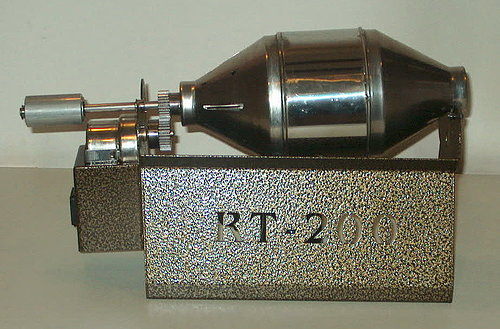
RT-200 Household small Coffee Bean Roaster the characteristics and usage of the frying machine are introduced in detail.
Coffee bean roaster ET-600g special point 1, using imported edible grade stainless steel forged and polished thick roller, strong temperature holding capacity, both conduction, radiation and convection to give coffee beans stable heating. 2. Two asymmetrical stainless steel low pick plates are installed in the drum to eliminate the dead corner and let the beans roll heartily in the baking room. There is absolutely no phenomenon of yin and yang beans in the pan.

Columbia Coffee Coca Cauca producing area with unique sour and mellow taste
The earliest record of coffee cultivation in Colombia appears in a book called The Illustrated Orinoca by Spanish missionary Jose Gumilla. He describes what he saw when he preached on both sides of the Meta River in 1730, in which he mentioned the local coffee plantation. By 1787, other missionaries had spread coffee to other parts of Colombia.

Introduction to the description of planting Environment and Flavor of Ecuadorian Coffee varieties with faint grassy fragrance
The Arabian Coffee Tree was first introduced to Ecuador (Ecuador) in 1952 and its coffee is of good quality, especially the coffee harvested in early June. Ecuadorian coffee beans can be divided into two varieties: Galapagos and Gigante, both of which have the characteristics of large granules and heavy weight. Ecuadorian coffee can be divided into first class (No.1) and super excellent (ExtraSuperior) according to its quality.

Coffee knowledge-what does a cappuccino do and simply teach you the difference between a cappuccino and a latte?
Coffee beginners often can't tell the difference between a cappuccino and a latte. There is almost no difference in appearance and taste between the two cups of coffee. When asked, their ingredients are all the same. They are both espresso and milk bubbles. So why should they be distinguished? First of all, in appearance, there are more cappuccino milk bubbles than milk, and lattes are more milk than milk bubbles.

Introduction to the characteristics of Ecuadorian Coffee Flavor description and Grinding degree treatment
The Arabian Coffee Tree was first introduced to Ecuador (Ecuador) in 1952 and its coffee is of good quality, especially the coffee harvested in early June. Ecuadorian coffee beans can be divided into two varieties: Galapagos and Gigante, both of which have the characteristics of large granules and heavy weight. Ecuadorian coffee can be divided into first class (No.1) and super excellent (ExtraSuperior) according to its quality.