
"Defects"
4326 article(s) found

How to judge whether there are defects in a bean by cup test what method is used to test the baking defects
There are many different roasting defects that can affect the taste of coffee. You may taste the burnt and mushy taste of burnt coffee, or even the light and bread-like taste of roasted coffee. As a baker, you don't want these flavors to outweigh the hard work you do on the oven. Identifying these defects through vision and taste will help you to a higher standard

What are coffee roasting defects | what are the characteristics of baking defects | judgment of baking defects
Professional coffee knowledge exchange more coffee bean information Please pay attention to the coffee workshop (Wechat official account cafe_style) when it comes to coffee defects, most of the time you think of either mixed with defective beans, or brewing problems, in fact, there is another situation, that is, baking defects! So what are baking flaws? Qianjie Coffee to introduce to you! Baked beans are

Definition of Fine Coffee Cup Test Grade-American Fine Coffee Association
The definition of boutique coffee cup test grade-the American Fine Coffee Association three taste threshold tests, refers to the sweet and sour taste recognition. One of them is to find out which of the nine cups of water are sweet, sour and salty; one is to distinguish the three concentration levels in each of the three cups of sour, sweet and salty; and the other is three flavors, three grades, that is, nine solutions, which are mixed with each other, and then eight cups are mixed.

Academic Talk: About Coffee Defects Why Coffee Beans Have Defects
Professional coffee knowledge exchange More coffee bean information Please pay attention to coffee workshop (Weixin Official Accounts cafe_style) In the 1990s, 20% of coffee produced in Brazil was considered to have Rio defects, that is, coffee had a strong odor, similar to drugs, phenols or iodine. In fact, this defect also occasionally exists in coffee produced in the country. At the time, there was a massive

Roasting of coffee beans | what are the roasting defects in coffee | which belong to baking defects
Professional coffee knowledge exchange more coffee bean information please pay attention to coffee workshop (Wechat official account cafe_style) coffee flavor defects, some are from raw bean defects, some are produced during roasting, and some are produced during brewing, today Qianjie Coffee first to talk about what defects will occur in roasting! The definition of roasting is called coffee baking.

Pregnant women "drinking" coffee may give birth to deformed children?
It is reported that as many as 1.0012 billion cases of birth defects occur in China every year. Cleft lip and palate, neural tube defect, polydactyly, congenital heart disease and hydrocephalus are the five major birth defects that plague newborns in China. At the top of the list is neonatal neural tube defects. There are many factors affecting neonatal birth defects, such as heredity, environment, biology, drugs and so on.

Premium Coffee beans-SCAA Fine Bean grading system
The new premium bean grading system of the American Fine Coffee Association (SCAA) has been adopted by the American Coffee quality Association (CQI) in recent years. Raw bean standard: 350 grams of raw beans should be sampled with a water content of 10% 12%. Raw beans must not have an indecent smell. The number of raw bean size must be equal, and the size difference rate shall not exceed 5% of the size stated in the contract. The number of defective beans can be divided into first-class defects.
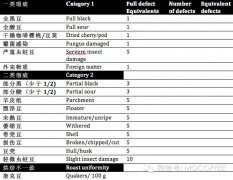
Is the grading standard of boutique coffee defined by SCAA so strict?
You love coffee, but you may not know or think of it, in fact, coffee beans have a lot of defects, and a variety of defects, all kinds of strange. There are many reasons for defects. Defects may affect our taste experience of coffee at different levels, and may also affect our health. However, many defects that can be clearly seen in raw beans can be quickly invisible once baked.

How to classify defective coffee beans? Colombian coffee classification system standard is not general.
Professional coffee knowledge exchange more coffee bean information please follow the coffee workshop (Wechat official account cafe_style) Front Street-Columbia grading system Columbia raw beans are generally classified using two classification methods, defect classification and mesh size classification. In the view of a certain fish, according to the classification of defects, the coffee flavor is controlled, and the beans with bad flavor are picked out one by one.

Introduction to the varieties of defective coffee beans
Coffee beans have many flaws, and there are a variety of flaws. There are many reasons for defects. Defects may affect our taste experience of coffee at different levels, and may also affect our health. However, many defects that can be clearly seen in raw beans can be quickly invisible once baked. Therefore, most of the coffee cooked beans we usually see are uniform in appearance and consistent in appearance.

Colombian coffee raw bean grading method
One: according to the defect rate, the number of defective beans allowed per 500 gr sample:-Private raw bean exporter: 72 defects-National Coffee Council: 42 defects defective beans are divided into two types:-first: known as first-level defects-second: called second-level defects first: main defects (defects that affect coffee taste characteristics): black beans, moldy beans.
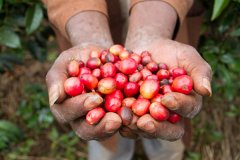
Colombian coffee raw bean grading method
One: according to the defect rate, the number of defective beans allowed per 500 gr sample:-Private raw bean exporter: 72 defects-National Coffee Council: 42 defects defective beans are divided into two types:-first: known as first-level defects-second: called second-level defects first: main defects (defects that affect coffee taste characteristics): black beans, moldy beans.

Introduction of coffee defective bean varieties to understand the culprit that affects the quality of a cup of coffee
Coffee beans have many flaws, and there are a variety of flaws. There are many reasons for defects. Defects may affect our taste experience of coffee at different levels, and may also affect our health. However, many defects that can be clearly seen in raw beans can be quickly invisible once baked. Therefore, most of the coffee cooked beans we usually see are uniform in appearance and consistent in appearance.
Classification of raw coffee beans by the American Special Coffee Association
Level 1: special product defects: 0-5 do not allow to contain obvious defects total sample weight: 300 grams sample size difference: less than 5% 5% or so, or within the specified range of appreciation features: must be at least a little outstanding in the following characteristics: taste, sour taste, taste, aroma. The characteristics will be determined by both the buyer and the seller. After cup testing and appreciation, there are no defects. Baking difference
American Special Coffee Association Coffee Raw Bean Classification description
Level 1: special product defects: 0-5 do not allow to contain obvious defects total sample weight: 300 grams sample size difference: less than 5% 5% or so, or within the specified range of appreciation features: must be at least a little outstanding in the following characteristics: taste, sour taste, taste, aroma. The characteristics will be determined by both the buyer and the seller. After cup testing and appreciation, there are no defects. Baking difference
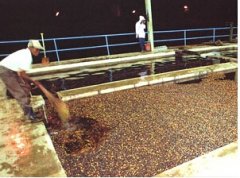
Characteristics of Colombian boutique coffee beans Colombian boutique coffee
According to the classification of defective beans, defective beans can be divided into two types:-first: called first-class defects-second: called second-level defects. First: main defects (defects that affect the taste characteristics of coffee): black beans. Private exporters of moldy beans or sour beans: no more than 12 national coffee committees: no more than 8 first-level defective beans, second: secondary defects

Blue Mountain Coffee, a grading system that gives priority to size and defects
Although the output of Blue Mountain Coffee is very small, it has a strict grading system, even if it is produced in the legal Blue Mountain area, it should be graded according to the size of beans and the proportion of defects. Blue Mountain No.1 Blue Mountain No. 1 bean type: 96% above 17 Blue 18 eyes defective bean proportion: 2% Blue Mountain No.2 Blue Mountain 2 bean type: 96% above 16 inch defective bean proportion: 2% Blue

The grading system of Blue Mountain Coffee grading Standard size giving priority to defects
Although the output of Blue Mountain Coffee is very small, it has a strict grading system, even if it is produced in the legal Blue Mountain area, it should be graded according to the size of beans and the proportion of defects. Blue Mountain No.1 Blue Mountain No. 1 bean type: 96% above 17 Blue 18 eyes defective bean proportion: 2% Blue Mountain No.2 Blue Mountain 2 bean type: 96% above 16 inch defective bean proportion: 2% Blue
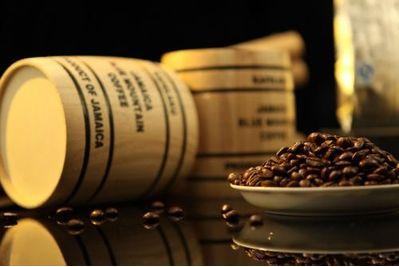
The grading system of Blue Mountain Coffee giving priority to defects. Blue Mountain Flavor imported Coffee beans
Although the output of Blue Mountain Coffee is very small, it has a strict grading system, even if it is produced in the legal Blue Mountain area, it should be graded according to the size of beans and the proportion of defects. BlueMountainNo.1 Blue Mountain No.1 Bean: 96% above 17 BlueMounta 18 defective Bean: 2% BlueMountainNo.2 Blue Mountain 2 Bean: 96% above 16 Universe 17 defective Bean: 2%
The grading system of giving priority to defects in the size of boutique Blue Mountain Coffee
Although the output of Blue Mountain Coffee is very small, it has a strict grading system, even if it is produced in the legal Blue Mountain area, it should be graded according to the size of beans and the proportion of defects. Blue Mountain No.1 Blue Mountain No. 1 bean type: 96% above 17 Blue 18 eyes defective bean proportion: 2% Blue Mountain No.2 Blue Mountain 2 bean type: 96% above 16 inch defective bean proportion: 2% Blue