
"Grain"
5423 article(s) found

Yunnan small-grain Coffee Huaguoshan Coffee Flavor description grindability treatment characteristic Variety production area introduction
Typica and Bourbon, two classic high-quality coffee varieties, are the main coffee varieties in Yunnan. In 1991, Katimo Catimor series varieties were introduced from Kenya (with stronger anti-virus ability and higher yield). A variety of Arabian species (also known as small seed species). Because the morphology and habits of the two varieties are similar, the two varieties are mostly mixed. Iron
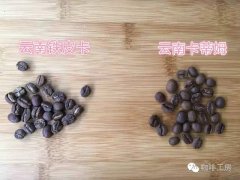
What is the variety of Yunnan small grain coffee? what's the difference between iron pickup and Katim? how does it taste good?
Professional coffee knowledge exchange more coffee bean information please follow the coffee workshop (Wechat official account cafe_style) Yunnan small Coffee how to brew Yunnan small Coffee, Rubiaceae, Coffee Genus, planting areas are mainly distributed in Lincang, Baoshan, Simao, Xishuangbanna, Dehong and other prefectures. Small grains of coffee are native to Ethiopia or Arabian Peninsula. The main producing area is small

Yunnan small Grain Coffee, the Top Coffee in China
Most people think that Blue Mountain and Mocha can be called kings in coffee. Blue Mountain Coffee is mellow, slightly sweet in bitterness, soft and smooth, and slightly sour, which can make the taste more sensitive and taste its unique taste. Mocha coffee has the most unique, richest and most fascinating complex flavor in the world: red wine, wild game, dried fruit,
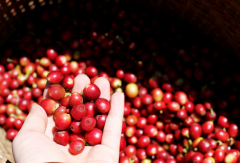
Which brand of Yunnan coffee is good? Yunnan small grain coffee in China is the top quality coffee in the world.
Professional barista exchanges please follow the coffee workshop (Wechat official account cafe_style) Yunnan small grain coffee is Rubiaceae, coffee genus, mainly grown in Lincang, Baoshan, Pu'er, Dehong, Nujiang, Xishuangbanna and other places. Small-grain coffee originated in Ethiopia and Arabian Peninsula and was introduced by the British in the later period.

What is the taste of Yunnan small-grain coffee | which Yunnan small-grain coffee tastes good and how does it taste?
Professional coffee knowledge exchange more coffee bean information please follow the coffee workshop (Wechat official account cafe_style) after 1886, a large number of British, French, American, Italian and German missionaries entered western Yunnan. In 1892, French missionary Tian Deneng came to Zhukula Village in Binchuan, Dali for missionary activities. The first coffee seed took root in Zhukula, and the Godfather Tian taught the local villagers.

Description of the characteristics and Flavor of Yunnan small-grain Coffee varieties
Professional baristas please follow the coffee workshop (Wechat official account cafe_style) small Coffee and Yunnan Coffee Coffee originated in Africa, all the complicated and confusing stories of coffee are inseparable from this basic fact about Africa. China first planted it in Taiwan in 1884. In 1908, Hainan Island, Yunnan and Guangxi began to introduce planting. 1914

General knowledge of fine coffee detailed explanation of Yunnan small grain coffee
Origin: in 1892, French missionary Father Tian succeeded in growing coffee in a place called Zhukula in Yunnan. Up to now, there are still 24 coffee trees which are more than 90 years old in Zhukula Township. Zhu Kula is a mysterious, legendary and beautiful natural village, which belongs to the Zhukula Village Committee of Pingchuan Town, Binchuan County, Dali Prefecture. It is located on the banks of Yupao River, a tributary of the Jinsha River. It is a Dali Prefecture and Chuxiong.

Introduction to the price and variety of Yunnan small-grain coffee dripping pot
According to introduction, in 1892, French missionary Father Tian used coffee fruit to breed the first coffee tree outside the church, and then cultivated more coffee trees around the church. Since then, coffee has been grown in Zhukula village, and coffee has been used around the village ever since.

What is the development of small-grain coffee and its coffee history
Small grain coffee, also known as Arabica (Arabica), originated in Ethiopia, improved and cultivated from the Arabian Peninsula, is the most primitive and traditional Arabica coffee variety. Characteristics of native small-grain coffee: granules

General knowledge of Fine Coffee cultivation of small Coffee in Yunnan
The origin of Yunnan small-grain coffee: in 1892, the French preacher Father Tian succeeded in experimenting with growing coffee in a place called Zhu Kula in Yunnan. To the city of Guzhu Kula, there are still 24 coffee trees with more than 90 years old. Zhu Kula is a mysterious, colorful and natural village, attached to the Zhukula Village Committee, Pingdi Town, Binchuan County, Dali Prefecture, located in the trunk of the Jinsha River.

The latest information and introduction of Yunnan small grain coffee boutique coffee beans
Small-grain coffee is suitable for growing in the mountains at an altitude of 800 to 1800 meters. If the altitude is too high, it will taste sour, and if it is too low, it will taste bitter. Small grains of coffee are mostly planted in dry and hot valleys about 1100 meters above sea level, so they are moderately sour, rich and mellow. There is a unique environment suitable for the growth of small seed coffee in many areas of Yunnan, and the quality of small seed coffee is excellent. The planting area is mainly distributed in the

Yunnan small Grain Coffee Yunnan Huaguoshan Flavor introduction China Yunnan Coffee
Professional coffee knowledge exchange more coffee bean information please pay attention to the coffee workshop (Wechat official account cafe_style) Yunnan coffee small grain coffee is suitable to grow in the mountain area of 8001800 meters above sea level, if the altitude is too high, the taste is sour, too low, the taste is bitter. Small grains of coffee are mostly planted in dry and hot valleys about 1100 meters above sea level, so they are moderately sour, rich and mellow. No in Yunnan.
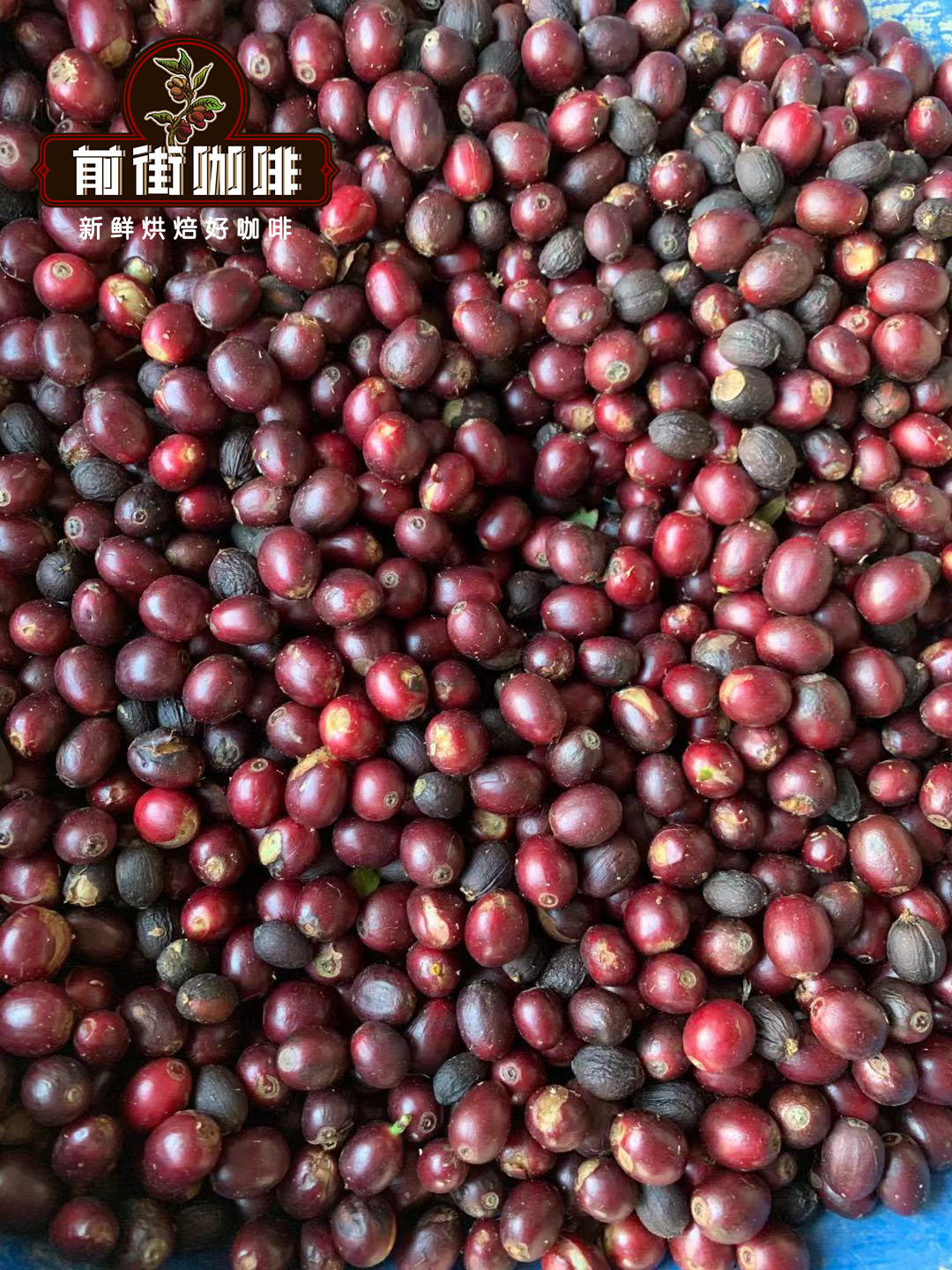
Coffee taste, flavor and difference between Yunnan small-grain coffee iron pickup and katim
Following Kaiping (official Wechat account vdailycom) found that Yunnan coffee beans are generally of mediocre quality, because most Yunnan coffee beans are used as the raw material for instant coffee (good coffee beans are not used for instant coffee.) if it is recommended to buy coffee beans with a roasting date of no more than March, it would be better to have an organic sign on the package.

Characteristics of caffeine content in Arabica coffee beans introduction to the manor of family members in the producing area
With the closure of the garden, growers began to look for other disease-resistant varieties. Small-grain coffee is still the most important coffee variety, accounting for about 3% of the world's total coffee production. It is mainly grown in Latin American countries, but also partly in Indonesia and the Pacific islands. The geographical and climatic conditions of Brazil, the world's largest coffee producer, are very suitable for the growth of small-grain coffee and the main coffee products grown.

What's the difference between Yunnan Xiaogu? What is the difference between Yunnan Xiaolii in the past and now? Is Katim Arabica?
With the improvement of the quality of Yunnan coffee beans, the menus of most boutique coffee shops have more options for Yunnan beans, among which they are generally referred to as Yunnan small grains. This also makes people wonder, what kind of coffee will be called small coffee? What is Yunnan small grain coffee? What is a small grain of coffee? Small

Introduction to the grinding scale of the description of taste and flavor of the time of flowering of small-grain coffee
Small-grain coffee flowering time brand price taste flavor description grinding scale introduction small-grain coffee is suitable for growing in the mountains of 800-1800 meters above sea level, if the altitude is too high, the taste is sour, too low, the taste is bitter. Small grains of coffee are mostly planted in dry and hot valleys about 1100 meters above sea level, so they are moderately sour, rich and mellow. There are many areas in Yunnan that are suitable for the growth of small seed coffee.

Yunnan small grain coffee which tastes better? Yunnan coffee is the most famous small grain coffee.
Professional coffee knowledge exchange more coffee bean information please follow the coffee workshop (Wechat official account cafe_style) Qianjie-Yunnan Coffee varieties introduction the climate of Yunnan has a large temperature difference between day and night; the seasonal temperature difference is small, like spring all year round, high altitude. Negotiate to provide a very good growing environment for coffee. With the change of people's concept of coffee, Yunnan is now stepping into the stage of high-quality coffee.

Yunnan Dehong small Coffee planting Base
Dehong small grain coffee is native to Africa and Ethiopia and is the main cultivated variety in the world. In 1951, coffee seed was first introduced to Dehong Luxi Cotton cropping Experimental Station for productive cultivation. The seedlings were planted in 6 mu and grew well. In 1956, the Dehong Prefecture Committee decided to vigorously develop coffee in the whole state, and held a training course on coffee planting techniques throughout the state, so that small-grain coffee was widely developed in the whole state. 1958 de

Description of Flavor of Yunnan Coffee Bean by Grinding scale method
Yunnan small-grain coffee is of good quality. Take Lujiangba small-grain coffee as an example: the percentage contents of the main components are as follows: crude fat 17.1, reducing sugar 0.93,starch 3.07,nitrogen 2.27,crude protein 1.419, ash 3.70,19.33crude fiber, 2.14caffeine, 9.20.Water 6.87small-grain coffee is suitable for growing in the mountain area with an altitude of 800m to 1800m.

Introduction to the taste characteristics of Yunnan small-grain coffee varieties by describing the flavor of Huaguoshan
Although Zhu Kula is poor and backward, it has an inextricable bond with coffee. In addition to growing coffee all over the country, the villagers all have a tradition of drinking coffee: self-growing, self-grinding and self-brewing, and now men, women and children in the village have the habit of drinking coffee. The villagers here have a special feeling for coffee trees, even if the coffee beans do not bring them any economic benefits.