
"Harvest"
21850 article(s) found

Yunnan coffee output reached 139000 tons at the end of the annual coffee harvest season.
The huge consumption potential of China's coffee market obviously gives Yunnan coffee industry great confidence. Figures show that at present, the annual per capita coffee consumption in China is only 4 cups, and even in Beijing and Shanghai, the per capita annual consumption is only 20 cups, which is far lower than 40 cups in Taiwan, 240 cups in South Korea, 200 cups in Japan, and about 400 cups in the United States and other European countries.

Nicaragua Harvest Season Coffee Flavor Taste Variety Characteristics Production Area Treatment Introduction
Nicaragua harvest season coffee flavor taste variety characteristics of production area treatment method introduction Nicaragua coffee aroma rich, smooth and delicate, slightly bitter aftertaste, taste before the best drink cold water, and then feel its mellow. The tannins in Nicaragua coffee change easily during cooling, making it sour and must therefore be tasted hot, as in other coffee-producing countries.
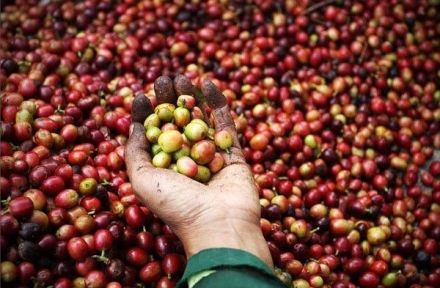
From the planting of coffee trees to the harvest of coffee beans
Coffee trees take 3-5 years from planting to fruiting. 6-10 years of coffee trees are the most likely to bear fruit, about 15-20 years, is the harvest period. Coffee trees are usually bred in nurseries and grow into saplings, and then moved to coffee farms a year later, in full compliance with the way the Arabs planted and cultivated coffee trees. Coffee trees will continue to take root downward and upward in the first four or five years of their growth.

It takes 3-5 years from coffee tree planting to coffee bean harvest.
Coffee trees take 3-5 years from planting to fruiting. 6-10 years of coffee trees are the most likely to bear fruit, about 15-20 years, is the harvest period. Coffee trees are usually bred in nurseries and grow into saplings, and then moved to coffee farms a year later, in full compliance with the way the Arabs planted and cultivated coffee trees. Coffee trees will continue to take root downward and upward in the first four or five years of their growth.

Coffee beans harvesting and handling skills Coffee Common sense
Harvest occurs in different months of the year (depending on the geographical location of the producing country), depending on the maturity of the fruit. The harvest time depends on the geographical location, climate and altitude, and varies according to the situation of each producing country. Ripe fruit can be picked by hand, raked with a small rake, or hit to the ground with a pole: the first two methods can be carried out by low-cost labor, and they

General knowledge of boutique coffee from coffee tree planting to coffee bean harvest
Coffee trees take 3-5 years from planting to fruiting. 6-10 years of coffee trees are the most likely to bear fruit, about 15-20 years, is the harvest period. Coffee trees are usually bred in nurseries and grow into saplings, and then moved to coffee farms a year later, in full compliance with the way the Arabs planted and cultivated coffee trees. Coffee trees will continue to take root downward and upward in the first four or five years of their growth.

What are the steps and harvest time for picking coffee beans
After 3 or 4 years of growth, the coffee tree matures and begins to bear fruit, and the fruit will be arranged in clusters or clustered together along the branches. The coffee beans we see are the seeds of the coffee tree. The outside of the seed is a layer of pericarp, with the maturity of coffee beans, the pericarp will change from green to red, as soon as it turns red, it can be harvested. The structure of coffee fruit is usually a layer of pulp (mesocarp) under the exocarp.

Carmen Estate Carmen Farm in Panama
Professional baristas exchange please follow the coffee workshop (Wechat official account cafe_style) Panama Carmen Estate Carmen Farm has established a special, exquisite trend, Panamanian Coffee! Introduce clearer, better, more diverse Panamanian beans to add to the coffee journey. These beans, whether they are honey treatment, water washing or sun drying, are all after a bumper harvest in the harvest season.

Fruit Flavor Kenya Fine Coffee Bean Growing Location Climate Elevation Profile
Bourbon Bourbon was first brought to Kenya for cultivation. In the 1950s, Scott Laboratory, an agricultural research institution at that time, made unremitting efforts to select two excellent hybrids SL-28 and SL-34, overturning the long-standing bias that artificial breeding varieties were not excellent in natural varieties. SL-28 and SL-34 helped Kenyan coffee become unique

A bumper harvest of coffee beans in Indonesia in 2019 the global price of coffee beans will be hit hard again!
Professional coffee knowledge exchange more coffee bean information please follow the coffee workshop (Wechat official account cafe_style) Indonesian coffee beans have a bumper harvest this year, Arabica coffee fruit was just harvested on the 9th in a coffee farm in West Java province. Indonesia is the third largest producer of robusta coffee beans in the world. Instant coffee manufacturers such as Nestl é prefer these beans. Indonesia this year

The harvest date of coffee beans.
From the coffee-producing countries, we can find that since almost all coffee is produced in countries with more cheap labor, it can be guessed that the process of harvesting coffee beans requires a lot of manpower. Yes, the harvesting of coffee is very hard and requires a lot of manpower, especially in many high-quality coffee, which can only pick fully ripe red cherries from coffee trees.
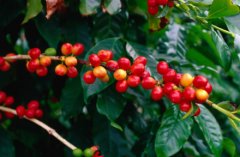
Coffee harvest time of coffee beans in the main producing areas of the world
Regional harvest period Brazil from May to late June Colombia from October to late February of the second year, China and the United States, from October to late February of the second year, mocha, from early October to late January of the second year, Africa Robsta, from early October to late January of the second year, Arabica, Africa, from early October to late January of the second year, Indonesia EK-1 from March to late May, to ensure that coffee cherries remain unchanged.

A brief introduction to the market price of glossy Kenyan boutique coffee beans
Coffee cultivation in Kenya is mainly divided into two types: large farms (Estate) and cooperatives (Cooperatives). The former generally has a large planting area and has independent coffee processing facilities. Most coffee production is done by a large number of small farmers, who form coffee cooperatives. The Coffee Cooperative Society hired special managers to supervise the coffee handling of its members.

The sowing method of Coffee basic knowledge of planting Coffee trees
The coffee wrapped in endocarp will be planted to the seedbed and will germinate in 40-60 days and grow to about 50 cm in about 6 months after germination. At this stage, the seedlings are still fragile and must be covered with cold gauze and other things to block direct sunlight. The seedlings blossomed about three years after they were transplanted from the seedbed to the garden. In this period, Central America and other countries that use hand-picking to harvest coffee beans, for

A brief introduction to the Market Price of Fine Coffee Bean varieties in Kenya
Like the choice of other coffee producing countries, although SL-28 and SL-34 have stood the test of time and cultivated generation after generation of faithful pumps for Kenyan coffee, the Kenyan government and the Coffee Research Institute (Coffee Research Foundation) have begun to promote a new variety, Ruiri 11, for the sake of coffee yield and disease resistance.

From the planting of coffee trees to the harvest of coffee beans, how to raise coffee trees
Coffee trees take 3-5 years from planting to fruiting. 6-10 years of coffee trees are the most likely to bear fruit, about 15-20 years, is the harvest period. Coffee trees are usually bred in nurseries and grow into saplings, and then moved to coffee farms a year later, in full compliance with the way the Arabs planted and cultivated coffee trees. Coffee trees will continue to take root downward and upward in the first four or five years of their growth.

Coffee Fruit decomposition Map growth and harvest of coffee
Coffee Fruit decomposition Diagram Coffee growth and harvesting are coffee beans fruits? When many people hear the word coffee beans, it is easy to mistakenly think that coffee beans are fruits like soybeans, but they are not. Coffee beans are obtained through some procedures from the seeds of fruits grown on coffee trees, so coffee beans are not fruits. Coffee knowledge popularization course Ⅰ: coffee beans are fruits

A brief introduction to the flavor and aroma characteristics of Kenyan boutique coffee beans
Coffee cultivation in Kenya is mainly divided into two types: large farms (Estate) and cooperatives (Cooperatives). The former generally has a large planting area and has independent coffee processing facilities. Most coffee production is done by a large number of small farmers, who form coffee cooperatives. The Coffee Cooperative Society hired special managers to supervise the coffee handling of its members.

Introduction to the harvest time of Vivette Nanguo coffee beans in Guatemala
Guatemala Vivette South Fruit Coffee beans Harvest time this dried bean aroma with a strong melon and fruit aroma, with a slightly sweet flavor. Almost in the first moment of grinding, the aroma is close to the mouth and nose, very prominent. The finish is also a little creamy and nutty. Smelling dry incense is very important. Do you remember when I shared the Shanghai White Bird Cafe? In the store

Harvest the flavor contest champion! Uganda Fine Coffee Bean Kava Cooperative Shibi Kabeva Sunning
Professional coffee knowledge exchange More coffee bean information Please pay attention to coffee workshop (Weixin Official Accounts cafe_style) Harvest flavor contest champion! Uganda boutique coffee beans kava cooperative hibi kabeva sun beans flavor? Uganda introduced Arabica coffee trees in 1900, while northern Bugisu along the Kenyan border produces higher quality coffee.