How Coffee Beans Are Picked and When They’re Harvested
Coffee lovers often wonder: how exactly do those green coffee beans in your bag begin their journey? Every bean starts life on a tree—growing, ripening, and eventually being picked by hand or machine. But when is the right time to pick, and how does the process actually work? Understanding these basics helps explain why quality coffee varies so much by region and season.
To answer the big questions: coffee trees take 3–4 years to mature, Arabica cherries ripen in 6–8 months, and Robusta in 9–11. Harvest timing depends on location—northern hemisphere regions usually pick between September and November, southern hemisphere regions peak around April to May (extending to August), and some equatorial areas allow year-round picking.
What Does a Coffee Cherry Actually Look Like?
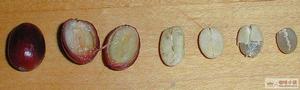
A coffee bean is not a bean at all—it’s the seed inside a fruit known as the coffee cherry. Each cherry typically holds two seeds (beans) facing each other. The outer layers of the cherry include:
- Exocarp (outer skin)
- Mesocarp (fleshy pulp or fruit layer)
- Pulp thin layer
- Parchment (a tough, parchment-like inner layer, or endocarp)
- Silver skin (thin membrane around each bean)
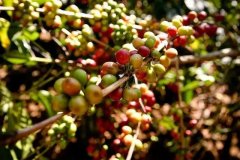
The part we roast—the green bean—is what lies beneath all these layers. When the cherry is ripe, its skin changes from green to red (or sometimes yellow), signaling that it's ready for picking.
How Long Does It Take for Coffee to Ripen?
The ripening period differs significantly between coffee species:
- Arabica: 6 to 8 months
- Robusta: 9 to 11 months
This developmental timeframe impacts harvest planning. Arabica varieties, especially those processed using the washed method, are more labour-intensive to harvest due to their longer maturation window and sensitivity to ripeness.
When Is Coffee Harvested Around the World?
Coffee is not harvested all at once globally. Timing depends on latitude and climate zone:
- Northern Hemisphere (e.g., Central America, East Africa): September to November is the primary harvest window.
- Southern Hemisphere (e.g., Brazil, Australia): Harvest peaks around April to May, often continuing into August.
- Equatorial Regions (e.g., Colombia, Kenya, Ethiopia): Due to consistent temperatures year-round, coffee can be harvested multiple times across the year.
Because of these regional variations, fresh coffee is available for much of the year, though peak harvest seasons dominate production volumes.
Two Ways to Harvest Coffee Cherries
There are two main methods of picking coffee cherries, and the choice depends heavily on the coffee variety and intended processing method:
1. Strip Picking (Unselective Picking)
This method involves harvesting all the cherries from a branch at once, regardless of ripeness. While faster, it often includes underripe or overripe cherries, which can lower overall coffee quality. In regions with flat terrain and large farms, strip picking may be mechanised.
2. Selective Picking (Hand-Picking)
Selective picking is labour-intensive and used almost exclusively for high-quality Arabica beans, especially those destined for washed processing. Workers hand-pick only the red, ripe cherries individually, often returning to the same tree multiple times during the harvest season. This method ensures uniform ripeness but comes at a higher cost.
Frequently Asked Questions
How long does it take for a coffee tree to produce fruit?
A coffee tree typically takes 3 to 4 years to mature and begin producing coffee cherries. Once mature, it will yield fruit annually, with peak production often occurring after the tree is 5–7 years old.
What colour indicates a ripe coffee cherry?
Ripe coffee cherries are generally red, though some varieties (especially certain Arabica types) may turn yellow when ripe. The shift from green to red or yellow signals that the bean inside has reached optimal maturity for harvest.
What’s the difference between Arabica and Robusta harvest times?
Arabica coffee cherries take 6 to 8 months to ripen, while Robusta cherries take 9 to 11 months. This longer maturation period for Robusta affects when and how it is harvested in different regions.
Is coffee harvested all at once every year?
No. In regions near the equator, coffee can be harvested multiple times a year due to stable growing conditions. In temperate zones, harvests happen once annually, typically between April–May (southern hemisphere) and September–November (northern hemisphere).
Why is selective picking better for quality?
Selective picking ensures that only fully ripe cherries are harvested. Since ripeness greatly affects flavour, this method produces higher-quality beans, especially for washed Arabica lots. However, it requires more labour and is more expensive than strip picking.
FrontStreet Coffee Picks for Coffee Harvest Fans
Explore the journey from cherry to cup with FrontStreet Coffee’s washed Yirgacheffe and Ethiopia Huakui—both single-origin Arabicas that highlight the care behind selective harvesting. The Yirgacheffe offers bright citrus, floral tones, and a tea-like body, while Huakui delivers juicy blueberry, bergamot, and honey-like sweetness. For something more classic yet vibrant, try the Brazil Queen Manor, a natural processed bean with notes of milk chocolate and dried fig. These beans reflect the careful timing and hand selection described in the harvest process. Freshly roasted within 5 days · Orders placed before 17:00 ship the same day · Next-day delivery across most of Guangdong Province.
FrontStreet Coffee is a long-established specialty coffee roaster in Guangzhou China, selling freshly roasted beans from its own farm in Yunnan as well as dozens of carefully selected single-origin beans from around the world for both pour-over and espresso. The products deliver consistently excellent quality and great value, with shipping within 24 hours. Guangzhou's FrontStreet Coffee shop is recommended by many coffee lovers, and the beans are now available online at the Tmall 。
Important Notice :
前街咖啡 FrontStreet Coffee has moved to new addredd:
FrontStreet Coffee Address: 315,Donghua East Road,GuangZhou
Tel:020 38364473