
"Inspection"
2254 article(s) found

New media say the study found that people's demand for coffee is determined by genes.
In the Zhongshan Qingfeng, an official account of the Nanjing Commission for discipline Inspection, the reporter clicked on the latest one called the Dragon Boat Festival Egg Clean Dragon Boat Race. Along with the breeze, the high Wechat, in addition to cordial Dragon Boat Festival wishes, also called on readers to test how much you know about party discipline and party rules, and to compare whose incorruptible dragon boat rowing faster. Answer the 10 questions one by one in order, in which both

The export of Pu'er coffee soared by 6061 tons in the first half of the year.
By the end of June, Pu'er City had exported 15036 tons of coffee beans through Pu'er entry-exit Inspection and Quarantine Bureau, earning 63.6255 million US dollars in foreign exchange, a sharp increase of 6061 tons from 8975 tons in the same period last year, and is expected to break through the 20, 000 ton mark by the end of the year. According to reports, Pu'er City currently has a coffee planting area of more than 400,000 mu, with an output of about 35000 tons of coffee beans, planting area and output.

A brief introduction to the Variety characteristics of the Flavor description method of Ethiopian Sidamomo Lion King Coffee
The export rating is marked by simple numbers, with the best washed coffee at level 5 and the best sun-cured coffee at level 4. After grading, mark the place of origin and then export. Exports are usually paid by letter of credit, which can not only reduce the risk of foreign exchange collection for exporters, but also give quality assurance to importers. Coffee is Ethiopia's most important export cash crop and the main source of Ethiopia's foreign exchange earnings.
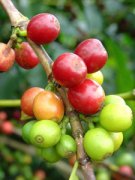
Introduction to Ethiopian Coffee
Ethiopia is one of the major producers of Arabica coffee in Africa, producing the best Arabian coffee in the world. It is said that coffee was first discovered by shepherds in Essekafa, and the name of coffee evolved from Kafa, so Essex is still the hometown of coffee. The geographical environment of coffee production and processing is very suitable for coffee growth. Coffee is mainly cultivated.

Ethiopian coffee plantation flavor taste introduction Ethiopian coffee characteristics
35% of coffee is courtyard coffee. In this coffee garden, the planting is three-dimensional distribution. Coffee sits in the lower layers, in the shade of other crops, to get the right environment to grow. Fertilizer is mainly deciduous, withered grass and animal manure. 5% of coffee is plantation coffee. This is a modern way of growing coffee. Coffee is grown in forests, but new varieties are used and mixed with other trees.

Ethiopian Coffee Flavor introduces the characteristics of Ethiopian Coffee
35% of the coffee is courtyard coffee. In this kind of coffee garden, the planting is three-dimensional. Coffee is located in the lower layer and gets a suitable growth environment in the shade of other crops. Fertilizers are mainly fallen leaves, withered grass and animal manure. 5% of the coffee belongs to plantation coffee. This is a modern way of growing coffee, which is also grown in forests, but uses new varieties and works with others.

Characteristics of flavor and taste quality of sun Xidama coffee beans introduction of manor treatment methods in producing areas
Characteristics of flavor and taste quality of sunburn Sidama coffee beans in producing areas the grading and quality control system of coffee in Ethiopia is divided into three levels: producer, regional and national. All coffee is inspected by local inspection agencies before leaving the country of origin, and then re-tested at the coffee inspection and grading centers in Addis and Diredawa to determine its quality grade.
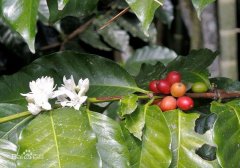
Coffee graded Ethiopian coffee coffee shop
Boutique coffee (specialty coffee) is also called specialty coffee selection coffee. It refers to coffee made from a small number of raw beans with excellent taste grown in an ideal geographical environment. Depending on the special soil and climatic conditions in which they grow, they have outstanding flavor. After strict selection and classification, this kind of coffee is hard in texture, rich in taste and stylish.
Coffee export in Pu'er reached an all-time high in the first half of the year.
By the end of June, Pu'er City had exported 15036 tons of coffee beans through Pu'er entry-exit Inspection and Quarantine Bureau, earning 63.6255 million US dollars in foreign exchange, a sharp increase of 6061 tons from 8975 tons in the same period last year, and is expected to break through the 20, 000 ton mark by the end of the year. According to reports, Pu'er City currently has a coffee planting area of more than 400,000 mu, with an output of about 35000 tons of coffee beans, planting area and output.

Harmful coffee beetles were detected in coffee beans imported from Laos
Recently, during the inspection of a batch of 3.06 tons of raw coffee beans from Laos, staff of the Animal and Plant Department of Xiamen Haicang Inspection and Quarantine Bureau detected quarantine pest coffee fruits for the first time in Fujian Province. Coffee bark beetle has been listed in the list of quarantine pests prohibited from entry in China. In order to prevent the spread of coffee fruit beetle in China, Haicang Bureau has responded to the above-mentioned regulations in accordance with the relevant regulations.
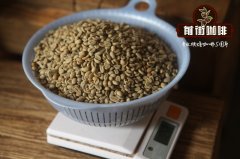
Air coffee bean import customs declaration process _ recommended by imported coffee bean suppliers _ imported coffee beans are so expensive
Professional coffee knowledge exchange more coffee bean information Please pay attention to the coffee workshop (Wechat official account cafe_style) Air import of coffee beans customs declaration and declaration elements: ★ on the import duties of coffee beans, we must first determine the customs code, because the tariffs on coffee beans produced by different processes and ingredients are different. 1. If it is pure coffee beans as raw material without adding any other ingredients

Illegal use of gas appliances failed to change a coffee shop in Nanchong was closed.
Recently, the fire supervision and law enforcement personnel of Xichong County in Nanchong City ordered three stops to a coffee shop in the area where there is a fire hazard. Recently, the fire supervisor found that the use of gas appliances in a coffee shop in Xichong County did not comply with the regulations, and immediately issued a "Fire Supervision and Inspection record" and a "notice of order to correct within a time limit". The limit expires, the fire supervisor of the brigade

Introduction to the characteristics of Ethiopian Coffee Flavor Manor with acidity and texture
5% of the coffee belongs to plantation coffee. This is a modern way of growing. Coffee is also grown in a forest, but new varieties are used and planted in rows with other shade trees. Due to different processing methods, coffee can be divided into washed coffee (Washed coffee) and sun-cured coffee (Sun-dried coffee). Washed coffee accounts for 35% of exports. Of good quality

Kunming Airport intercepts two coffee pests in US express for the first time (photo)
Recently, the staff of the express department of Kunming Airport Inspection and Quarantine Bureau (hereinafter referred to as Kunming Airport Bureau) intercepted raw coffee beans in an express delivery from Portland, USA, and on-site quarantine found many live insects. Identified by the Technical Center of Yunnan entry-exit Inspection and Quarantine Bureau, the live insects are coffee bark beetle Hypothenemus hampei (Ferrari) and coffee bean weevil Araecerus fa
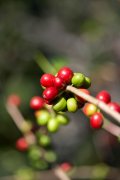
Ethiopian coffee producing area introduces fine coffee Yega Xuefei and Sidamo water washing and sun treatment.
Ethiopia is one of the major producers of Arabica coffee in Africa, producing the best Arabica coffee in the world. It is said that coffee was first discovered by shepherds in Essekafa, and the name of coffee evolved from Kafa, so Ethiopia is still coffee. Ethiopia is an African Arab coffee.

Characteristics of grinding degree of Ethiopian coffee introduction of high-quality coffee beans
Coffee is Ethiopia's most important export cash crop and the main source of Ethiopia's foreign exchange earnings. Ethiopia's coffee exports account for about 3% of the world market, making it the eighth largest coffee exporter in the world. Coffee exports increased steadily from 58000 tons in 1990 to 110000 tons in 1995-1996 and remained at this level in the following years. 2001-2002

Construction of China's first key laboratory for coffee testing
With the development of Pu'er coffee industry, there is no scientific, standardized, well-equipped coffee testing key laboratory, which seriously restricts the development of coffee industry and the foreign trade of coffee products. In 2012, the Pu'er municipal government allocated 10 million yuan for the special construction of the laboratory, and a deputy mayor led the preparatory work of the laboratory, the Pu'er entry-exit Inspection and Quarantine Bureau.

China's first coffee testing laboratory starts construction
It was learned from Yunnan Pu 'er Entry-Exit Inspection and Quarantine Bureau that the construction of the national key coffee testing laboratory was started in Pu' er City, marking the birth of the only national coffee product professional laboratory in Yunnan Province. Coffee cultivation in Pu 'er City began at the end of the 19th century and began to develop industrially in 1988. In 2015, the coffee planting area of the whole city was 757,000 mu, with 402,300 mu put into production and 39,900 tons of output.

Jiaxing Port imports coffee and raw beans for the first time.
As raw coffee beans are the seeds of coffee trees, there is a high risk of carrying pests, especially the coffee fruit beetles they carry are entry quarantine pests in China. As soon as the goods arrived in Hong Kong, Jiaxing entry-exit Inspection and Quarantine Bureau immediately organized relevant personnel to carry out on-site quarantine to shorten the time-consuming and ensure the safety and smooth entry of the first batch of raw coffee beans. After entering the customs, coffee producers who pass the quarantine inspection

Construction of China's first key laboratory for coffee testing
According to the Yunnan Pu'er entry-exit Inspection and Quarantine Bureau, the construction of the national key laboratory for coffee testing began in Pu'er City, marking the birth of China's only national professional laboratory for coffee products in Yunnan Province. Coffee cultivation in Pu'er City began at the end of the 19th century, and its industrialization began in 1988. In 2015, the planting area of coffee in Pu'er City was 757000 mu, with an output of 402300 mu and a yield of 39900 tons.