
"Latitude"
4145 article(s) found

What are the characteristics of Latin American coffee? How can Latin American coffee taste good?
Professional coffee knowledge exchange more coffee bean information Please pay attention to coffee workshop (Wechat official account cafe_style) Coffee growth conditions due to the main geographical factors: latitude, temperature, topography, rainfall, sunshine and so on, the distribution of coffee producing areas varies from continent to continent. The countries of Central and South America and Africa match the climate and topography of the region at the same latitude and

How to grow coffee beans? how to grow coffee beans under suitable planting conditions and how to breed excellent flavor?
Professional coffee knowledge exchange more coffee bean information please follow the coffee workshop (Wechat official account cafe_style) front street-coffee bean planting belt Coffee production belt (coffee production zone) is between 25 degrees north latitude to 30 degrees south latitude, including Central, West Africa, Middle East and South Asia, the Pacific, Latin America, the Caribbean many countries. Why is coffee growing?

Columbia Linglong Flavor Coffee Grinding scale treatment Variety characteristics
Columbia Linglong Flavor Coffee Grinding scale treatment Variety characteristics the annual rainfall ranges from 2000 to 3000 mm, latitude 1-11 15 north, longitude 72-78 west, and the specific range of elevation can exceed 2.000 meters. By a special combination of factors, the latitude, altitude, soil, plant origin of species and varieties of coffee in the coffee growing areas of Colombia.

Coffee knowledge | "African Coffee"
The world of coffee is rich and interesting. Coffee from different continents has its own characteristics. Coffee is the product of the equator to 15 degrees north latitude. Therefore, it is produced in South America, Asia and Africa. However, the coffee produced from the equator to 15 degrees north latitude is so strong and bitter that only some people who drink coffee and do not know its taste will like it. In fact, the best coffee should come from

Coffee bean flavor of American beans, African beans and Asian beans
[introduction] Coffee is rich and interesting in the world. Coffee from different continents has its own characteristics. Coffee is the product of the equator to 15 degrees north latitude. Therefore, it is produced in South America, Asia and Africa. However, the coffee produced from the equator to 15 degrees north latitude is so strong and bitter that only some people who drink coffee and do not know its taste will like it. Actually, the best coffee should be

Hierarchical and full Columbia exquisite boutique coffee bean flavor, taste and aroma description, Jane
Origin: na Linglong altitude: 1860 m-2220 m processing: washing harvest time: April-June (75%), October-February (25%) varieties: new Kaddura species, Castie baking degree: CITY+ flavor features: roasted almonds, lemon and orange, white chocolate, honey, peach, round body, long aftertaste, balanced annual rainfall of 2000 to 3000 mm, north latitude 1

The characteristics of global coffee reveal what is the difference between Yunnan coffee and foreign coffee?
For the exchange of professional baristas, please pay attention to the coffee workshop (Wechat official account cafe_style) Coffee is the product of 15 degrees north latitude from the equator and is produced in South America, Indonesia and Africa. But the coffee produced from the equator to 15 degrees north latitude is too strong and bitter. In fact, the best coffee should be produced between 15 degrees north latitude and the Tropic of Cancer. [Yunnan Coffee, China] Coffee is

Basic knowledge of introduction to Coffee
The best growing area for coffee is between 25 degrees north latitude and 30 degrees south latitude. This region includes the heartland of many countries and parts of South America, Colombia, Africa, India, Asia, the Middle East and Hawaii.

Hierarchical and full Columbia exquisite boutique coffee bean planting situation, geographical location, climate sea
The suitable climate in Colombia provides a real natural pasture for coffee. Coffee trees in Colombia are mainly cultivated in the Andes, on steep slopes about 1300 meters above sea level, where the annual temperature is about 18 degrees Celsius, annual rainfall is 2000 to 3000 millimeters, latitude 1-11 15 north, longitude 72-78 west, and the specific range of elevation can exceed 2.000 meters. By

A brief introduction to the Origin, Development, History and Culture of Columbia's exquisite Coffee beans
The suitable climate in Colombia provides a real natural pasture for coffee. Coffee trees in Colombia are mainly cultivated in the Andes, on steep slopes about 1300 meters above sea level, where the annual temperature is about 18 degrees Celsius, annual rainfall is 2000 to 3000 millimeters, latitude 1-11 15 north, longitude 72-78 west, and the specific range of elevation can exceed 2.000 meters. By

Jamaica Blue Mountain Coffee Geographic location, Regional Climate
The unique flavor of Blue Mountain Coffee is related to the unique geographical location and climatic conditions of Blue Mountain. Blue Mountain is located in the coffee belt between 25 degrees north latitude and 25 degrees south latitude, with fertile new volcanic soil, fresh air, no pollution, rainy all the year round and great temperature difference between day and night. Most importantly, clouds cover the top of the mountain every afternoon, not only as a natural shade for coffee trees, but also for coffee trees.

Columbia Linglong Coffee Bean Flavor description Taste Grinding scale Variety Manor characteristics
Columbia Linglong Coffee Bean Flavor description Taste Grinding scale Variety Manor Features: the annual temperature is about 18 degrees Celsius, the annual rainfall is 2000 to 3000 mm, latitude 1-11 15 north, longitude 72-78 west, and the specific range of elevation can exceed 2.000 meters. By a special combination of factors, the latitude, altitude, soil,

Flavor description of Columbia Linglong Coffee beans taste grinding scale
Columbia Linglong Coffee Bean Flavor description treatment Taste Grinding scale latitude, altitude, soil, plant origin of species and varieties of coffee in Colombian coffee growing area, rain patterns produced by climate and tropical convergence in coffee growing areas, changing topography, luminosity, favorable temperature range throughout the year, moderate and Rain Water
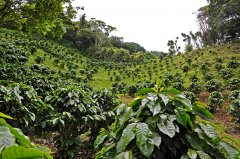
The Coffee planting Industry in China is booming and changing the Poverty-stricken villages
Coffee from the West and tea from the East. With the blending of Eastern and Western cultures, Eastern tea culture has long been integrated into the life of Westerners, while Western coffee has been gradually accepted by more and more Easterners. In the big cities of China, Beijing, Shanghai and Guangzhou, cafes are decorated with urban customs and become fashionable consumption elements. in recent years, China's coffee consumption market has increased by 1. 5% every year.

Introduction to Jamaican Blue Mountain Coffee with rich, balanced, fruity and sour taste
The unique flavor of Blue Mountain Coffee is related to its unique geographical location and climatic conditions. Blue Mountain is a coffee belt between 25 degrees north latitude and 25 degrees south latitude, with fertile new volcanic soil, fresh air, no pollution, rainy all the year round and great temperature difference between day and night. The most important thing is that every afternoon, clouds cover the top of the mountain, which not only shades the coffee trees naturally, but also brings abundance.

The types and characteristics of coffee beans the origin of coffee beans
Most of the Blue Mountains are more than 1800 meters above sea level, of which the highest peak is 2256 meters above sea level. It is also the highest peak in the Caribbean and is a famous tourist attraction. The unique flavor of Blue Mountain Coffee is related to the unique geographical location and climatic conditions of Blue Mountain. The Blue Mountain is located in the coffee belt between 25 degrees north latitude and 25 degrees south latitude, with fertile new volcanic soil and fresh air.
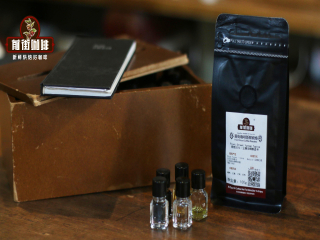
The flavor and taste of the three major coffee producing areas in Pu'er, Lincang, Baoshan, Yunnan Province, which is the best producing area of Yunnan small-grain coffee?
Follow the caf é (official Wechat account vdailycom) and found that the coffee bean-producing areas in Yunnan are basically the same as the tea-producing areas in Yunnan, mainly in Xishuangbanna, Pu'er, Lancang, Baoshan and Dehong. Coffee and rubber from Yunnan are introduced at the same time.

A brief introduction to the taste varieties of Colombian coffee beans by means of flavor description
Although there are many legends about the origin of Colombia, it is generally believed that coffee saplings were brought by a missionary from the French Antilles via Venezuela. Coffee trees were first planted in the Orinoco region in the early 19th century. Today, Colombia produces 13 million bags of coffee a year, each weighing 60 kilograms. Colombia is

The development of blue mountain coffee and the present situation of blue mountain coffee
Following Kaiping (Wechat official account vdailycom) found that the Beautiful Cafe opened a small shop of its own in the run-off of the coffee beans, and one of the Elaraby card people took refuge in the Blue Mountains of Jamaica. Most of the Blue Mountains are more than 1800 meters above sea level, with the highest peak at 2256 meters above sea level, which is also the highest in the Caribbean. The Blue Mountains are located between 25 degrees north latitude and 25 degrees south latitude, all the year round.

Jamaica Blue Mountain Coffee Regional Climate
The unique flavor of Blue Mountain Coffee is related to the unique geographical location and climatic conditions of Blue Mountain. Blue Mountain is located in the coffee belt between 25 degrees north latitude and 25 degrees south latitude, with fertile new volcanic soil, fresh air, no pollution, rainy all the year round and great temperature difference between day and night. Most importantly, clouds cover the top of the mountain every afternoon, not only as a natural shade for coffee trees, but also for coffee trees.