
"Pesticides"
3649 article(s) found

Brief introduction of planting in Costa Rican Diamond Mountain Coffee Flavor description method
The manor attaches great importance to the concept of environmental treatment, such as collecting Rain Water to process coffee, and the production and use of organic compost using earthworm farming (worm composting) makes the planting process completely free of chemical fertilizers and pesticides. The high-quality coffee produced by this estate is very unique, the biggest feature is that it has a very amazing sweetness, 100% organic coffee! Participate in boutique coffee in 2009

Myanmar Chevatron Coffee introduces the purpose of cooperation between Chevatra Coffee and Danu
Shiva Coffee Snow WA Coffee works closely with the local Danu Hills Tribal people in Ywar Ngan, Southern Shan State, Myanmar, to help small coffee farmers upgrade their planting, picking and processing techniques to produce quality Arabica coffee. The area's fertile red and yellow soil, ideal altitude and continuous rainfall make Ywar Ngan the best environment for growing coffee. Unripe
Beginner coffee beans recommend entry coffee: deep-roasted coffee or light-to-medium roasted coffee
If coffee beans are grown at high altitudes and roasted properly, they will taste great, just as we expected! To maximize the number of coffee beans they can grow on their land, some growers remove all trees from large tracts of land and plant coffee directly in the sun.

Introduction to the taste grinding degree of Ethiopian coffee flavor description method
At present, about 25% of the Ethiopian population directly or indirectly depends on coffee production for a living. The majority of farmers use traditional planting methods. Artificial care of coffee trees, the use of organic fertilizers, do not use harmful pesticides and herbicides, etc. Therefore, most of the coffee produced by Ethiopia is organic coffee. Due to different planting methods, coffee can be divided into forest-semi-forest coffee (Forest or semi-f).

Ecuadorian coffee with mild taste and a hint of flowers and fruits introduces fine coffee.
The coffee beans produced in Ecuador's Galapagos Islands are organic coffee beans, thanks to the unique ecological environment such as volcanic soil and microclimate, coupled with the fact that they do not use any chemical fertilizers or pesticides, they are recognized as natural green boutique coffee. this naturally grown coffee has a mild taste with a hint of flowers and fruit and caramel. It is understood that the Galapagos Islands are far from Eritrea.

Introduction to the characteristics of Ecuador Coffee Galapagos Coffee Flavor Manor
Flavor: taste rich, sour and sweet suggested baking method: medium roasting ★★★: excellent Galapagos Islands Coffee Market: due to the unique role of the Galapagos Islands in the historical process, the Ecuadorian government has turned the Galapagos Islands into a national park, no longer allowed to reclaim the land for new agricultural land, and strictly forbids the introduction and use of chemical fertilizers, pesticides and herbicides

Guatemala Antigua Coffee Incht Manor Micro South Fruit Highland introduction
The Incht manor pays special attention to the protection of the ecological environment and the technology of organic planting. The manor is subdivided into different small areas, each of which will select suitable varieties according to soil conditions. Chemical analysis of soil and coffee leaves is done every year in order to provide the right way of fertilization without the use of chemicals such as pesticides and fungicides.

Ecuador's Galapagos Islands with a mild taste and a hint of flowers, fruit and caramel
The coffee beans produced in Ecuador's Galapagos Islands are organic coffee beans, thanks to the unique ecological environment such as volcanic soil and microclimate, coupled with the fact that they do not use any chemical fertilizers or pesticides, they are recognized as natural green boutique coffee. this naturally grown coffee has a mild taste with a hint of flowers and fruit and caramel. It is understood that the Galapagos Islands are far from Eritrea.

The Hasunda Coffee Garden in the Galapagos Islands has a superior coffee growing environment.
Features of coffee: coffee produced in the Galapagos Islands (Galapagos Islands) is a treasure of coffee with excellent quality and is grown without any chemical agents. Flavor: rich taste, sweet and sour suggested baking method: medium roast ★★★: excellent Galapagos Islands Coffee Market: due to the unique work of the Galapagos Islands in the course of history

Full-bodied Ecuadorian coffee with aromas of fruit, grass and chocolate
The coffee beans produced in Ecuador's Galapagos Islands are organic coffee beans, thanks to the unique ecological environment such as volcanic soil and microclimate, coupled with the fact that they do not use any chemical fertilizers or pesticides, they are recognized as natural green boutique coffee. this naturally grown coffee has a mild taste with a hint of flowers and fruit and caramel. It is understood that the Galapagos Islands are far from Eritrea.

Galapagos Coffee Manor introduces Galapagos Coffee beans roasted Galapagos Coffee varieties
Galapagos Islands Coffee Market: because of the Galapagos Islands' unique role in history, the Ecuadorian government has designated the Galapagos Islands as a national park and no longer allows land to be reclaimed as new agricultural land. and the introduction and use of fertilizers, pesticides, herbicides and other chemicals are strictly prohibited, so Galapagos coffee is recognized as a natural product flavor:

Introduction of Burmese Coffee Culture Analysis of main Coffee varieties in Myanmar
Over the past few years, Myanmar's coffee industry has emerged on the international stage with the cooperation of the Myanmar Agricultural Promotion Agency (Myanmar Agriculture Department), the United States Agency for International Development (USAid), the Coffee quality Association (CQI) and the country's hard-working coffee farmers. When British missionaries introduced the first coffee trees from Costa Rica nearly a hundred years ago, the coffee industry

Rainforest Alliance Certified Frog Dou ran Environmental Coffee "Rainforest Alliance Certified Coffee" quality
There is an obvious frog on the rainforest certification logo, rainforest alliance certified coffee, also known as frog beans. Rainforest Alliance RA (Rainforest Alliance) certification refers to a farm that meets the standards set by the Rainforest Alliance. The Alliance will protect the farm and its surrounding ecosystem, impose some restrictions on the use of pesticides, and evaluate benchmarks such as waste management.

Coffee grounds have three wonderful uses that no one knows about.
After enjoying the delicious coffee, don't throw away the rest of the coffee, which is rich in antioxidants and alkaloids. Magic use 1: exfoliate. Coffee grounds is a good material for exfoliating. Rub it into the bath milk and massage the body to remove the aged cutin and make the skin smooth, compact, meticulous and shiny. Ingenious use 2: moisture absorption and deodorization. Coffee grounds have many small pores that absorb moisture and remove moisture.

How about Peruvian organic coffee?
Following Caf é comment (Wechat official account vdailycom) found that good Caf é opened a small shop of its own Peru is an internationally famous quality coffee producing area, regardless of grade, all of its producing areas are organically grown Arabica beans, without organic compound fertilizers and pesticides (the main coffee farmers are too poor to afford it), and generally fertilizers come from rotten or poorly grown coffee cherries. Peru

Galapagos Islands Coffee producing area Flavor introduction to Galapagos Islands Santa Cruz Island
The coffee beans produced in Ecuador's Galapagos Islands are organic coffee beans, thanks to the unique ecological environment such as volcanic soil and microclimate, coupled with the fact that they do not use any chemical fertilizers or pesticides, they are recognized as natural green boutique coffee. this naturally grown coffee has a mild taste with a hint of flowers and fruit and caramel. It is understood that the Galapagos Islands are far from Eritrea.
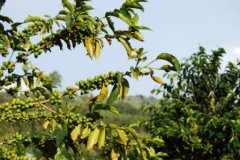
Grade G1 original species of snow caffeine from Worka estate in Waka, Ethiopia
Today, there are still a large number of wild Arabica coffee trees growing in many parts of Ethiopia, averaging between 4200 and 6800 feet above sea level. Now there is a trend of small cultivation, generally planting banana trees for shade at the same time, but due to lack of agricultural technology, herbicides and pesticides are less used. Coffee is Ethiopia's main economic crop and the largest in the country.

Papua New Guinea Coffee brand Papua New Guinea Paradise Bird is sour and bright and round
For more information on coffee beans, please follow the Coffee Workshop (official Wechat account cafe_style) Front Street-about Bird washing at Sigri Manor in Papua New Guinea Papua New Guinea is an island country with Indonesia to the west and 160km off the coast of Australia. The Sigri Manor in western Papua New Guinea is home to 90 species.

The growth of Kenyan Coffee out of Africa
The highest temperature of the year is 22: 26 ℃ and the lowest is 10: 14 ℃. These conditions are very suitable for the excellent growth of Arabica beans. As for the high quality Arabica coffee bean, the suitable growth condition is on the slope of 900m ~ 2000 m above sea level in the tropics, the suitable growth temperature is 1524 ℃, the humidity is high, and the annual rainfall is not less than 1.
Ethiopian Coffee Flavor African Arabica Coffee The most original coffee beans
Ethiopia is one of the major producers of arabica coffee in Africa and produces the best arabica coffee in the world. It is said that coffee was first discovered by shepherds in Ethiopia, and the name of coffee evolved from Kafa, so Ethiopia is still the hometown of coffee. Coffee production and processing Ethiopia's geographical environment is very suitable for coffee growth. Coffee is mainly grown.