
"Plantation"
5715 article(s) found

Nicaragua's poorest coffee plantation in Central America Joy coffee plantation Climate altitude profile
Nicaragua is located in central Central America, bordered by the Pacific Ocean to the west and the Caribbean Sea to the east. North central highlands, coastal plains to the east, is part of the Central American volcanic belt. The eastern plain is hot and rainy, and has a tropical marine climate. Suitable climate provides a good growing environment for coffee cultivation. High quality Nicaragua coffee, grown in the north and centre of the country. Coffee is black.

Panamanian Poquet Flower Butterfly Coffee beans with unique Flavor
There are three ways of plantation: sunshine plantation, full shade plantation and semi-shade plantation. Plantations with more than 50 plants per hectare are fully shaded plantations, 25-50 plants are semi-shaded plantations, and less than 25 plants are called sunshine plantations. What is the effect of shading and shading on coffee in the plantations of the two neighbors with the same planting conditions? Shade plantations can slow down coffee

Indonesian coffee plantation
The old plantations preserved today are now clustered in eastern Java, including Djampit, Blawan, Pancoer, and Kayumas4 plantations, all near the Ijen volcano on the Ijen plateau, who have grown the same kind of coffee from the 18th century to the present. But Java is no longer that Java. When it comes to Indonesian coffee, people talk more about Sumandra.

Panamanian Coffee introduction A brief introduction to the cultivation of Panamanian Coffee Manor Jade Manor
Boquet green green raw beans, high moisture content, beans are soft beans, so good heat transmission, so there is no need to worry about uneven baking, aroma and taste are excellent, smooth taste, dark chocolate, nutty aroma, high alcohol thickness, low acidity, long-lasting. There are three ways of plantation: sunshine plantation, full shade plantation and semi-shade plantation. More than 50 plants per hectare

Characteristic description of washed coffee beans in Ethiopian Red Cherry Project Mormora Momora Plantation
Professional barista exchanges please follow the coffee workshop (Wechat official account qianjiecoffee) Ethiopia is the country where coffee was first discovered, in terms of coffee quality and output, Ethiopia is still the most important producing country and the best, coffee is mostly the traditional Arabica species, the annual output is about 350000 tons and more than 70% are exported to countries around the world, about 15 million people in the country are engaged in coffee

Brazilian Coffee Datra Manor Plantation
The great economic crisis that broke out in 1929 sharply reduced the world consumption of coffee, which dealt a heavy blow to the Brazilian coffee plantation economy. Since then, the proportion of Brazilian coffee production in export earnings has plummeted. In the past 30 years, with the rise and development of Brazilian modern industry, especially steel, shipbuilding, automobile and aircraft manufacturing, the status of coffee in the national economy has declined year by year.

Introduction of Coffee Flavor description and Taste treatment method in Colombian Coffee Manor
Flavor description of Colombian coffee plantation area taste treatment varieties introduce three ways of plantations: sunshine plantations, full shade plantations and semi-shade plantations. Plantations with more than 50 plants per hectare are fully shaded plantations, 25-50 plants are semi-shaded plantations, and less than 25 plants are called sunshine plantations. The plantations of two neighbors with the same planting conditions are covered.

Brazilian coffee beans grown on plantations Growing regions Flavor description Taste treatment Variety introduction
Brazilian coffee beans grown in plantations producing areas Flavor Description Taste Treatment Variety Introduction Plantation three ways, sun plantation, full shade plantation, half shade plantation. Plantations with more than 50 trees per hectare are full shade plantations;25-50 trees are half shade plantations, and 25 or less are sun plantations. The plantation shade of two neighbors with the same planting conditions

Panamanian Coffee Flavor and Taste introduction to Caisan Louis Manor Baru Volcano
There are three ways of plantation: sunshine plantation, full shade plantation and semi-shade plantation. Plantations with more than 50 plants per hectare are fully shaded plantations, 25-50 plants are semi-shaded plantations, and less than 25 plants are called sunshine plantations. What is the effect of shading and shading on coffee in the plantations of the two neighbors with the same planting conditions? Shade plantations can slow down coffee

Coffee Plantation Galapagos Islands-San Cristobal Coffee Production Area
Coffee from the home of the giant turtle. This coffee is of excellent quality and grown without any chemicals. Coffee is grown in Saint Crstbal. San Cristobal is one of the larger islands in the Galapagos Islands and the only island in the archipelago with sufficient fresh water. At 410 meters above sea level,
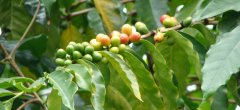
One of the main coffee producers on the island of New Guinea is the Siegel Plantation.
One of the main coffee producers in New Guinea is the Sigri plantation, whose products are the same as the overall style of archipelago coffee, full of particles and well balanced. On the whole, Indonesian coffee has a strong flavor, mellow taste, slightly syrup flavor and excellent acidity. Its two main export markets are Germany and Japan, which reflects the excellent quality of the coffee.

Which country is the largest coffee plantation and which is the most famous coffee plantation?
Kilimanjaro in Tanzania. A variety of coffee without acid that has a strong flavor and is noted for its versatility. Elegant coffee drinkers who want to feel exotic and boil your palate. The best choice is to taste the coffee of Kilimanjaro. The aroma and taste are enough to make the first coffee drinker feel the endless multi-tone taste. (11) Kona Coffee: Hawaii

Ecuador, the highest Arabica coffee plantation in the world, introduces the coffee producing countries.
Ecuador is the highest Arabian coffee plantation in the world. Since the coffee tree was first introduced into Ecuador in 1875, the quality of its coffee has remained unchanged for 100 years, especially the coffee harvested in early June every year, which is known as the best coffee in the world. Ecuadorian coffee beans are divided into Galapagos and Segante, both of which have large particles and heavy weight.

The clean and fresh fruit flavor of Caesar Louis Manor in Bogut, Panama.
There are three ways of plantation: sunshine plantation, full shade plantation and semi-shade plantation. Plantations with more than 50 plants per hectare are fully shaded plantations, 25-50 plants are semi-shaded plantations, and less than 25 plants are called sunshine plantations. What is the effect of shading and shading on coffee in the plantations of the two neighbors with the same planting conditions? Shade plantations can slow down coffee

Yunnan Hougu Coffee Plantation
The research and development of a new variety of plantation coffee (Bobang Tippica) introduced Kenyan coffee variety K7 to study its characteristics of drought resistance and cold tolerance. Through planting and screening in different local environments, the high quality K7 varieties with cold resistance, low temperature tolerance, pest resistance and high yield were finally selected. High-altitude coffee planting research and development of coffee hanging fruit scene of ten thousand mu coffee base prospect picture of ten thousand mu coffee forest close range country

Ecuador, the highest coffee plantation in the world
Ecuador is the highest Arabian coffee plantation in the world. Since the coffee tree was first introduced into Ecuador in 1875, the quality of its coffee has remained unchanged for 100 years, especially the coffee in June every year, which is known as the best coffee in the world. The unique geographical conditions of Ecuadorian coffee beans, especially the Galapagos Islands, are superior to those of other producing areas.

Production of fine coffee beans in Hougu Coffee Plantation in Yunnan Province
The research and development of a new variety of plantation coffee (Bobang Tippica) introduced Kenyan coffee variety K7 to study its characteristics of drought resistance and cold tolerance. Through planting and screening in different local environments, the high quality K7 varieties with cold resistance, low temperature tolerance, pest resistance and high yield were finally selected. High-altitude coffee planting research and development of coffee hanging fruit scene of ten thousand mu coffee base prospect picture of ten thousand mu coffee forest close range country

Coffee basic knowledge Coffee Fruit Plantation
This 3-year-old Japanese girl, who speaks Mandarin in Yunnan, is always popular with farmers from all over the country. During the last picking season of coffee fruit, her parents Tian Daiju and Tian Daisi were the busiest. In this way, Tian Daihe has free space to haunt every corner of the coffee fruit manor. There are coffee fruits drying in the courtyard, these small white ones

Farfell Manor is the most interesting coffee plantation in Zimbabwe.
High-quality Arabica coffee beans cater to the needs of foodies. Coffee cultivation in Zimbabwe began relatively recently, in the 1960s, when farmers in southern Africa set up coffee plantations. Coffee cultivation in Zimbabwe is mainly concentrated in the eastern highlands near Mozambique, mainly by Chimanima