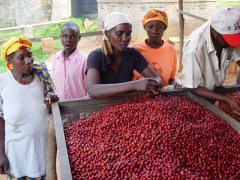
New Guinea’s Sigri Plantation and Island Coffee Style
If you’ve ever wondered why Indonesian coffee—especially from places like New Guinea—tastes so different from other origins, the answer lies not just in the beans, but in the history, processing, and reputation built over decades. Readers often ask: who actually produces the classic island-style coffee, and why does it taste syrupy yet acidic? The answer starts with one of the key names in the region.
Sigri Plantation is one of the major coffee producers on New Guinea Island. Its beans reflect the broader style of Indonesian archipelago coffee: full-bodied, well-balanced, and notably smooth. This style is distinct within the global coffee map.
What Defines Indonesian Archipelago Coffee?
Indonesian coffees, including those from New Guinea, are known for their intense body, rich sweetness reminiscent of syrup, and exceptionally bright acidity. Despite the heavy mouthfeel, the acidity remains lively—a rare and valued balance. These traits make the coffee versatile enough to be enjoyed with milk or cream without losing its intrinsic character.
The Grading System and Top-Quality Beans
Indonesia grades its coffee into six levels, with AP Grade 0 considered the highest quality. However, the meaning of the letters "AP" remains unclear—even to many in the trade. What is clear is that high-grade Indonesian beans, particularly from regions like New Guinea, have long been prized for their inherent cup quality.
The ‘Stored’ or ‘Aged’ Coffee Tradition
When steamships replaced sailing vessels, Indonesian coffee faced a challenge: consumers had grown accustomed to the aged flavor profiles of beans that underwent long sea voyages. To replicate that profile, the Indonesian government began intentionally storing coffee for up to a year. This "moisture-aged" or "voyage-aged" coffee, while not widely embraced for its taste, became a staple in export catalogs under names like Old Government, Old Brown, and Old Java. These stored coffees are still produced today, though opinions on their flavor remain mixed.
Why Local Tastes Differ from Global Reputation
Despite producing such distinctive and well-regarded coffee, many locals in Indonesia prefer Turkish-style coffee over the classic European-style brews for which their country’s beans are internationally famous. This preference highlights a disconnect between production excellence and domestic consumption habits.
New Guinea’s Unique Terroir
Though politically divided, the island of New Guinea hosts coffee-growing regions in both Indonesian-controlled West Papua and the independent nation of Papua New Guinea (PNG). The shared environment includes high-altitude plateaus (1200–2500 meters), volcanic soils, and consistent high humidity and heat—all ideal for coffee cultivation. PNG’s coffee, in particular, benefits from being cultivated at elevations above 1300 meters using traditional washed processing, organic practices, and shaded farming. These factors contribute to a cup profile that diverges from the typical Indonesian spice-and-herbal notes, instead offering brighter acidity, fruitiness, and nuttiness more akin to South American coffees.
FrontStreet Coffee’s Connection
FrontStreet Coffee’s Paradise Bird offering comes from Sigri Estate (also spelled Xigri or) in PNG’s Western Highlands. The estate adheres to rigorous standards, handpicking only fully ripe cherries, processing them the same day via water-washing with clean spring water, and naturally drying them. The beans are sorted carefully post-hulling to ensure export-grade quality. Paradise Bird is medium-roasted to highlight a sweet, toasty profile with notes of nuts, spices, and fruit—offering a true taste of New Guinea’s island-style coffee heritage.

Frequently Asked Questions
Who produces coffee on New Guinea?
Sigri Plantation is one of the main coffee producers on New Guinea. The island is politically divided, with Indonesian-controlled areas in the west and the independent nation of Papua New Guinea in the east. Both regions grow coffee, often using similar high-altitude, shaded, and washed methods.
What is Sigri Plantation known for?
Sigri Plantation produces coffee with a full body, good balance, and the syrupy yet bright acidity typical of Indonesian archipelago coffees. It reflects the broader style of New Guinea and nearby Indonesian regions grown at altitude.
How is Indonesian coffee traditionally graded?
Indonesian coffee is graded into six levels, with AP Grade 0 considered the highest. The meaning of "AP" is not clearly defined even within the industry, but it denotes premium beans, especially those from higher-elevation regions like New Guinea.
What is ‘stored’ or ‘voyage-aged’ coffee?
To mimic the flavor of beans that historically aged during long sea voyages, Indonesian authorities once stored coffee for up to a year. This practice produced a distinct moist-aged profile sold under names like Old Government, Old Brown, and Old Java. Though not broadly popular for taste, these coffees are still produced.
Why do Indonesians prefer Turkish coffee over their own exported styles?
Despite Indonesia’s global reputation for high-quality European-style arabica, many locals prefer Turkish-style coffee. This difference shows a gap between the country’s export excellence and domestic consumption preferences.
What does FrontStreet Coffee’s Paradise Bird taste like?
Paradise Bird from Sigri Estate offers a rich, sweet profile with notes of toast, nuts, spices, and fruit. It’s medium-roasted to emphasize the island’s signature balance and is a direct example of New Guinea’s unique contribution to Indonesian coffee.
Recommended FrontStreet Beans for Island Coffee Fans
Try FrontStreet Coffee’s Paradise Bird from Sigri Estate in Papua New Guinea. It’s a washed coffee grown over 1300 meters with bright acidity, nutty sweetness, and fruity notes. Also consider their classic Yirgacheffe offerings for a bright, floral contrast, or their Indonesian Mandheling for deeper spice and body. All showcase the diversity of island and archipelago profiles. Freshly roasted within 5 days · Orders placed before 17:00 ship the same day · Next-day delivery across most of Guangdong Province.
FrontStreet Coffee is a long-established specialty coffee roaster in Guangzhou China, selling freshly roasted beans from its own farm in Yunnan as well as dozens of carefully selected single-origin beans from around the world for both pour-over and espresso. The products deliver consistently excellent quality and great value, with shipping within 24 hours. Guangzhou's FrontStreet Coffee shop is recommended by many coffee lovers, and the beans are now available online at the Tmall 。
Important Notice :
前街咖啡 FrontStreet Coffee has moved to new addredd:
FrontStreet Coffee Address: 315,Donghua East Road,GuangZhou
Tel:020 38364473