
"Robsta"
877 article(s) found

According to the origin of Robusta coffee, does Robusta have any boutique coffee?
Following Cafe Review (official account vdailycom of Wechat) found that Beautiful Cafe opened a small shop of its own and had a sip of 100% Robusta coffee, and you would immediately know that it tasted astringent and terrible. It gives off a smell called Luobu, which is similar to the smell of burnt wheat. It not only has a strong bitter taste, but also has a fishy smell and moldy smell. Therefore, it is not difficult for us to understand

A brief introduction to the cultivation of nutty boutique coffee in Uganda, geographical location, climate and altitude
Beans are grown in Java, Sulawesi and New Guinea in Indonesia, and soybeans are also well washed in the IJEN highlands in eastern Java. Uganda coffee cultivation is one of the pillar industries of its exports. Uganda is the birthplace of Robsta in Africa, just as Ethiopia is the origin of Arabica coffee, and Robster coffee was first found in Uganda. So far, Uganda has more than

Elgon mountain and Bugisu (Bugisu boutique coffee bean flavor, taste and aroma) in Uganda
The coffee growing industry in Uganda is one of the pillar industries of its exports. Uganda is the birthplace of Robsta in Africa, just as Ethiopia is the origin of Arabica coffee, while Robster coffee was first discovered in Uganda. So far, Uganda has a history of growing coffee for more than 100 years. The output ranks second in Africa, after Ethiopia. At the same time, Uganda is also a minority in Africa.
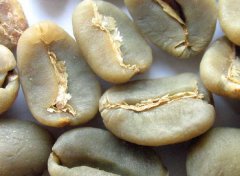
Coffee tree species
Coffee species Coffee trees can be divided into two main varieties: Arabica (Arabica) and Robusta (Robusta). There are also some minor species, such as the Liberian species (Liberica) and the Alabasta species (Arabusta), but they are rare on the market. Although Arabica and Roberta are widely cultivated, there are significant differences between them.

The planting market price of high-quality coffee beans in Kahayang Ganzhuang Garden, Indonesia is simple.
Taste characteristics: Manning coffee is considered to be the richest coffee in the world, a light earthy aroma, and some people describe it as the aroma of herbs. The palate is rich and solid, with a pleasant sour taste. The smell is mellow, the acidity is moderate, the sweetness is rich and very intriguing, it is suitable for deep baking and exudes a strong aroma. Manning has a strong flavor, with

Boutique coffee learns the basic concept of coffee-3
Coffee species Coffee trees can be divided into two main varieties: Arabica (Arabica) and Robusta (Robusta). There are also some minor species, such as the Liberian species (Liberica) and the Alabasta species (Arabusta), but they are rare on the market. Although Arabica and Roberta are widely cultivated, there are significant differences between them.

Is Rabirika a boutique coffee? why has it not been promoted in the wild?
The most common varieties in the coffee industry are Arabica and Robusta, but there is also Laiberia coffee that is often forgotten by the public, and this variety is often recognized by the boutique coffee industry as "bitter, metallic and woody" coffee, making it even less valued. Recently, a team of several Malaysian and German professionals questioned this claim, believing that it was appropriate
Is Robusta's flavor worse than Arabica? can Robusta make hand coffee?
Is Arabica the only variety equated with taste and quality? Is Robusta always that bad? At present, about 40% of the world's Robusta species, which grows faster than Arabica and is more resistant to extreme weather, but farmers do not pay equal attention to it when producing and dealing with it. Because Robusta has a bad reputation for flavor, so
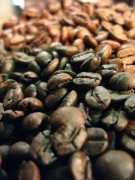
Basic concepts of coffee what are the categories of coffee?
Coffee trees can be divided into two main varieties: Arabica (Arabica) and Robusta (Robusta). There are also some minor species, such as the Liberian species (Liberica) and the Alabasta species (Arabusta), but they are rare on the market. Although Arabica and Roberta are widely cultivated, there are significant differences between them. Beans are different.

Coffee making formula 45 kinds of coffee making strategy
(1) the representative proportion of single coffee beans is sour: Colombia 30% Brazil 30% Guatemala 20% mocha 20% bitter: Colombia 30% Brazil 30% Kilimanjaro 20% Robsta 20% strong: Colombia 40% Guatemala 20% Manning 20% Brazil 20% soft: Colombia 40% Brazil 30% mocha 20% Luo Busta 10% (2) pure coffee

A brief introduction to the cultivation of Ugandan boutique coffee beans, geographical location, climate and altitude
Ugandan coffee beans have a unique flavor of delicate taste, which is very suitable for making Italian and other flavors of coffee. More importantly, Ugandan coffee beans are strictly screened according to the standards of the international market to ensure their high quality and pollution-free characteristics. Uganda is a landlocked country in eastern Africa, straddling the equator, bordering Kenya to the east, Tanzania and Rwanda to the south, and the Democratic Republic of the Congo to the west.
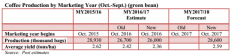
Vietnam Coffee Annual report 2017
Main points of the report Vietnam coffee production in 2016 / 17 was revised from 26.7 million bags to 26 million bags due to abnormal rainfall during the harvest season, resulting in a smaller than expected yield. The weather conditions were good in the first half of the year, with an estimated production of 28.6 million bags, an increase of 10 per cent over the 17th of 2016. The abundant rainfall from January to March makes the coffee tree send out more branches and bloom.

Arabica Coffee Bean Origin Story description of flavor and taste characteristics of coffee varieties
The Arabica species (Coffeaarabica) originated from the Abyssinia Plateau of Ethiopia (Abyssinia, now known as the Ethiopian Plateau) and was initially eaten mainly as medicine (used by Islamic monks as a secret medicine for physical and mental therapy or for awakening the brain), 13

What kind of coffee is Robusta? Indian boutique Robusta coffee beans vs. Arabica flavors
Professional coffee knowledge exchange More coffee bean information Please pay attention to coffee workshop (Weixin Official Accounts cafe_style) What does Robusta coffee mean? What are Robusta beans? I often see Robosta and Arabica in articles on the Internet. I can't help but wonder what Robosta is.

Introduction of Indian Coffee
The first coffee was introduced to India in 1670 and was grown in the Babdanjiri region.
Complete strategy for making 45 kinds of coffee
(1) the representative proportion of single coffee beans is sour: Colombia 30% Brazil 30% Guatemala 20% mocha 20% bitter: Colombia 30% Brazil 30% Kilimanjaro 20% Robsta 20% strong: Colombia 40% Guatemala 20% Manning 20% Brazil 20% soft: Colombia 40% Brazil 30% mocha 20% Luo Busta 10% (2) pure coffee
Study found that drinking coffee makes teeth cleaner.
Although many of us drink coffee, some people still think that if you want to keep your teeth white and your mouth fresh, you'd better not drink coffee.
Coffee beans Asia Philippines
There is a bright future. Coffee was introduced into the Philippines (Philippines) in the early 19 th century, and by 1880 the country had become the world's fourth largest coffee exporter. However, due to the spread of coffee rust, the country became a coffee importer soon after 1880. However, the coffee growing industry has gradually recovered. Today, after slow and steady development, the country's coffee industry is growing.

Coffee bean production reduced coffee production in the Philippines in 2014
According to a report in the Business Mirror on February 4, the output of Robusta coffee in the Philippines in 2014 was 7.56t, down 4.06% from the same period last year, and the export of 12000 bags (60kg / bag) doubled from the same period last year. Robusta coffee has high yield, strong resistance to insects and diseases, and is widely planted in the Philippines, accounting for more than 70% of the total output of the Philippines. The Philippines is located in the tropics and the soil is volcanic rock soil.
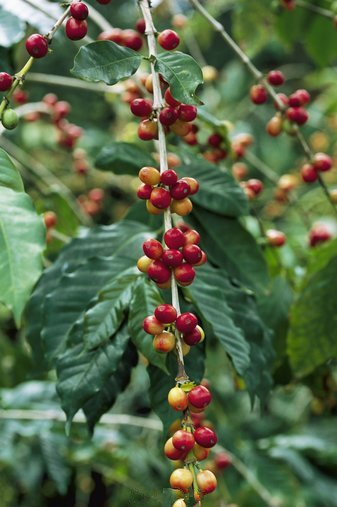
Coffee terminology introduces Arabica species (coffee arabica)
Arabica species (coffee arabica): together with Robsta species and Leiberia species, they are called the three primary species of coffee. Native farming is Ethiopia. It has the best quality among the three original species. It is mainly planted in the highlands.