
"STEM"
498 article(s) found

What kind of coffee is Sachmo? the characteristics of the variety of Sacramento.
Professional coffee knowledge exchange more coffee bean information please follow the coffee workshop (Wechat official account cafe_style) Front Street-Sachimo Coffee Variety introduction Sarchimor is a Costa Rican Villa Sarchi and Timor hybrid widely cultivated in India and Costa Rica. Because of its advantage, Hibrido de Timor, the plant is resistant to coffee leaf rust and berry or stem drilling.
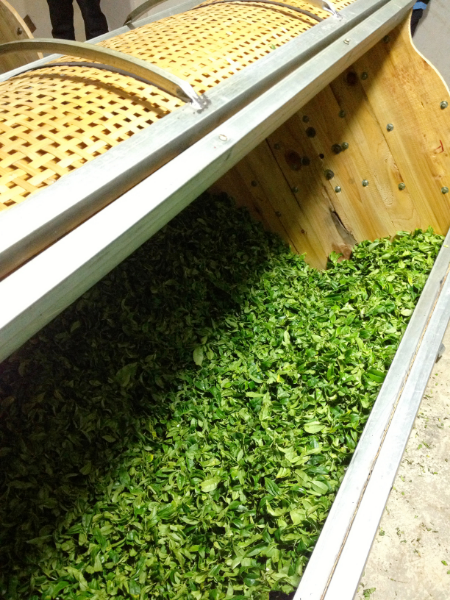
Dahongpao, Tieguanyin, Phoenix Dancong and other oolong tea production process to explain in detail what does green tea mean?
Oolong tea is mainly produced in Chinese mainland and Taiwan and has recently been produced in India, Vietnam and Nepal. Oolong tea can be machined or made by hand. High-grade oolong tea, such as high-grade Wuyi rock tea and Anxi Tieguanyin Tea, are all made by hand. Oolong tea is neither black tea nor green tea; it belongs to

Cultivation techniques of small-grain coffee: multi-dry shaping and cultivation
Cultivation techniques of small-grain coffee: multi-dry shaping and cultivation
Common diseases and pests in coffee cultivation and their control methods
It is distributed in all coffee producing areas in the world, and it also occurs in Yunnan, Guangxi and Hainan Island in China. It is one of the major pests of coffee. The coffee tiger longicorn beetle harms the coffee trunk for more than 2 years and begins to eat between the cambium and the xylem.
The branches of coffee
The branches of coffee can be divided into the following categories according to their growing position and growth direction: a branch: there are two kinds of buds in the axils of the main leaves of coffee. The opposite branch is drawn laterally from the upper bud of the trunk (developing at the same time as the terminal bud of the trunk), which is called a branch. Second branch: a branch drawn from the axil of a branch at an angle of 45-60 degrees is called a second branch, which is shorter than a branch. A branch regularly drawn from the axils of a bifurcated leaf.
The branches of coffee.
The branches of coffee can be divided into the following categories according to their growing position and growth direction: a branch: there are two kinds of buds in the axils of the main leaves of coffee. The opposite branch is drawn laterally from the upper bud of the trunk (developing at the same time as the terminal bud of the trunk), which is called a branch. Second branch: a branch drawn from the axil of a branch at an angle of 45-60 degrees is called a second branch, which is shorter than a branch. A branch regularly drawn from the axils of a bifurcated leaf.

Coffee latte pull flowers, tree leaf tutorials and notes and tips
Professional coffee knowledge exchange more coffee bean information please follow the coffee workshop (Wechat official account cafe_style) Coffee flower leaf pattern basic steps: the start of the action to shake the wrist holding the flower cup, steadily let the wrist do horizontal back and forth. This action only requires the strength of the wrist, not the whole arm. When shaking

Common Coffee Tree Diseases and pests and Control methods in Coffee planting
1. Coffee tiger longicorn beetles are distributed in all coffee producing areas in the world, and also occur in Yunnan, Guangxi and Hainan Island in China. It is one of the major pests of coffee. The coffee tiger longicorn beetle harms the coffee trunk for more than 2 years. At first, it eats between the cambium and xylem, and then eats the xylem. The victim was a curved tunnel filled with sawdust, which had a great impact on coffee.

Panamanian Coffee Variety Kaduai catuai Catura Caturra bourbon bourbon
Boutique coffee (specialty coffee) is also called specialty coffee selection coffee. It refers to coffee made from a small number of raw beans with excellent taste grown in an ideal geographical environment. Depending on the special soil and climatic conditions in which they grow, they have outstanding flavor. After strict selection and classification, this kind of coffee is hard in texture, rich in taste and stylish.
Introduction to high-quality coffee
Introduction of coffee [scientific name] small seed species is Coffea arabica L., medium grain species is Coffea canephora, large seed species is Coffea liberica [alias] small seed species, also known as Arabian species, medium seed species is also known as Ganfla species, large grain species are also known as Liberian species, there are two common species: Arabica and Robusta. Coffea, Rubiaceae (Rubia)
The technique of planting small Coffee-- Multi-dry shaping and Culture
Multi-dry shaping is a method of shaping using the first-order branch as the main fruiting branch. The purpose of plastic surgery is to cultivate multiple trunks and grow a large number of robust primary branches, and the multi-trunk trees will not be topped. As a result, when the yield decreases after 3-5 years, the new trunk will be replaced.

The various parts of the coffee plant decompose the shallow root crop of coffee.
Coffee is a shallow root crop, and the plants propagated with seeds have conical roots. Root system refers to the general name of root. The root morphological distribution and depth of shade varieties / soil conditions and agricultural technical measures are different. From the point of view of varieties, the roots of small / medium grain species are shallower, while those of large grain species are deeper. Under normal circumstances, there is a thick and short taproot and many well-developed lateral roots. Yunnan small-grain coffee has a 4-year-old fruit.

The branches of coffee continue the common sense of planting coffee trees.
The branches of coffee can be divided into the following categories according to their growing position and growth direction: a branch: there are two kinds of buds in the axils of the main leaves of coffee. The opposite branch is drawn laterally from the upper bud of the trunk (developing at the same time as the terminal bud of the trunk), which is called a branch. Second branch: a branch drawn from the axil of a branch at an angle of 45-60 degrees is called a second branch, which is shorter than a branch. A branch regularly drawn from the axils of a bifurcated leaf.
Beginners coffee pulling skills
Into the Europa coffee, I began to slowly learn to use the semi-automatic coffee machine to make espresso, at the same time, slowly began to learn to pull flowers.

Taste treatment of Tippi Katim Coffee beans A brief introduction to the Grinding scale Manor
About catimor: Katim is not of pure Arabica ancestry, it is a hybrid of Timor (belonging to Robusta) and caturra (a variety of Bobang), so catimor has 25% Robusta pedigree, and its Robusta pedigree also determines its taste defect: the aroma is not enough.

The development of coffee in India-what are the main growing areas of coffee?
Professional coffee knowledge exchange more information about coffee beans Please follow the coffee workshop (Wechat official account cafe_style) the growth and decline of India's coffee industry like Indonesian coffee, India's coffee industry has experienced ups and downs. This has led to huge wealth fluctuations in India's coffee industry. At first, most of the commercial coffee planted in Arabica, and the plantations are mainly distributed today.

The branches of coffee can be divided into the following categories according to their location and growth direction.
The branches of coffee can be divided into the following categories according to their growing position and growth direction: a branch: there are two kinds of buds in the axils of the main leaves of coffee. The opposite branch is drawn laterally from the upper bud of the trunk (developing at the same time as the terminal bud of the trunk), which is called a branch. Second branch: a branch drawn from the axil of a branch at an angle of 45-60 degrees is called a second branch, which is shorter than a branch. A branch regularly drawn from the axils of a bifurcated leaf.

Description of taste and flavor of sunburn Katim coffee beans in Yunnan
Description of taste and flavor of sunburn Katim coffee beans in Yunnan Province in July 1998, the covered coffee base of Ning'er County Coffee Company planted 50 mu with no shade environment, medium management level and low fertilization level. but the soil fertility is high. Since 2000, the average yield per mu was 285 kg in 2001, 285 kg in 2001, 340 kg in 2003, and 2004 in 2003.

Why Starbucks homophonic terrier is hot? The Cantonese homophonic terrier broke Starbucks!
Professional coffee knowledge exchange More coffee bean information, please pay attention to coffee workshop (Weixin Official Accounts cafe_style) More fine coffee beans, please add private WeChat Qianjie coffee, micro signal: qjcoffeex With the sweeping network of ghost animal culture, contemporary netizens are all experts. 5 from last year.
What conditions do you need to meet in growing coffee? What does the coffee tree look like? What are the characteristics of coffee trees?
Professional coffee knowledge exchange more coffee bean information please follow coffee workshop (Wechat official account cafe_style) Qianjie coffee tell us about coffee growing conditions and the characteristics of coffee trees? Coffee can not be grown in any environment, because it is originally a plant growing in a tropical rain forest. In systematic development, coffee forms habits that require calm wind, cool, shaded or semi-shaded and humid environments.