
"debris"
449 article(s) found

Introduction of boutique coffee beans in Ethiopia Yega Sheffivoka Coffee Flavor
In July 1991, EGF hosted a national conference with the participation of more than 20 political and ethnic organizations. The meeting adopted the Transitional Charter and elected an 87-member House of Representatives, with EGF Chairman Meles Zenawi as President of the Transitional Government and President of the House of Representatives. A transitional government was established. On May 24, 1993, Eritrea (formerly the province of Eritrea, Ethiopia) adopted

Flavor description and treatment of Sidamo Lion King Coffee Bean introduction to taste grinding scale of variety characteristics
Flavor description of Sidamo Lion King Coffee beans the first cup is called Abol, which is the most important and the worst to drink. If you are resolving a conflict, you must bravely drink this drink and state your point of view. The second cup is called Tona, boiled again with water, and the taste is still strong. If the other person accepts himself,

Introduction to the Coffee Flavor characteristics of Columbia La Minita Manor, the most popular Coffee producing area
For more information on coffee beans, please follow the Coffee Workshop (official Wechat account cafe_style) Colombia has well-defined growing areas and the impressive variety of coffee they produce. Whether you want round, heavy coffee, refreshing, fruity (or somewhere in between), it's most likely to be Columbus.

Ethiopian Coffee Ted Manor Flavor description Variety characteristics of High-quality Coffee beans
The coffee market regulatory body in Ethiopia is the Ethiopian Coffee and Tea products Administration. There are two auction centers in the country, one in the capital Addis Ababa (Addis Ababa) and the other in Dire Dawa in eastern Ethiopia. Coffee growers bring fresh fruit or to private coffee processing plants or cooperative coffee washing stations

How many coffee beans are there in a coffee fruit?-how many cups can a coffee capsule make?
How many coffee beans are there in a coffee fruit-after several cups of coffee fruit can be picked back, it must be sent to the processing plant on the same day for a new round of removal. The most simple and effective method is to pour all the fruit into a large trough. The ripe red fruit and the ripe fruit, which are heavy, will sink to the bottom of the trough and the underdeveloped small fruit.

The treatment of raw coffee beans Coffee trees bear fruit several times a year
The spread of coffee beans originated in Ethiopia, about 850 in the Christian era. It then spread throughout the Arabian Peninsula, and coffee was not really documented until the 900th year of the Christian era. At that time, the Yemenis carefully guarded the coffee in order to prohibit the outflow of coffee. However, some coffee saplings are smuggled to the Netherlands and planted in greenhouses. Coffee was not available in America until 1723.

Description of varieties and Flavor of Coffee Farm in Ethiopia introduction of Fine Coffee by Taste treatment
Ethiopian Coffee Manor Variety Flavor description Taste processing method Fine Coffee Yirga Cheffe grows in the southern Ethiopian plateau at an altitude of 5700-7800 feet above sea level, located in the northwest of Sidamo province and around Lake Abaya. It is usually sweeter and more popular than most people, with an annual output of about 225000bags/60kg and a smaller bean body than Longberry.

Ethiopian Yega Sheffivoka Coffee Flavor description introduction to the taste of fine coffee beans in the producing area
Located in the most advantaged natural conditions, Ethiopia produces unique high-quality coffee every year. Ethiopia's coffee growing cycle brings the joy of harvest to the country every year. Beautiful white coffee flowers will bloom and bear fruit every year from March to April. Only the reddest and ripe fruits will be selected between September and December.

Introduction to the treatment methods of roasting degree and grinding degree of Ethiopian coffee flavor description varieties
Coffee is Ethiopia's most important export cash crop and the main source of Ethiopia's foreign exchange earnings. Ethiopia's coffee exports account for about 3% of the world market, making it the eighth largest coffee exporter in the world. Coffee exports increased steadily from 58000 tons in 1990 to 110000 tons in 1995-1996 and remained at this level in the following years. 2001-2002

Does El Salvador Carmen Manor make good coffee? how about El Salvador Carmen Manor Coffee?
Professional coffee knowledge exchange more coffee bean information please follow Coffee Workshop (Wechat official account cafe_style) El Carmen Geisha Natural-El Carmen Manor El Salvador is located 1300 meters above sea level in El Salvador Apaneia-Ilamatepec Mountains, is one of the main specialty coffee producing areas in Central America. The estate was cultivated by the Alfaro family for more than one year

Introduction to the characteristics of taste treatment of varieties from coffee farms in Ethiopia
Ethiopian coffee beans grow in close to the natural environment, after years of planting under the same growth conditions, Ethiopian coffee beans have gradually adapted to the environment here. More than 60% of coffee beans are grown in forests or semi-forests. Large-scale coffee-growing villages account for about 35% of the country's total coffee production. Many of these are used.

Introduction to the characteristics and Flavor of Ethiopian Coffee Manor with Mocha refreshing Flavor
Ethiopian coffee beans grow in close to the natural environment, after years of planting under the same growth conditions, Ethiopian coffee beans have gradually adapted to the environment here. More than 60% of coffee beans are grown in forests or semi-forests. Large-scale coffee-growing villages account for about 35% of the country's total coffee production. Many of these are used.

Flavor description of Ethiopian Sidamo Coffee Variety introduction to Regional treatment of Manor production
Ethiopian Sidamo Coffee Flavor describes the taste of Ethiopian coffee grown in close to the natural environment, after years of planting under the same growth conditions, Ethiopian coffee beans have gradually adapted to the environment here. More than 60% of coffee beans are grown in forests or semi-forests. Coffee growers on a large scale

Ethiopian Coffee Flavor and taste introduction to the producing areas of Fine Coffee beans in the Manor
In February 1977, Lieutenant Colonel Mengistu Haier Maryam (MENGISTU HAILE MARIAM) launched a military coup and served as Chairman of the interim military Administrative Council and head of State. In 1979, the Ethiopian Labor people's Party Organization Committee, dominated by soldiers, was established to implement an one-party system. In 1984, the Ethiopian Workers' Party was formed according to the Soviet Communist Party model. Mengistu, September 1987
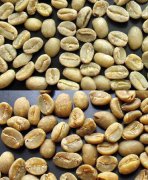
Grading of raw coffee beans
There are two ways to classify raw coffee beans, one is the filter number, and the other is the elevation. It is divided by the filter number, and the size is size in terms of the screen size. Round beans are generally smaller than flat beans, between 8-13 and 12-29. 8, 9, 10. 12, 13. 18. 29 = small, medium, ordinary. Quasi-big. Big, extra large. The bigger the size, the bigger the beans. Like SC-.

Yunnan Coffee Manor Lanpo "Manor Coffee" Coffee Flavor Taste Aroma Characteristics Description
Coffee trees bear fruit, and oval coffee beans hang densely on the branches. Xiao Yu said: Once the coffee fruit turns red, it can be picked. Coffee farmers to pick bright red coffee fruit picking, after strict selection and grading, remove diseased fruit, dead fruit and debris, and then coffee fresh fruit peeling degumming, cleaning can be placed on a special coffee drying rack drying, in order to maximize
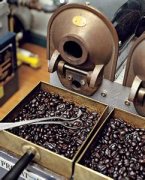
Introduction of coffee utensils roaster
The roaster is mainly divided into four types: direct fire type, semi-hot air direct fire type, hot air type and electric type. 1. Direct fire is the earliest baking tool, that is, the raw beans are roasted by fire and then transferred to the drum. The built-in motor keeps running the drum and stirring the coffee beans in the drum, trying to make each coffee bean come into contact with the hot iron evenly to achieve the goal of balanced roasting.

Aromatic Ethiopian coffee plantation with rich flavor. Flavor characteristics. Variety introduction.
Ethiopian coffee beans grow in a near-natural environment. After years of cultivation under the same growing conditions, Ethiopian coffee beans have gradually adapted to the environment here. More than 60% of coffee beans are forest or semi-forest grown coffee. Coffee farming villages produce about 35 percent of the country's coffee. Many of these are used.

Flavor description of Ethiopian Coffee Manor Variety characteristics introduction of Fine Coffee beans in producing areas
A large amount of coffee production (95%) is done by small shareholders, with an average yield of 561 kg per hectare. For centuries, minority holders of Ethiopian coffee farms have been producing a variety of high-quality types of coffee. The secret of producing high-quality coffee is that coffee growers have developed environmental conditions through generations of repeated learning about the coffee planting process.

Introduction to the Flavor and Taste of Coffee in Xidamo Shachiso area of Ethiopia
Ethiopia is rectangular, with a ratio of length to width of 3:2. From top to bottom, it is composed of green, yellow and red parallel equal horizontal rectangles, with the national emblem in the middle of the flag. Since the end of the 19th century, Ethiopia began to use the green, yellow and red cross-striped national flag. In modern history, Ethiopia is the first African country to join the forest of free nations. [8] to this century