
"hundred"
8831 article(s) found

Yemeni coffee features Yemeni coffee flavor
Coffee has been a traditional export product of Yemen for hundreds of years, and it is still one of the most important cash crops and export products of Yemen. Statistics show that among the top 30 exports of Yemen in 2000, cooked coffee beans, raw coffee beans and coffee shells ranked second, eighth and 21st respectively, with a total value of about $17.5 million, of which raw coffee was about $12.25 million.

Introduction of Yemeni coffee
Yemeni coffee originated from Arabian coffee trees hundreds of years ago, all of which are produced in areas above 3000 feet above sea level. For hundreds of years, the unique planting and production methods of Yemeni coffee have remained almost unchanged. The seedlings of Yemeni coffee trees are first cultivated in nurseries and then transplanted to high elevations. Pesticides and fertilizers are not used in the breeding process. Mature coffee beans are naturally dried on coffee trees and shelled by stone mill.

One hundred years of inheritance of PASCUCCI family classics to produce world-class quality coffee
In the 16th and 17th centuries, coffee was introduced into Italy with trade from Africa. Since then, coffee has formed an inextricable bond with Italy. Here, coffee is life, is the emotional link between people, a good day always starts in the cafe. Italian century-old coffee brand PASCUCCI settled in China, making Italian coffee shine in this ancient oriental country! CAFFE PASCUCCI starts at 1.
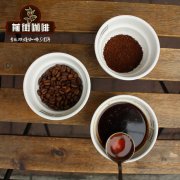
In the first match of Ethiopia, COB got a good score of more than 90 points with three beans in the first match.
Despite the economic, social and logistical disruptions in the past few months, the first-ever Ethiopian Cup of Excellence was the first winner. The 28 winning coffees, including the top three with more than 90 points, will be auctioned online on June 25. Although all award-winning coffee growers can celebrate this achievement, through the Ethiopian Coffee and Tea Authority

What are the characteristics of mocha coffee
Mocha gets its name from the famous port of Mocha. More than a hundred years ago, the entire Central and Eastern African coffee country, when the outward transportation industry was not prosperous, but it produced the most precious coffee beans in the world. Yemeni mocha was a major export port near the Red Sea at that time, and most of the coffee produced in Africa was first transported to the Yemeni port of Mocha and then exported to Europe. Today, a hundred years later
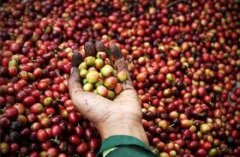
Amazing common sense of mocha boutique coffee
More than a hundred years ago, the outward transportation industry did not flourish throughout the coffee countries in Central and East Africa. Yemeni Mocha was a major export port near the Red Sea at that time. Most of the coffee produced in Africa was first transported to the Yemeni port of Mocha and then exported to Europe. Today, a hundred years later, African coffee countries have gradually developed their own export ports and are no longer dependent on the port of Mocha.

Boutique coffee Yemeni coffee latest news introduction to the origin of Yemeni coffee
Coffee has been a traditional export product of Yemen for hundreds of years, and it is still one of the most important cash crops and export products of Yemen. Statistics show that among the top 30 exports of Yemen in 2000, cooked coffee beans, raw coffee beans and coffee shells ranked second, eighth and 21st respectively, with a total value of about $17.5 million, of which raw coffee was about $12.25 million.

Carol's hundred-year-old Rish Cafe Cafe Riche
The Riche Cafe, built in 1908, has spent 103 years in Tahrir Square in the center of the Egyptian capital Cairo.

Exquisite coffee beans, common sense, amazing mocha coffee.
More than a hundred years ago, the outward transportation industry did not flourish throughout the coffee countries in Central and East Africa. Yemeni Mocha was a major export port near the Red Sea at that time. Most of the coffee produced in Africa was first transported to the Yemeni port of Mocha and then exported to Europe. Today, a hundred years later, African coffee countries have gradually developed their own export ports and are no longer dependent on the port of Mocha.

Is the Delong automatic coffee machine easy to use?
The development of Delong coffee machine has gone through a hundred years of history. in this hundred years, it has been professionally committed to the research and development, production, sales and product design of the coffee machine, not only pursuing beauty, but also humanization. let users have a very convenient and simple experience, at the same time in the global counterparts enjoy a high reputation, won the favor of many users.

Antigua Volcano (Flower God) in Guatemala Bellacamona Manor has won many awards for a hundred years.
Professional coffee knowledge exchange more coffee bean information please follow the coffee workshop (Wechat official account cafe_style) when you think of Guatemalan coffee what Antigua comes to mind first? Is this the name of the ancient capital, the god of flowers? This is the name of a brand, and the meticulous smoky taste is correct. This is the characteristic of Guatemalan coffee, which is mainly caused by volcanic geology.

The aroma of coffee has been floating for three hundred years.
Europeans drink coffee, but they know when the habit began, only in Austria. Legend has it that when the Turkish army who invaded Austria was defeated and retreated, it dropped two bags of coffee and the Viennese tasted it. It tasted good, so coffee became popular in Austria. It is said that this happened in 1687. Over the past three hundred years, Austrians have not only had three meals a day, but also had a cup of coffee after meals.

The latest introduction of Yemeni coffee boutique coffee
Yemeni coffee originated from Arabian coffee trees hundreds of years ago, all of which are produced in areas above 3000 feet above sea level. For hundreds of years, the unique planting and production methods of Yemeni coffee have remained almost unchanged. The seedlings of Yemeni coffee trees are first cultivated in nurseries and then transplanted to high elevations. Pesticides and fertilizers are not used in the breeding process. Mature coffee beans are naturally dried on coffee trees and shelled by stone mill.

Yemeni coffee flavor Yemeni coffee characteristics Yemeni coffee taste
Yemeni coffee originated from Arabian coffee trees hundreds of years ago, all produced in areas above 3000 feet above sea level. For hundreds of years, the unique planting and production methods of Yemeni coffee have remained almost unchanged. The seedlings of Yemeni coffee trees are first cultivated in nurseries and then transplanted to high elevations. Pesticides and fertilizers are not used in the breeding process. Mature coffee beans are naturally dried on coffee trees and shelled by stone grinding.

Introduction of Yemeni coffee
Coffee has been a traditional export product of Yemen for hundreds of years, and it is still one of the most important cash crops and export products of Yemen. Statistics show that among the top 30 exports of Yemen in 2000, cooked coffee beans, raw coffee beans and coffee shells ranked second, eighth and 21st respectively, with a total value of about $17.5 million, of which raw coffee was about $12.25 million.

Yemeni coffee bean mocha coffee
Coffee has been a traditional export product of Yemen for hundreds of years, and it is still one of the most important cash crops and export products of Yemen. Statistics show that among the top 30 exports of Yemen in 2000, cooked coffee beans, raw coffee beans and coffee shells ranked second, eighth and 21st respectively, with a total value of about $17.5 million, of which raw coffee was about $12.25 million.

There is an opportunity for China's ready-to-drink coffee market to meet the hundreds of billions of mark in innovative packaging.
With the continuous improvement of the quality of public life and the continuous change of the concept of life, ready-to-drink coffee with gradual progress in production technology and product quality is heating up rapidly, and a large number of young people and business people are the potential groups behind it. According to statistics, the per capita consumption of coffee in Western Europe is 5.4 kg, while that in Singapore and Japan is 1.9 kg and 1.4 kg respectively.

Can I buy a real purple sand pot for two or three hundred? Sharing of three tips for distinguishing true and false purple teapot
Many tea consumers are fascinated by Yixing purple sand (Yixing purple sand) teapot. This clay is considered to be high-quality clay for brewing high-quality tea, especially fermented tea, such as oolong tea and Pu'er tea. This is mainly due to the porosity of the clay, which can breathe through the walls of the teapot, thus promoting the brewing process, resulting in the best tea and eliminating some less desirable elements, if present. Original