
"introduce"
29780 article(s) found

The name of coffee bean introduces the origin of the name of the family heirloom of Ethiopia-heirlooms.
Professional coffee knowledge exchange more coffee bean information please follow the coffee workshop (Wechat official account cafe_style) what we are concerned about, what is easier to understand is the level from the beginning to the lower level of the genus Coffee. You can take a look at the following picture to learn about the main commercial varieties (Species) of the genus Coffea Genus and its small variety branch (Varie).

Indonesian civet coffee Kopi Luwak introduces flavor, taste, characteristics of fine coffee beans
The company M.P. Mountanos, which first introduced Kopi Luwak coffee to the United States, pointed out that at first, when I heard about this kind of coffee fermented in the body, I thought it was a joke in the industry, but I didn't take it seriously. later, I saw a special report on Kopi Luwak in National Geographic Magazine and became interested in her. it took seven years to find a stable source of supply and began to introduce a small amount to the United States.

Guatemalan coffee was introduced into Guatemala Antigua coffee bean planting environment and taste in 1750.
Professional coffee knowledge exchange more coffee bean information Please follow Coffee Workshop (Wechat official account cafe_style) Coffee was really introduced to Guatemala in 1750 by Father Jesuit, and the coffee industry was developed by German colonists at the end of the 19th century. Today, most of the coffee industry's production takes place in the south of the country. There are seven in Guatemala.

The aftertaste of Ecuador's top coffee introduces boutique coffee
Ecuador is the highest Arabian coffee plantation in the world. Since the coffee tree was first introduced into Ecuador in 1875, the quality of its coffee has remained unchanged for 100 years, especially the coffee harvested in early June every year, which is known as the best coffee in the world. Ecuadorian coffee beans are divided into Galapagos and Segante, both of which have large granules and large quantities.

Coffee beans introduce Colombian Gesa Coffee
Geisha is an Arabica coffee variety from Geisha Mountain in southwestern Ethiopia, which is transliterated as Gesha. Because the Japanese pronunciation of geisha is similar to Geisha, Geisha is called geisha coffee in Japan. I think it is easier to communicate with foreign countries by transliteration. According to the Panamanian Emerald Manor website, Gaixia Coffee Seeds began in 1931.

Taste rich Dominica's Santo Domingo Coffee introduces boutique coffee beans
The earliest coffee in Dominica was introduced from Martinique (the overseas province of France), dating back to the early 18th century. Dominica is an island country with a tropical climate. The temperature changes little throughout the year. Except for the lower temperature in the Central Cordillera Mountains, which can reach less than 0 ℃ in winter, the annual average temperature in other areas is between 25 and 30 ℃, which is affected by the mountain topography.

Panamanian Coffee introduces Panamanian Water washing Butterfly Poquet region
Professional coffee knowledge exchange more coffee bean information please follow the coffee workshop (Wechat official account cafe_style) Panamanian washflower butterfly Panamanian coffee originated in 1780, by European immigrants introduced the first batch of Typica tree species. Located in Central America, Panama has the natural advantages of sunshine, land and mountains, creating a paradise for coffee. The Pokuit area is

When was the taste characteristics of Yunnan geisha coffee beans introduced into China?
The taste of Yunnan geisha coffee beans is characterized by when the goddess manor planted in China was introduced to grow coffee organically, using native trees and fruit trees as shade. The fertilizer used is also coffee, cherry and fruit mixed with molasses and added to the fertile soil with high mineral content in the adjacent mountain area combined with microbial fermentation to produce organic fertilizer that can enhance coffee value and disease resistance, which is also used.
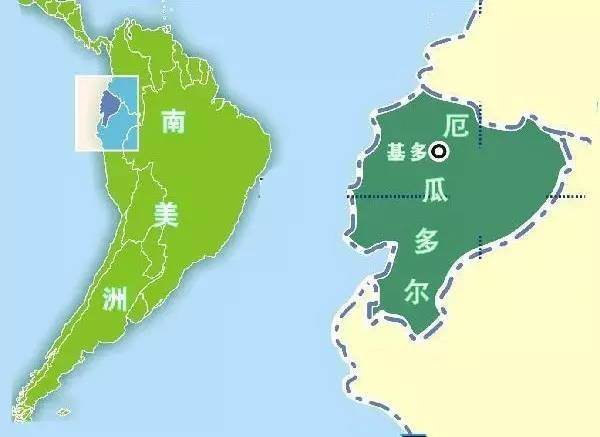
Introduce the washed iron pickup coffee beans of Theo Manor in Ecuador, South America.
The Arabian Coffee Tree was first introduced to Ecuador (Ecuador) in 1952 and its coffee is of good quality, especially the coffee harvested in early June. Ecuadorian coffee beans can be divided into two varieties: Galapagos and Gigante, both of which have the characteristics of large granules and heavy weight. Ecuadorian coffee can be divided into first class (No.1) and excellent (ExtraSuperior) according to its quality.

Fine Coffee introduced in the Coffee production area in the Central Mountain area of Costa Rica
Coffee was introduced into Costa Rica from Cuba in 1729. Today, its coffee industry is one of the well-organized industries in the world, with a yield of 1700 kg per hectare. Costa Rica has only 3.5 million people but 400m coffee trees, and coffee exports account for 25 per cent of the country's total exports. The volcanic soil of Costa Rica is very fertile and well drained, especially in the central part.

When was coffee introduced into China? coffee development in China
In terms of natural conditions, many parts of China are very close to Latin America, South America, India, Indonesia and other places, with the congenital conditions of coffee cultivation, but the traditional culture and customs restrict the development of coffee in China. It was not until recent years that coffee was grown as more coffee entered the lives of ordinary Chinese people and with the impact of foreign culture and way of life.

Costa Rica Coffee introduces the relationship between Costa Rican Coffee and Rosa Coffee
Exchange of professional baristas please pay attention to the coffee workshop (Wechat official account cafe_style) Costa Rican coffee: Costa Rica's high latitudes produce coffee beans in the world famous, rich, mild taste, but extremely sour, the coffee beans here are carefully processed, which is why there is high quality coffee. Tarasu is located in San Jose, the capital of Costa Rica.

Which country's coffee tastes better? the name of the manor in China's coffee brand is introduced in Yunnan.
The Chinese Yunnan coffee brand introduces that Ethiopia is known as the birthplace of coffee. It was discovered by Ethiopia that goats eat a plant and become refreshed after eating it, so people discovered coffee. Vietnam was introduced by the French in 1857 and began to grow coffee. Vietnam's climate and fertile land make it possible to grow high-quality coffee.

Mexican boutique coffee producing area introduces Corabegu producing area
Mexicans are enthusiastic and optimistic, and the chocolates in Mexican coffee perfectly reflect this. There are different methods of Mexican coffee, but the main difference is whether it contains alcohol or not. let's first introduce the practice of non-alcohol. Heat a cup of milk, a teaspoon of cinnamon powder and a teaspoon of vanilla powder in a pot. Keep it at medium temperature. The heat is not too high. The milk must not boil. And then join.

Why does coffee introduce the relationship between musicians and coffee?
For the exchange of professional baristas, please follow the coffee workshop (Wechat official account cafe_style), the world famous composer Bach. In his works, he wrote a coffee carol with a coffee theme. The coffee situation at that time also seemed to be involved in the background of the work. We will introduce the relationship between Bach and coffee, the origin of coffee. Women are prohibited from drinking coffee. Currently, only

Tolima, Tolima, Colombia introduces Colombian coffee, introduces Colombian coffee flavor.
For more information on coffee beans, please follow the Coffee Workshop (Wechat official account cafe_style) Columbia is divided into 32 provinces, and Department of Tolima is located in the southwest, adjacent to the well-known boutique coffee producing areas Huila and Cauca. Iwag, the provincial capital, Ibague. In Tolima province, there is a north-south direction.

Indonesian boutique Manning Coffee Flavor taste Manor introduces the price of Indonesian coffee
Coffee flower Sunda Hejo processing plant is located in Bandung, West Java Province, the main coffee growing range is Malabar, about 1650 meters above sea level, volcanic soil (the coffee grown here has no smoky taste), springs, and the mountain area has a large temperature difference between day and night, so it is very suitable for coffee cultivation. Cooperative farmers are mainly local village residents, about 100 people, built a coffee treatment

Panamanian Kasha Coffee Flavor and taste introduction to boutique coffee beans in the manor area
Species of Geisha were discovered in the Rose Summer Forest of Ethiopia in 1931 and sent to the Coffee Research Institute in Kenya, introduced to Uganda and Tanzania in 1936, introduced to Costa Rica in 1953, and Panama was introduced in the 1970s by Mr. Francico Serraxin of the Tonba Seven Farm Garden from CATIE in Costa Rica and began to grow Rose Summer Coffee. G

West Hannah Manor in Kenya introduces the flavor characteristics of Kenyan coffee
For more information on coffee beans, please follow the Coffee Workshop (Wechat official account cafe_style) West Hannah Manor is located in the Thika region of the central province of Kenya, the primitive bourbon species introduced by French missionaries at the end of the 19th century, the Harris family of West Hannah Manor has grown coffee in the Thika area and has a history of more than 100 years, where it has red volcano fertile soil.

Taste rich Dominica coffee in the south introduce boutique coffee beans Santo Domingo coffee
The earliest coffee in Dominica was introduced from Martinique (the overseas province of France), dating back to the early 18th century. Dominica is an island country with a tropical climate. The temperature changes little throughout the year. Except for the lower temperature in the Central Cordillera Mountains, which can reach less than 0 ℃ in winter, the annual average temperature in other areas is between 25 and 30 ℃, which is affected by the mountain topography.