
"mesocarp"
470 article(s) found

Briefly describe the processing process of coffee beans what are the processing methods of coffee processing?
There are three main methods of processing coffee: drying method, semi-dry treatment method and non-dry treatment method. The last method of treatment is adopted in Yunnan. The purpose of the treatment is to peel the coffee beans, reduce the water content of the coffee beans to a level suitable for preservation, and then deal with the coffee beans according to the market demand. Coffee fruit consists of exocarp, slimy pulp (mesocarp), and coffee beans.

Basic knowledge of Coffee picking of raw coffee beans
After 3 or 4 years of growth, the coffee tree matures and begins to bear fruit, and the fruit will be arranged in clusters or clustered together along the branches. The coffee beans we see are the seeds of the coffee tree. The outside of the seed is a layer of pericarp, with the maturity of coffee beans, the pericarp will change from green to red, as soon as it turns red, it can be harvested. The structure of coffee fruit is that there is a layer of pulp (mesocarp) under the exocarp.

The common sense of fine coffee illustrates the whole process of planting and growth of coffee beans.
First, what is coffee seed? How did you get the coffee seeds? Coffee seeds, commonly known as dried beans with shells, are coffee seeds that have not yet removed their mesocarp and silver skin. Coffee seeds are divided into Arabica Arabica species and Robusta Robasta species. The picture shows commercial coffee raw beans available for consumption, and they are also two major coffee varieties grown commercially on a large scale. Coffee beans have been planted and grown

What are the steps and harvest time for picking coffee beans
After 3 or 4 years of growth, the coffee tree matures and begins to bear fruit, and the fruit will be arranged in clusters or clustered together along the branches. The coffee beans we see are the seeds of the coffee tree. The outside of the seed is a layer of pericarp, with the maturity of coffee beans, the pericarp will change from green to red, as soon as it turns red, it can be harvested. The structure of coffee fruit is usually a layer of pulp (mesocarp) under the exocarp.

Coffee and its products-- terminology (2)
Pulper--mipped bean cut or scraped wet processed coffee beans, often with brown black scars. 3.20 Brown coffee beans brown bean brown-black coffee beans. 3.21 White coffee beans white bean are simply called white beans, that is, coffee beans with a white surface. 3.22 Amber beans amber bean yellow coffee beans
Processing method of raw coffee
The dry processing of dry process is the drying method, in which the fresh coffee fruit is dried into dried fruit, and then the dried peel is removed mechanically to prepare raw coffee. Drying drying of cherry coffee of fresh coffee fruit this operation is to reduce the water content of fresh coffee fruit to facilitate shelling and preservation. Shelling dehusking removes the coffee shell mechanically. Wet processing of fresh fruit in wet process coffee

Coffee bean processing method-wet plucking method
Coffee fruit consists of exocarp, pulp with mucus (mesocarp) and coffee beans (endosperm). When the coffee fruit is ripe, the exocarp of the coffee turns red or yellow. Usually, a coffee fruit contains two coffee beans, each wrapped in a brown film similar to the color of parchment and a white film. In every step of processing coffee,
Boutique Coffee Science talk about Coffee Fruit
The fruit is a berry, also known as comb fruit. Oval, 9-14 mm long, young fruit green, red at maturity, purplish red. Each fruit generally has two seeds, but also one or three, showing a semi-oval, there is a longitudinal groove, called grooves. The structure of a fruit in which the exocarp consists of a thin layer of hardwood human cells with stomata; the mesocarp (that is, pulp) is large and Lignified by several layers of polygons.
About the coffee fruit.
The fruit is a berry, also known as comb fruit. Oval, 9-14 mm long, young fruit green, red at maturity, purplish red. Each fruit generally has two seeds, but also one or three, showing a semi-oval, there is a longitudinal groove, called grooves. The structure of a fruit in which the exocarp consists of a thin layer of hardwood human cells with stomata; the mesocarp (that is, pulp) is large and Lignified by several layers of polygons.
Boutique coffee basic knowledge coffee fruit
The fruit is a berry, also known as comb fruit. Oval, 9-14 mm long, young fruit green, red at maturity, purplish red. Each fruit generally has two seeds, but also one or three, showing a semi-oval, there is a longitudinal groove, called grooves. The structure of a fruit in which the exocarp consists of a thin layer of hardwood human cells with stomata; the mesocarp (that is, pulp) is large and Lignified by several layers of polygons.
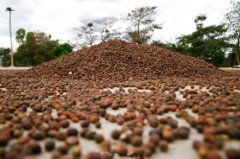
Coffee bean picking-berry processing-drying process
What we call coffee beans is actually the seeds of a cherry-like fruit. Coffee trees produce berries called coffee berries, which turn bright red to indicate ripeness and are ready for picking. The fruit clustered on the branches. Coffee berries have thick, bitter outer skins (exocarp). However, the fruit inside (mesocarp) is sweet and has a grape texture. And then parenchyma, which is like

Coffee berries are picked and dried.
The coffee beans we are talking about are actually the seeds of a fruit similar to cherries. Coffee trees produce berries, called coffee berries, whose bright red color means they are ripe and ready to be picked. The fruit clustered on the branches. The outer skin (exocarp) of coffee berries is thick and bitter. However, the fruit (mesocarp) inside is very sweet and has the texture of grapes. And then there's parenchyma, which is like

Fine Coffee Coffee basic knowledge introduction Coffee Fruit
The fruit is a berry, also known as comb fruit. Oval, 9-14 mm long, young fruit green, red at maturity, purplish red. Each fruit generally has two seeds, but also one or three, showing a semi-oval, there is a longitudinal groove, called grooves. The structure of a fruit in which the exocarp consists of a thin layer of hardwood human cells with stomata; the mesocarp (that is, pulp) is large and Lignified by several layers of polygons.
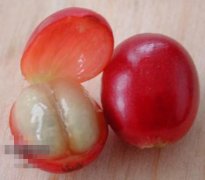
Basic knowledge of fine coffee knowledge of coffee fruit
The fruit is a berry, also known as comb fruit. Oval, 9-14 mm long, young fruit green, red at maturity, purplish red. Each fruit generally has two seeds, but also one or three, showing a semi-oval, there is a longitudinal groove, called grooves. The structure of a fruit in which the exocarp consists of a thin layer of hardwood human cells with stomata; the mesocarp (that is, pulp) is large and Lignified by several layers of polygons.
The harvest of coffee beans
After 3 or 4 years of growth, the coffee tree matures and begins to bear fruit, and one fruit will be arranged in clusters or clusters along the branches. Of course, the coffee beans we see are the seeds of coffee trees. The outside of the seed is a layer of peel, which can be picked as soon as it turns red. Under the red skin (exocarp) there is a layer of pulp (mesocarp), inside is a small thin layer, and then there is a layer of parchment
Learn about coffee berry picking-berry treatment-drying
Coffee berry picking-berry treatment-drying what we call coffee beans are actually the seeds of a cherry-like fruit. Coffee trees produce berries, called coffee berries, whose bright red color means they are ripe and ready to be picked. The fruit clustered on the branches. The outer skin (exocarp) of coffee berries is thick and bitter. However, the fruit (mesocarp) inside is sweet and has the texture of grapes.
Coffee bean treatment process: picking-berry treatment-drying
The coffee beans we are talking about are actually the seeds of a fruit similar to cherries. Coffee trees produce berries, called coffee berries, whose bright red color means they are ripe and ready to be picked. The fruit clustered on the branches. The outer skin (exocarp) of coffee berries is thick and bitter. However, the fruit (mesocarp) inside is very sweet and has the texture of grapes. And then there's parenchyma, which is like
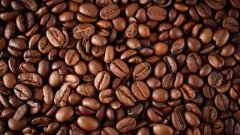
The picking of coffee beans coffee beans are the seeds of coffee trees.
Coffee beans are the seeds of coffee trees. After three or four years of growth, the coffee tree matures and begins to bear fruit, with one fruit arranged in clusters or clusters along the branches. The outside of the seed is a layer of peel, which can be picked as soon as it turns red. Under the red skin (exocarp) there is a layer of pulp (mesocarp), which is a small thin layer, and then a layer of material endocarp like parchment. In

Coffee bean coffee berry picking-berry treatment-drying
The coffee beans we are talking about are actually the seeds of a fruit similar to cherries. Coffee trees produce berries, called coffee berries, whose bright red color means they are ripe and ready to be picked. The fruit clustered on the branches. The outer skin (exocarp) of coffee berries is thick and bitter. However, the fruit (mesocarp) inside is very sweet and has the texture of grapes. And then there's parenchyma, which is like
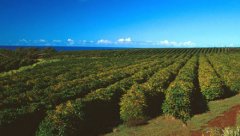
Common sense of Coffee Tree planting
After 3 or 4 years of growth, the coffee tree matures and begins to bear fruit, and one fruit will be arranged in clusters or clusters along the branches. Of course, the coffee beans we see are the seeds of coffee trees. The outside of the seed is a layer of peel, which can be picked as soon as it turns red. Under the red skin (exocarp) there is a layer of pulp (mesocarp), inside is a small thin layer, and then there is a layer of parchment