
"ornamental"
735 article(s) found

The choice of ice cubes in cafes? What are the types of ice? What are the advantages and disadvantages of different types of ice?
Professional coffee knowledge exchange more coffee bean information Please pay attention to the coffee workshop (Wechat official account cafe_style) the seemingly simple ice cubes actually contain great knowledge. For drinks, ice is not only used as a way of cooling, its shape, size and even density will affect the drink. Although it has a cold temperature, it can miraculously finish with any drink.

The home siphon pot coffee making tutorial is obsessed with making bottles and cans similar to chemical experiments when siphoning.
Siphon pot is an excellent way to make coffee. Many people are fascinated by making bottles and cans similar to chemical experiments when making siphon, as well as the barista's attentive attitude, and some even fall in love with coffee because they fall in love with siphon pot. The siphon pot originated in 1840 when the Scottish engineer RobertNapier invented the coffee pot, which was later developed by Wasserf of France.
Temperature control of siphon pot brewing process
Siphon pot is used to experience the coffee brewing process, not only has a certain ornamental, the most important, siphon pot is the most convenient and fine grasp of the process of equipment, brewing coffee in the taste of the complex degree (Note 1) performance can reach an ideal degree, is the necessary equipment for coffee appreciation.
Brazil can't bring back coffee beans when watching the game.
As the World Cup is just around the corner, "go to Brazil" has become a recent greeting for fans.
The origin of the royal Belgian coffee pot
The Belgian coffee pot originated in the 19th century and was used exclusively by the Belgian royal family at first and later became the top coffee pot dedicated to the European royal aristocracy.
Introduction to mocha Coffee
In fact, authentic mocha coffee is only produced in the Republic of Yemen in the southwest of the Arabian Peninsula, grows on steep hillsides at elevations of 3, 000 to 8, 000 feet, and is the oldest coffee in the world.
Passionate Spanish coffee making
Spanish coffee is a classic after-dinner drink. Spanish coffee is as enthusiastic as the Spanish people. The editor will take you to make a cup of hot Spanish coffee. Ingredients: black coffee, a cup of rum, Rum, a small amount of white orange peel, Triple Sec, a small amount of Kalua coffee wine, a small amount of whipped cream, Kahlua, a spoonful of crushed nuts to make Spanish coffee is the most important.

A cool summer of thin mocha iced coffee
As summer is coming, I recommend an iced coffee which is suitable for summer, which changes the strong taste of coffee when people mention it in the past. Raw material (suitable for cup size 360ml) cup quantity: 360ml espresso 60ml (made at home can be obtained from a mocha pot) peppermint chocolate powder 20g (no mint chocolate powder can choose mocha powder with white mint)
Ice drop coffee maker
Brand: TIAMO size: 6-8 / 25 people this is a large ice drop coffee maker, originally popular in Japan, when not making coffee, it is often used as a decoration, if you want to use it to make fancy coffee, according to the flow rate of 10 minutes, it will take 67 hours to fill a pot of coffee. The coffee made in this way is naturally very rare and is usually used only once a day.
Foreign specialty coffee shop Japanese hammock coffee shop mahika mano
Generally speaking, I wonder what you will think of when it comes to "hammock". Then shake it over and over again ~ feel so comfortable and leisurely ~ just use the imagination to make people relax! A "hammock coffee shop" mahika mano has been opened at the Jixiang Temple in Japan to allow people to sway through the afternoon tea. The name of the "hammock coffee shop" is "mahika mano".
World Coffee producer Bolivia Bolivia
From serving as a garden hedge to coffee grown exclusively on the manor, coffee trees in Bolivia used to be planted around the garden as hedges, decorating flowers and trees. Real commercial production began in the early 1950s. The coffee industry in Brazil was badly damaged by the great frost in 1957, while Bolivia (Bolivia) benefited and developed rapidly. Bolivian coffee in the sea
There are six common ways to make coffee in the Royal Coffee Pot of Belgium
It combines several natural forces: fire, steam, pressure and gravity, which make the operation of the Belgian royal coffee pot more visible. The whole cooking process is like a coffee maker for a stage play, because the dazzling and gorgeous appearance, coupled with the full fun of gimmick operation, greatly increases the score of coffee sensibility and romance. This magnificent coffee extraction process, plus
Boutique coffee bean producing countries introduce Bolivia
From serving as a garden hedge to coffee grown exclusively on the manor, coffee trees in Bolivia used to be planted around the garden as hedges, decorating flowers and trees. Real commercial production began in the early 1950s. The coffee industry in Brazil was badly damaged by the great frost in 1957, while Bolivia (Bolivia) benefited and developed rapidly. Bolivian coffee

Magic Ice Cream Coffee making principle how to make magic ice cream coffee? Magic ice cream coffee
1. Dig three Vanilla Ice Cream balls into the cup, arrange the ice cream in inverted shape, and add some chocolate sauce to the ice cream. 2. Pour Italian coffee into the gap between the cup wall and the ice cream to avoid damaging the appearance of the ice cream. 3. Add some whipped cream to the ice cream as embellishment to increase the three-dimensional feeling. Use chocolate sauce on whipped cream and ice cream, again
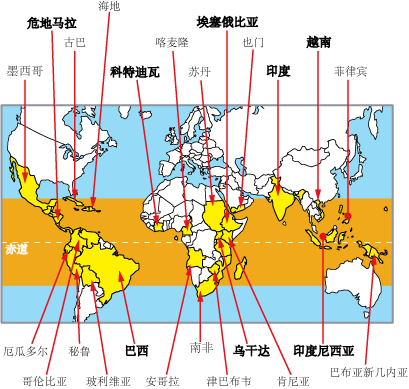
Coffee producing area 53 coffee producing areas worldwide Bolivian coffee producing area Bolivia coffee
Bolivia from serving as a garden hedge to coffee grown exclusively on a manor. In the past, Bolivian coffee trees used to act as hedges around the garden, decorating flowers and trees. Real commercial production began in the early 1950s. The coffee industry in Brazil was badly damaged by the great frost in 1957, while Bolivia (Bolivia) benefited and developed rapidly. Glass
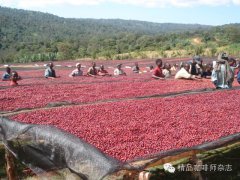
Bolivian coffee grows American coffee beans
Boutique coffee (specialty coffee) is also called specialty coffee selection coffee. It refers to coffee made from a small number of raw beans with excellent taste grown in an ideal geographical environment. Depending on the special soil and climatic conditions in which they grow, they have outstanding flavor. After strict selection and classification, this kind of coffee is hard in texture, rich in taste and stylish.

Bolivia's coffee production Metro Bica varieties of American boutique coffee beans in Lake Tata
Bolivian coffee market: coffee grown in Bolivia, in which Arabic washed coffee beans are exported to Germany and Sweden, is not the best taste today, and with a bit of bitterness. In the past, Bolivian coffee trees used to act as hedges around gardens and decorate flowers and trees. Real commercial production began in the early 1950s. The great frost of 1975 was severe.

Medium roasted Bolivian coffee flavor manor introduce snow vein manor
Lake Titicaca, located on the Coaya Plateau on the border between Bolivia and Peru, is the highest and largest freshwater lake in South America, one of the highest large freshwater lakes in the world, the highest navigable lake in the world, and the third largest lake in South America (after Maracaibo and Patus lagoons) Lake Titicaca Copacabana countries.

Bolivian coffee bean flavor Bolivian coffee manor
South America is rich in coffee beans, and Bolivia is no exception. The unique tropical rain forest environment in some parts of Bolivia provides excellent natural conditions for the growth of organic coffee. The aroma of Bolivian coffee is rich and unique, both the aroma of ground beans and the aroma of coffee are obviously rich, similar to the mixture of flower and fruit aroma, which is impressive.

American boutique coffee brief introduction of Tibica varieties in Lake Tata producing area of Bolivian coffee
Bolivian coffee producing area: Bolivian coffee is grown at an altitude of 180,670 meters above sea level. Characteristics of Bolivian coffee: flavor: high quality mixed coffee recommended roasting method: medium to deep barbecue ★: general Bolivian coffee market: Bolivian coffee, of which Arabica washed coffee beans are exported to Germany and Sweden, its taste is not the best today