
"provenance"
399 article(s) found

Strong aroma of Tanzanian coffee flavor taste introduction of boutique coffee in manor producing area
The topography of Tanzania is high in the northwest and low in the southeast, showing a ladder shape. The eastern coast is a lowland, the western inland plateau accounts for more than half of the total inland area, and the East African Rift Valley runs from east to west from Lake Malawi to the north and south. The Kibo peak of Mount Kilimanjaro in the northeast is 5895 meters above sea level. It is the highest peak in Africa. The eastern coastal areas of Tanzania and part of the inland lowlands have a savanna climate.

Full-bodied bitter coffee manor producing area flavor and taste characteristics of high-quality coffee beans
The types of rainfall can be divided into bimodal distribution and unimodal distribution. The areas with double bee rainfall include the provinces around the Lake Victoria basin, the northeast highlands, the coastal and inland northeastern. The bimodal rainfall area is characterized by two rainy seasons. The short rainy season occurs from September to December. The total rainfall can reach 200-500 mm. The long rainy season occurs from March to May.

Introduction to Xuemai Manor, Flavor Manor in Bolivian Coffee producing area
Rich in mineral resources, mainly tin, antimony, tungsten, silver, zinc, lead, copper, nickel, iron, gold and so on. Mineral deposits are rich, with tin reserves of 1.15 million tons, ranking second in the world; iron reserves of 45 billion tons, second only to Brazil in Latin America; and lithium reserves of 100 million tons, ranking first in the world. [7] Oil and gas Bolivia is rich in oil and gas resources. Proven oil reserves are 929 million barrels, as of 2013

Flavor characteristics of Fruit Ding Coffee Coffee treated with Ethel é and Sheffield Fruit Coffee Bean
Ethiopia Yega Sheffield Ding Ding Ethiopia (Ethiopia) is the place where human beings and coffee meet for the first time. There are tens of thousands of native varieties of coffee. It can be said that the coffee trees that can be found everywhere in the fields or jungles of Ethiopia may be coffee varieties found nowhere else, so Ethiopia is also the provenance treasure house of coffee in the world. The coffee fruit is really harvested.

Yunnan Arabica coffee beans varieties flavor introduction Yunnan katim coffee hand brewing method introduction
Pay attention to coffee reviews (Weixin Official Accounts vdailycom) and find a beautiful cafe to open your own small shop. South coffee is usually called Yunnan small coffee. Arabica coffee refers to the provenance, that is, all coffee with arabica coffee gene. The common characteristics of Arabica coffee are mellow, soft and taste

Introduction of Bolivian coffee bean grinding scale varieties taste manor production area
There are mainly light industries such as food processing, wine making, cigarettes, textiles and so on. Mining is an important part of the Bolivian national economy. It is an exporter of mineral products and is rich in mineral resources, including tin, antimony, tungsten, silver, zinc, lead, copper, nickel, iron and so on. It has proven oil reserves of 188 million barrels and natural gas of 1.13 trillion cubic meters. The forest area is 56 million hectares. Coca is grown in Bolivia

Introduction to the Flavor and Taste of Fine Coffee in Snow vein Manor of Bolivia
The legal capital, the seat of the Supreme Court, with a population of 284000, 2790 meters above sea level. Founded in 1538, the city was formerly known as Chuquisaka. The city witnessed the first uprising in South America against Spanish rule in 1809. Bolivia declared its independence here in 1825 and became the capital in 1826. In 1839, it was renamed Sucre to commemorate the second president of Bolivia, General Antonio Jos é Sucre.

Description of Bolivian Coffee Flavor of refreshing Perfume introduction to Fine Coffee
There are mainly light industries such as food processing, wine making, cigarettes, textiles and so on. Mining is an important part of the Bolivian national economy. It is an exporter of mineral products and is rich in mineral resources, including tin, antimony, tungsten, silver, zinc, lead, copper, nickel, iron and so on. It has proven oil reserves of 188 million barrels and natural gas of 1.13 trillion cubic meters. The forest area is 56 million hectares. Coca is grown in Bolivia

Flavor description of Panamanian Shangri-La coffee beans introduction to the characteristics of varieties and producing areas
Panamanian Shangri-La Coffee Bean Flavor description the characteristics of varieties and producing areas the proven reserves of copper available for mining for 50 years the Panamanian flag was launched on November 3, 1904, with a rectangular flag with an aspect ratio of 3:2. The flag consists of four rectangles of white, red and blue. White symbolizes peace; red and blue represent the liberals and conservatives of the former Panama, respectively, and they are also two parties.

A brief introduction to the planting market price of high-grade vanilla sweet Bolivian boutique coffee beans
The eastern and central part belongs to the savanna climate, the transition from the western mountain to the subtropical climate, and the inland plateau to the mountain climate. The climate in most areas is dry and cool; the annual precipitation decreases from 2000 mm to less than 100mm from northeast to west. [7] Natural resources are rich in mineral resources, including tin, antimony, tungsten, silver, zinc, lead, copper, nickel, iron, gold and so on. Abundant mineral deposits

Bright sour, clean Sumatra Lindong boutique coffee bean flavor manor
China Coffee Network Sumatra Lintong Rasuna Sumatra Lindong Mantenin Coffee Bean Product name: Sumatra Lintong Rasuna La Souna Variety: Rasuna La Souna provenance: Catimor and tipica Hybrid Variety Origin: Indonesian Farm: Wahana Estate region: Sidikalang altitude: 1100-1300 m treatment method: semi-washed Rasuna Suma

Medium alcohol Tanzanian coffee Flavor Taste Manor Features Fine coffee Introduction
Tanzania's eastern coastal areas and inland parts of the lowlands belong to the savanna climate, the western inland plateau belongs to the tropical mountain climate, most of the average temperature of 21-25℃. More than 20 islands of Zanzibar have a tropical maritime climate, hot and humid all year round, with an average annual temperature of 26℃. [6]Rainfall types are divided into bimodal distribution and unimodal distribution. Areas with bi-modal rainfall include

Nicaraguan Lemon Tree Coffee Manor Story characteristics of sipping Flavor of Java Coffee Bean
Java species are similar in shape to ladder card species, and most Java species are short-grained Slor Ber), while Java species with long grain (Long Ber) are few, and Java is a rare Java long grain. Variety and appearance are rare, but the flavor is very clean and delicate. There has never been a similar flavor in the history of Nicaraguan coffee. Java provenance comes from iron seed system, Nicaraguan coffee has always been

Peaceful and full-bodied coffee manor in Arusha, Tanzania, the planting market price of fine coffee bean varieties is simple.
Raw beans: raw beans are unbaked beans, which contain 11.5% fat; 11.5% moisture; 28.6% crude fiber; 4.0% minerals; 6.2% tannic acid; 1.3% caffeine; 17.0% essence; 8.1% sugar; 11.8% protein. Baked beans: baked beans containing 13.0% fat; 1.5% caffeine; 29.5% crude fiber; 2.6% moisture; 5.0% minerals

Description of Tanzanian Coffee Flavor with Chocolate aftertaste introduction to the characteristics of roasting area
Tanzania is rich in mineral resources. By 2014, the major minerals identified include gold, diamond, iron, nickel, phosphate, coal and various gemstones, ranking fifth in Africa in total. Tanzania also has huge natural gas reserves. According to official data released by Tanzania, Tanzania has proven natural gas reserves of 44 trillion cubic feet, and the total reserves are expected to be at least

How does the price of coffee in Tanzania describe the flavor? introduction to the taste characteristics of varieties.
The eastern coastal areas and inland lowlands of Tanzania have a savanna climate, while the western inland plateau has a tropical mountain climate, with an average temperature of 21-25 ℃ in most areas. More than 20 islands in Zanzibar have a tropical maritime climate and are hot and humid all the year round. The annual average temperature of 26 ℃ has been found in many parts of the mainland, among which Lake Victoria is similar in geology and scale to Australia and Canada.

Can you still drink coffee beans after three years? How long will the coffee powder last? How to prolong the shelf life of coffee
How long will the coffee last? Dry coffee, if properly stored, can last months or even years longer than any date printed on the package. Will the coffee expire? Let's explain. The shelf life of coffee depends on a variety of factors, such as the best date to eat, the method of preparation and the way the coffee is stored. Due to the addictive taste and proven health benefits of coffee (yes

Introduction of Coffee Flavor and Taste planting Environment in Snow vein Manor, Bolivia
There are mainly light industries such as food processing, wine making, cigarettes, textiles and so on. Mining is an important part of the Bolivian national economy. It is an exporter of mineral products and is rich in mineral resources, including tin, antimony, tungsten, silver, zinc, lead, copper, nickel, iron and so on. It has proven oil reserves of 188 million barrels and natural gas of 1.13 trillion cubic meters. The forest area is 56 million hectares. Coca is grown in Bolivia
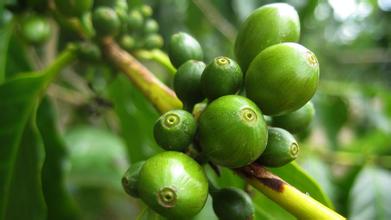
Introduction History of Yunnan Coffee, the Old varieties of Yunnan Coffee
Coffee originated in Ethiopia in north-central Africa. It was introduced into the Arabian Peninsula before the 15th century, introduced into Taiwan in 1884 and introduced into Hainan in 1908.

The countries that bring coffee in the world: one is poorer than the other
The origin of coffee is not worth showing off. It is found that it is an Ethiopian goat scouring the mountains in search of forage. To make matters worse, those countries that have made world-famous coffee (such as Nestle in the United States, UCC in Japan, Grant in Germany, etc.) can hardly grow coffee trees, but these countries make a lot of money from selling coffee to the people of the world, and the countries that provide them with coffee beans are also the countries that provide them with coffee beans.