
"renas"
175 article(s) found

Introduction of Coffee Flavor description and Grinding degree treatment in Renas Manor of El Salvador
El Salvador's coffee accounts for 40% of the country's exports, and it is usually picked in November, December and January-March of the following year. The export of raw beans lasts almost all year round. Coffee is produced in seven of the country's 14 provinces, with the largest number in the northwestern provinces of chalatenango and santa ana. The coffee produced in El Salvador is 100% Arabica, of which 68% is

Introduction to Renas Manor in El Salvador Coffee Bean Manor
Salvador (So Salvador da Baa de Todos os Santos, meaning San Salvador on Halloween Bay) is a coastal city in northeastern Brazil and the capital of Bahia state. El Salvador was called Bahia directly for a long time, and it was marked as Bahia in many books and maps before the middle of the 20th century (for example, Robinson Drift by Daniel Difoe).

El Salvador Coffee Manor Flavor and Taste area introduction to El Salvador Coffee Bean Renas Manor
Salvadoran coffee: with sour, bitter, sweet and other taste characteristics, the best roasting degree is moderate, deep Salvadoran boutique coffee is concentrated in the western Santa Ana and northwest Charantan fruit volcanic rock producing areas. In recent years, the top 10 cup tests are almost all from these two producing areas, with an altitude of about 9-1500 meters, mainly bourbon (68%), followed by Pacas (29%).
Yega Xuefei Gelena Abaya Jin Reina Abaya / Jin Rena Amba Coffee Story style
Professional coffee knowledge exchange more coffee bean information Please pay attention to the coffee workshop (Wechat official account cafe_style) in Ethiopia ECX trading system, there is no way to trace the source of the product, and this has also led to the market is full of some Yega Sheffield coffee that is not really produced in the small town of Yega Chefe. Officially recognized by Ethiopia as Yega Xuefei
Yega Xuefei producing area | Jin Rena Ambaya | washed Yega Xuefei G1
Professional coffee knowledge exchange more coffee bean information please follow the coffee workshop (Wechat official account cafe_style) front street coffee recommended rose summer 2018 rose summer village rose summer green sign | Ethiopia Yirgacheffe Gelana Abaya Homa Co-op Washed G1 Ethiopian sun Yega snow caffeine G1 Kinreena Abaya flavor description: lemon, orange
Brief introduction of El Salvador Coffee Bean Renas Manor Fine Coffee Bean Variety planting Market Price
Taste introduction: aroma: sweet flower flavor (jasmine, lavender, coffee flower,) 4tick 6, sweet orange flavor (lemon orange orange) 1 hand 6 sweet berry flavor (cherry apricot strawberry), almond flavor, peanut flavor, barley flavor, corn flavor, sugar dense flavor, dark chocolate flavor, Swiss chocolate flavor. Taste: smooth El Salvador Warriors Manor coffee beans, Warriors Manor Farm is very close to Santa Ana Fire

Introduction to Renas Manor of El Salvador Coffee Bean Manor with Water washing and Solar treatment
Coffee species: 100% Arabica coffee beans, treatment: washing and sunbathing coffee varieties: Bourbon particle size distribution: moisture content 10.48 plus or minus 0.5% (5 repeats) raw bean proportion 1.15 plus or minus 0.15g/CM3 judge: Mr. Xu Guozhi, evaluation roaster: Mr. Zhang Bocheng judgment: Mr. Guo Weiping, Mr. Zhang Wenwei, Mr. Zhang Bocheng, Mr. Zhang Jinyuan. Auction editor

Moderate, slightly viscous Salvadoran coffee introduces the Santa Ana volcano area of Renas Manor.
El Salvador's Cuspa region is rich in coffee beans, which are lighter in weight, fragrant, pure and slightly sour. Like Guatemala and Costa Rica, Salvadoran coffee is graded according to altitude, and the higher the altitude, the better the coffee. The best brand is Pip, whose quality has been recognized by the American Organic Certification Society. Another kind of rarefaction

Introduction to the characteristics of El Salvador Coffee Manor IzaIco area of Renas Manor Sonsonate Province
Pacamara is the artificial breeding variety of Pacas and Maragogipe. It was first cultivated by researchers in El Salvador in 1958. Pacamara is an excellent variety under rare artificial breeding, which is better than blue, and perfectly inherits the advantages of the mother plant. It not only has the excellent taste of Pacas, but also inherits the large size of Maragogipe, and the bean body is at least like beans.
El Renas Estate Coffee Grind Taste Flavor Description Boutique Coffee Features
Honduras declared independence on September 15, 1821, but was incorporated into the First Mexican Empire in 1822. Joined the Central American Federation in 1823, withdrew from the Central American Federation in October 1838 and established the Republic. In Honduras in 1840, the conservative Francisco Ferreira, supported by Guatemala dictator Rafael Carrera, established a dictatorship. Freedom in Honduras after 1853
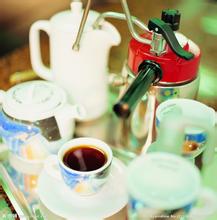
Introduction to the taste characteristics of coffee flavor description and grinding treatment in Renas Manor in El Salvador
The topography here is mainly mountainous and plateau, with many volcanoes. Savanna climate. The plain area belongs to the tropical rain forest climate and the mountain area belongs to the subtropical forest climate. The average annual temperature is 25-28 ℃, and the annual precipitation is more than 1800 mm in mountainous areas and about 1000 mm in coastal areas. It is rich in water resources, short and swift rivers and volcanic lakes. El Salvador's coffee accounts for 40% of the country's exports.

The balanced Salvadoran Coffee Bean Renas Manor introduces the Kuskabapa region.
Flavor: balanced taste, excellent texture suggested baking method: medium to deep, there are many uses of high-quality beans: El SHB taste characteristics: sour, bitter, sweet mild and moderate. Salvadoran coffee ranks side by side with Mexico and Guatemala as the producers of Asa and Merdo, and is fighting for the top one or two places in China and the United States with other countries. The highland of origin is equal in size and size.

El Salvador Coffee Manor Coffee characteristics Coffee producing area Flavor introduction to Renas Manor
Mineral-rich hot spring water is used for processing, because Salais Manor is located in fertile volcanic soil and rich in natural hot spring water, so this natural hot spring water is used in raw bean processing, the water temperature is 85 degrees. The hot spring water is backflowed to six different elevations of the pool, the temperature is 32-34 degrees to the sixth hot spring pool, and then cool and process the coffee raw.

El Salvador coffee bean flavor taste manor area introduces Renas Manor Santa Ana Volcano area
The recommended beans are processed with mineral-rich hot spring water, because Salais Manor is located in fertile volcanic soil and rich in natural hot spring water, so the natural hot spring water is used in raw bean processing, the water temperature is 85 degrees, the hot spring water is backflowed to six pools with different elevations, and then the temperature is 32-34 degrees to the sixth hot spring pool.

Introduction to Renas Manor in El Salvador Coffee Flavor producing area
In the 19th century, coffee in El Salvador was an important cash crop, and the government legislated to collect taxes and encourage planting and export. although coffee farmers in El Salvador could not get technical or financial assistance, they were in the growth of production per hectare, it is quite excellent among many coffee-producing countries! The output value of coffee is like a locomotive, which is important to the basic transportation construction and the development of light industry in Saudi Arabia.
El Renas Estate Coffee Grind Characteristics Variety Producing Area Taste Flavor Description
In the early 1990s, guerrilla warfare greatly damaged the country's national economy, reducing coffee production from 3.5 million bags in the early 1970s to 2.5 million bags in 1990 - 1991. The eastern part of the country was most affected by guerrilla warfare, and many farmers and workers were forced to leave their estates. The shortage of funds has led to a sharp drop in coffee production, from 1200 kilograms per hectare in the past to less than 9 percent per hectare today

Species of Salvadoran Coffee in Central America Renas, IzaIco region, Sonsonate Province
In the 19th century, coffee in El Salvador was an important cash crop, and the government legislated to collect taxes and encourage planting and export. although coffee farmers in El Salvador could not get technical or financial assistance, they were in the growth of production per hectare, it is quite excellent among many coffee-producing countries! The output value of coffee is like a locomotive, which is important to the basic transportation construction and the development of light industry in Saudi Arabia.

El Salvador coffee bean flavor taste manor production area introduces which brand of Renas Manor coffee is better.
Salvadoran coffee ranks side by side with Mexico and Guatemala as the producers of Asa and Merdo, and is fighting for the top one or two places in China and the United States with other countries. The highlands of origin are large coffee beans of all sizes, which are fragrant and mild in taste. Like Guatemala and Costa Rica, coffee in El Salvador is graded according to altitude. The higher the altitude, the better the coffee.

The taste of balanced Salvadoran coffee introduces Renas Manor.
Flavor: balanced taste, excellent texture suggested baking method: medium to deep, there are many uses of high-quality beans: El SHB taste characteristics: sour, bitter, sweet mild and moderate. Salvadoran coffee ranks side by side with Mexico and Guatemala as the producers of Asa and Merdo, and is fighting for the top one or two places in China and the United States with other countries. The highland of origin is equal in size and size.
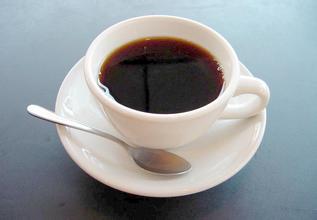
Introduction to Salvadoran Coffee Flavor Manor Renas Manor
El Salvador's coffee accounts for 40% of the country's exports, and it is usually picked in November, December and January-March of the following year. The export of raw beans lasts almost all year round. Coffee is produced in seven of the country's 14 provinces, with the largest number in the northwestern provinces of chalatenango and santa ana. The coffee produced in El Salvador is 100% Arabica, of which 68% is