
"semi-natural"
23 article(s) found

Introduction to various treatment methods of coffee dense treatment, sun water washing red honey and semi-natural white honey
Coffee treatment introduces that honey treatment is a way to treat coffee with pectin and endocarp after the peel and flesh are removed. The key to distinguish between different honey treatments lies in the choice of the remaining pectin: retaining the proportion of pectin and drying speed and method. According to Nordic Approch, Seattle Coffee and Origin, the raw bean companies run by the big shot Tim

Sun-treated fine coffee
Coffee beans are processed in the following ways: sun (Natural); semi-sun (Semi-Natural or Pulped-Natural); honey processing (Honey processing) and washing (Washing). Water washing treatment means that immature and immature coffee fruits are screened out in a special way after harvesting.

Coffee bean flavor black coffee with different coffee bean dry, semi-dry, wet and honey treatments
Coffee beans are treated in the following ways: sun (Natural); half-sun (Semi-Natural or Pulped-Natural); Honey processing (honey) and Washed (washing). Our most common treatment is Washed. The washing treatment means that after the coffee fruit is harvested, the immature and immature coffee fruits are screened out in a special way.
Detailed explanation of sun, half-sun, water washing and honey treatment of coffee beans
In recent years, with the continuous popularity of boutique coffee, new occupations: roaster and cup tester have become popular in the industry, and coffee roasting has also become the preferred way for some baristas and enthusiasts to start a business. there are many factors that determine its taste, the variety of coffee trees, the way coffee beans are handled, the local conditions in which the tree grows, and even related to the tree.

Introduction to the flavor description method of Brazilian Bourbon Rivida coffee beans
Brazilian Coffee Bean Camo Manor is located in the southern state of Minas Gerais. Here are manors large and small, mainly producing Arabica coffee. Coffee production began at the beginning of the 20th century, which is a relatively new manor. The highest part of the planting area, which is 1300 meters above sea level, belongs to the highland topography in the producing area of Brazil, with large fluctuations as a whole. The refining method only uses natural drying, but near

Introduction of Brazilian Coffee varieties and Manor producing areas
With regard to Brazil's Brazil production, which ranks first in the world, its consumption has also risen to the forefront of the world's population: annual coffee output of about 194 million people: 2.172 million tons of coffee varieties main varieties: bourbon, Mondonovo, Canifra, Icato treatment method: basic use of natural drying method, the use of sun exposure flavor characteristics: sour taste is relatively slight, flavor system is complex and famous

Coffee beans dried, semi-dry, wet and honey-treated coffee beans fermented high-quality coffee
Boutique coffee (specialty coffee) is also called specialty coffee selection coffee. It refers to coffee made from a small number of raw beans with excellent taste grown in an ideal geographical environment. Depending on the special soil and climatic conditions in which they grow, they have outstanding flavor. After strict selection and classification, this kind of coffee is hard in texture, rich in taste and stylish.

Sun treatment, washing treatment, coffee beans after picking, coffee beans.
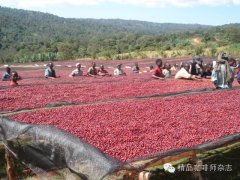
The main countries that use the sun treatment are some African countries and Brazil. the sun treatment is greatly affected by the treatment environment and technological level, so the quality varies, but on the whole, the coffee beans treated by the sun have high sweetness. it has a unique fermentation flavor, but once the fermentation flavor is not played well, it will be transformed into stink, rotten milk, mildew and so on. Half in the sun, it's okay.

Honey treatment of coffee beans sun washing
The Honey treatment of Coffee beans the sun-washed coffee beans are dried and treated before baking parchment (Parchment): inside the mucous membrane, a film of cellulose surrounds the coffee beans. After drying, the film looks like parchment, hence the name Mucilage: under the skin and pulp, a layer of sticky mucus tightens the coffee beans.

Detailed Analysis of four cultivation Systems of Coffee in Ethiopia
Forest coffee (Forest Coffee): wild coffee, which accounts for 10% of Ethiopia's national output, is distributed in the wild coffee forest areas of the west and southwest, also known as the Kafa forest. The dense trees here provide the most natural shade for coffee trees and do not need manual care. Mother Earth is in charge of birth, aging, sickness and death, and coffee farmers can go directly to the woodland to harvest. Hansen

Detailed Analysis of four cultivation Systems in Coffee producing areas of Ethiopia
Forest coffee (Forest Coffee): wild coffee, which accounts for 10% of Ethiopia's national output, is distributed in the wild coffee forest areas of the west and southwest, also known as the Kafa forest. The dense trees here provide the most natural shade for coffee trees and do not need manual care. Mother Earth is in charge of birth, aging, sickness and death, and coffee farmers can go directly to the woodland to harvest. Hansen

Four major cultivation systems of Ethiopian coffee analyze in detail how Ethiopian coffee is cultivated.
Forest coffee (Forest Coffee): wild coffee, which accounts for 10% of Ethiopia's national output, is distributed in the wild coffee forest areas of the west and southwest, also known as the Kafa forest. The dense trees here provide the most natural shade for coffee trees and do not need manual care. Mother Earth is in charge of birth, aging, sickness and death, and coffee farmers can go directly to the woodland to harvest. Hansen

Detailed analysis of forest and semi-forest system of four major cultivation systems of Ethiopian coffee
Forest coffee (Forest Coffee): wild coffee, which accounts for 10% of Ethiopia's national output, is distributed in the wild coffee forest areas of the west and southwest, also known as the Kafa forest. The dense trees here provide the most natural shade for coffee trees and do not need manual care. Mother Earth is in charge of birth, aging, sickness and death, and coffee farmers can go directly to the woodland to harvest. Hansen

Detailed Analysis of four cultivation Systems of Ethiopian Fine Coffee
According to the following four different modes of production, Ethiopian coffee can be divided into nine major coffee producing areas, including five boutique coffee areas: Sidamo, Yegashefi, Harald, Lim and Lekampidi, and four general commercial bean producing areas: Gemma, Irugbagbo, Tibby and Bekaa. The sun or water washing methods are used in each district, and different treatment methods also affect the flavor.

Ethiopian pastoral coffee cultivation system coffee bean cultivation system distributed in Ethiopia
(photo from: national Geographic Chinese website Photo: Amivitale,Panos) according to Qianjie Coffee Consulting, 90% of coffee in Ethiopia comes from pastoral, forest and semi-forest, but large-scale corporate cultivation is rare in Ethiopia. According to the scale and model, the cultivation of Ethiopian coffee can be divided into four types: 1, forest coffee Forest C

Ethiopian Coffee Bean Story-relationship between Ethiopian Coffee Bean grading and defect rate
Professional coffee knowledge exchange more coffee bean information please follow the coffee workshop (Wechat official account cafe_style) in all the coffee producing areas, the most familiar is Ethiopia, because this is the recognized birthplace of coffee. At first, coffee fruit was regarded as a fruit rather than a drink. Ethiopian coffee beans taste very diverse, from oranges and flowers

The difference between sun-cured coffee and half-sun coffee what's the taste of sun-cured coffee?
Professional coffee knowledge exchange more coffee bean information Please follow the coffee workshop (Wechat official account cafe_style) individual coffee has become increasingly popular in recent years, and more and more people will make their own coffee at home, while choosing and buying coffee beans, they always see confusing terms such as washing, sun drying, honey treatment and other confusing terms on the packaging, these different treatment methods

Ethiopian coffee climate
Following Cafe (Wechat official account vdailycom) found that Beautiful Cafe opened its own shop for Ethiopian Coffee Climate if you like coffee, there is one more reason to pay attention to climate change. Ethiopia, an important coffee producer, will be greatly affected if global warming is not contained, and at worst nearly 60% of the country's coffee-producing areas will be affected, according to a new study.

Introduction to the cultivation of coffee beans in Ethiopia _ how to buy coffee beans in Ethiopia
Professional coffee knowledge exchange more coffee bean information please follow the coffee workshop (Wechat official account cafe_style) Ethiopia is located between 3 and 14 degrees north latitude, coffee planting area of nearly 600000 hectares. There are two rainy seasons a year in the south and east of the country, while there is only one rainy season in the west. The distribution of the rainy season is different, so coffee is harvested in Ethiopia all the year round. Coffee