
"sucking"
1115 article(s) found

Four cats Yunnan Arabica coffee authentic?_Four cats and Nestle which drink four cats coffee scam
Professional coffee knowledge exchange More coffee bean information Please pay attention to coffee workshop (Weixin Official Accounts cafe_style) Four cats Yunnan Arabica coffee, seed particles are small, also known as fragrant coffee. The characteristic is fragrant but not strong, thick but not bitter. It is native to the Red Sea region and currently cultivated in southern China.●

What grade does Taiwan honey-scented black tea belong to? The reason and production process of authentic Honey-scented Black Tea
[honey fragrant black tea] Honey fragrant black tea is produced in Taiwan, and its main producing areas are Xinbei City, Hualien, Nantou and Chiayi, which belong to fully fermented black tea. From May to September, it is a special tea product that is sucked by the small green leafhopper during the growth of the tea tree (called salivation in Taiwanese), artificially picked the youngest one leaf, and then carefully kneaded. [
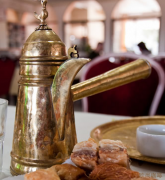
How do I use the coffee maker? Detailed explanation of the use of various types of coffee machines
The operation of the Turkish coffee pot first we would like to introduce what is meant by brewing coffee. Boil-put something in water and boil it over fire. But the process of brewing coffee is to wash the taste out of the coffee with water of 92-96 degrees. So many people will misunderstand this word. If you really put the coffee into the water to brew, the drink you get will no longer be a cup of coffee, but a cup.

Six steps to identify coffee
1. Fragrance: the first step in cup evaluation is to evaluate the aroma of coffee beans. Grind 10 grams of coffee, put it in 3-5 sample cups, and then breathe hard at the gas released by the freshly crushed coffee cells. The characteristics of the aroma indicate the essence of the taste of coffee beans: the sweet smell indicates that its taste is sour; the pungent smell indicates that its taste is irritating. The power of aroma
Cup test: the effect of brewing time on the taste of coffee
The effect of brewing time on the taste of coffee

Drink coffee like a connoisseur.
Coffee industry also has selection activities, coffee tasting is a professional. At coffee judging conferences, coffee judges scoop up a little coffee and suck it into their mouths to make it mist, which is just one way to judge whether coffee is good or bad. Generally speaking, coffee is divided into coffee beans and single origin coffee beans. Bean coffee is mainly used to make espresso coffee and various flowers
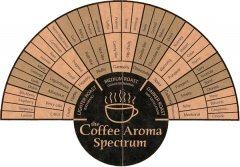
SCAA coffee cup testing process
1. Fragrance: the first step in cup evaluation is to evaluate the aroma of coffee beans. Grind 10 grams of coffee, put it in 3-5 sample cups, and then breathe hard at the gas released by the freshly crushed coffee cells. The characteristics of the aroma indicate the essence of the taste of coffee beans: the sweet smell indicates that its taste is sour; the pungent smell indicates that its taste is irritating. The power of aroma
Two kinds of "Cup Test" Competition: "God Dou" Competition and "God Man" Competition
Mr. Ben Bicknell in the competition (photo: http://www.fivesenses.com.au/blog/2009/02/01/ben-australian-cupping-champion) as coffee is heating up in China, we are more and more likely to hear the word coffee cup test and see the coffee cup test scene more and more times. But when you hear about the coffee cup test contest, do you know that it is coming

How to choose the coffee pot and the purity of coffee beans is also another consideration.
Now the coffee pots on the market are all drip-type, and they are divided into Japanese style, American style and Italian style. The Japanese coffee maker, also known as the siphon pot, has an alcohol lamp on the base and two glass balls on it. It heats the water from the lower glass ball to produce water vapor, pushes the hot water from the lower sphere to the upper pot, and then sucks back the coffee extracted from the upper glass ball after the lower pot cools. Cooked in a Japanese coffee pot
Six steps of coffee cup evaluation
The six steps of coffee cup evaluation describe the aroma, aroma, taste, smell, aftertaste and mellowness of coffee. 1. Fragrance: the first step in cup evaluation is to evaluate the aroma of coffee beans. Grind 8.25 grams of coffee, put it in 3-5 sample cups, and then breathe hard at the gas released by the freshly crushed coffee cells. The characteristics of the aroma indicate the taste of coffee beans.
Six steps to taste coffee
There are six steps in coffee cup evaluation, describing the aroma, aroma, taste, smell, aftertaste and mellowness of coffee. 1. Fragrance: the first step in cup evaluation is to evaluate the aroma of coffee beans. Grind 10 grams of coffee, put it in 3-5 sample cups, and then breathe hard at the gas released by the freshly crushed coffee cells. The characteristics of the aroma indicate the essence of the taste of coffee beans:
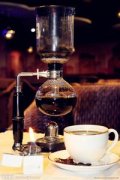
Analysis of homemade coffee: siphon pot
Siphon pot (Syphon), commonly known as "glass ball" or "siphon", is a simple and easy-to-use method of coffee brewing, and it is also one of the most popular coffee brewing methods in cafes. Although the siphon pot has the nickname of "plug wind type", it has nothing to do with the siphon principle, but uses water heating to produce water vapor, resulting in thermal expansion and cold contraction principle, push the hot water from the lower sphere to the upper pot, and then wait for the lower pot to cool.

Homemade coffee analytical siphon pot
Siphon pot (Syphon), commonly known as "glass ball" or "siphon", is a simple and easy-to-use method of coffee brewing, and it is also one of the most popular coffee brewing methods in cafes. Although the siphon pot has the nickname of "plug wind type", it has nothing to do with the siphon principle, but uses water heating to produce water vapor, resulting in thermal expansion and cold contraction principle, push the hot water from the lower sphere to the upper pot, and then wait for the lower pot to cool.

How to choose and buy coffee pot and freshness of coffee beans are important factors affecting quality.
Now the coffee pots on the market are all drip-type, and they are divided into Japanese style, American style and Italian style. The Japanese coffee maker, also known as the siphon pot, has an alcohol lamp on the base and two glass balls on it. It heats the water from the lower glass ball to produce water vapor, pushes the hot water from the lower sphere to the upper pot, and then sucks back the coffee extracted from the upper glass ball after the lower pot cools. Cooked in a Japanese coffee pot
Production of siphon Coffee
In the cozy weekend afternoon, invite three or five friends to taste the self-made tile cookies, cliff is a happy thing. But it is a pity that there is only food and no drink. In this issue of the West Point Legion, the host Xiaoding will recommend the production of siphon coffee to netizens. Siphon pot, commonly known as air stopper or siphon, is a simple and easy-to-use method of brewing coffee.
Six common ways of brewing coffee
1. Siphon pot (Syphon) is one of the most popular coffee brewing methods in cafes. Principle of siphon pot: under the combustion of alcohol lamp, when the water temperature in the lower container reaches 92 ℃, the water is sucked into the upper container with coffee powder, and after soaking and stirring, the coffee is returned. Suitable for coffee: slightly sour, medium-bodied coffee. Degree of grinding: slightly thicker than powder
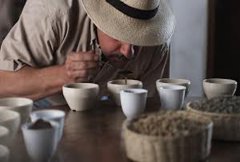
Coffee common sense SCAA coffee cup testing process
1. Fragrance: the first step in cup evaluation is to evaluate the aroma of coffee beans. Grind 10 grams of coffee, put it in 3-5 sample cups, and then breathe hard at the gas released by the freshly crushed coffee cells. The characteristics of the aroma indicate the essence of the taste of coffee beans: the sweet smell indicates that its taste is sour; the pungent smell indicates that its taste is irritating. The power of aroma

Six steps of coffee cup evaluation
There are six steps in coffee cup evaluation, describing the aroma, aroma, taste, smell, aftertaste and mellowness of coffee. 1. Fragrance: the first step in cup evaluation is to evaluate the aroma of coffee beans. Grind 10 grams of coffee, put it in 3-5 sample cups, and then breathe hard at the gas released by the freshly crushed coffee cells. The characteristics of the aroma indicate the essence of the taste of coffee beans:
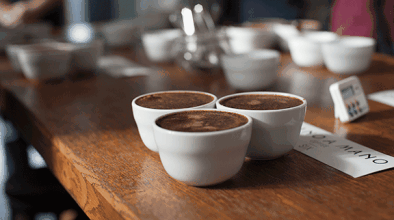
What are the steps of the coffee cup test? What are the steps of the cup test? How to measure the coffee cup correctly
First, sample grinding. The roughness and fineness of coffee beans of all samples are completely the same, and the most suitable grinding thickness is between the coarse and fine grinding of American drip filter coffee machine and French press filter. Second, weigh and take powder. According to the technical standard of SCAA cup testing, it is recommended that every 0.055g coffee powder be brewed with 1ml hot water. If we use a standard cup with a capacity of 150ml, then each cup should contain
Six Steps to Coffee Cup Evaluation
Coffee cup evaluation has six steps, describing coffee aroma, aroma, taste, smell, aftertaste and alcohol. Image: ab3a6c70gw1e5uo4ma2xzj20gj0a9gnf.jpg 1. Fragrance: The first step in cup evaluation is to evaluate the aroma of coffee beans. Grind 10 grams of coffee, place in 3 to 5 sample cups, and sniff vigorously the coffee released by the freshly ground coffee cells