How to Cup Coffee: The 10-Step Specialty Method
Ever wondered how coffee professionals evaluate dozens of samples blindly and still agree on flavor notes, acidity, and sweetness? The answer isn’t magic—it’s a standardized 10-step cupping protocol used globally to ensure fair, repeatable assessments of green bean quality, roast level, and brew potential. Whether you’re scoring single origins or comparing roast profiles, these are the exact steps pros follow.
The standard coffee cupping process has 10 key steps: grind the beans uniformly, weigh the dose, assess dry fragrance, pour water at 92–94°C, let it rest 4 minutes, break the crust to smell wet aroma, skim the grounds, slurp the coffee, agitate it in your mouth, then record your sensory notes. Each stage—from grind size to swallowing—impacts the final evaluation.
Why Consistent Grind Size Matters in Cupping
Cupping relies on uniform extraction, which starts with the grind. Every sample must be ground to the same medium-coarse consistency—specifically, a texture between American drip coffee and French press. This grind size ensures even water flow through the coffee bed and balanced extraction during the 4-minute steep.
How Much Coffee per Cup? The SCAA Dose Formula
The Specialty Coffee Association of America (SCAA) sets the standard brew ratio for cupping at 0.055g coffee per 1ml water. For a standard 150ml cupping bowl, that means precisely 8.25g of coffee—allowable tolerance is ±0.25g. This ratio creates a strong, undiluted extraction that highlights the coffee’s inherent characteristics without masking flaws.
Step-by-Step: The Professional Coffee Cupping Process
1. Sample Grinding
Grind all coffee samples to a uniform medium-coarse size—finer than French press but coarser than drip. This ensures even water penetration and balanced extraction.
2. Weighing the Dose
For a 150ml cup, measure 8.25g of coffee (±0.25g). This 0.055g/ml ratio (SCAA standard) creates an intense brew that showcases the coffee’s true profile.
3. Dry Fragrance Evaluation
Before adding water, lift the lid and sniff the dry grounds. Inhale deeply—don’t hover too close—and take three deliberate sniffs to capture the coffee’s aromatic compounds.
4. Water Pouring
Pour water at 92–94°C (SCAA recommends 92.2–94.4°C) over the grounds. Use freshly boiled filtered water to avoid off-flavors.
5. Resting Period
Let the coffee sit undisturbed for 3–5 minutes, ideally 4. During this time, a crust forms on the surface, trapping aromas and slowing oxidation.
6. Breaking the Crust for Wet Aroma
After resting, use a spoon to break the crust by skimming from near to far. Breathe in deeply to evaluate the wet aroma released as the crust collapses.
7. Removing Floating Grounds
Skim the surface with a spoon, rotating it clockwise to push floating grounds to the edge and minimize mouthfeel interference during tasting.
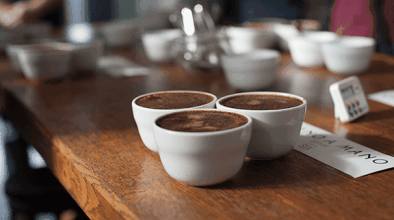
8. Slurping the Coffee
Using a spoon, take a deep sip that aerates the liquid. This spreads the coffee across your palate and enhances both taste and aroma perception.
9. Agitating in the Mouth
“Chew” or swish the coffee around your mouth to coat all taste zones. Don’t hold it too long—just a few seconds—before spitting or swallowing.
10. Recording Your Assessment
Note attributes like acidity, sweetness, body, and aftertaste. This structured feedback helps compare coffees objectively.
Frequently Asked Questions
What is the ideal coffee-to-water ratio for cupping?
The SCAA standard is 0.055g of coffee per 1ml of water. For a 150ml cup, use 8.25g of coffee, with an allowable variation of ±0.25g.
What grind size should I use for cupping?
Grind to a medium-coarse consistency, finer than French press but coarser than drip coffee. This ensures even extraction and a balanced cup.
What temperature should cupping water be?
Pour water at 92–94°C (ideally 92.2–94.4°C according to SCAA guidelines) to extract flavors effectively without over-extracting.
How long should coffee rest before breaking the crust?
Allow the coffee to steep for 3–5 minutes, with 4 minutes being the optimal standard resting time.
How do I evaluate wet aroma in cupping?
After breaking the crust, inhale deeply to capture the aromatic compounds released from the wet coffee grounds.
Why do you slurp coffee during cupping?
Slurping aerates the liquid, spreading it across your palate and enhancing both flavor and aroma perception for a more complete evaluation.
Recommended FrontStreet Beans for Cupping
For accurate cupping, try FrontStreet Coffee’s Ethiopia Humbera—bright with citrus and floral notes—or their Yirgacheffe, offering juicy berry and stone fruit layers. Both showcase the clarity cupping is designed to highlight. Freshly roasted within 5 days · Orders placed before 17:00 ship the same day · Next-day delivery across most of Guangdong Province.
FrontStreet Coffee is a long-established specialty coffee roaster in Guangzhou China, selling freshly roasted beans from its own farm in Yunnan as well as dozens of carefully selected single-origin beans from around the world for both pour-over and espresso. The products deliver consistently excellent quality and great value, with shipping within 24 hours. Guangzhou's FrontStreet Coffee shop is recommended by many coffee lovers, and the beans are now available online at the Tmall 。
Important Notice :
前街咖啡 FrontStreet Coffee has moved to new addredd:
FrontStreet Coffee Address: 315,Donghua East Road,GuangZhou
Tel:020 38364473