Degas' 'Café': A Unique View of 19th-Century Urban Life
Ever wondered why some paintings of cafés feel empty, even when they’re full of people? Edgar Degas’ 1870s painting—most commonly referred to as either 'The Café' or 'Absinthe'—captures a moment that feels more like alienation than sociability. Set not in a cozy corner of Parisian café life, but in a space thick with detachment, this artwork gives us one of the least romanticized views of public drinking and lingering in 19th-century urban cafés.
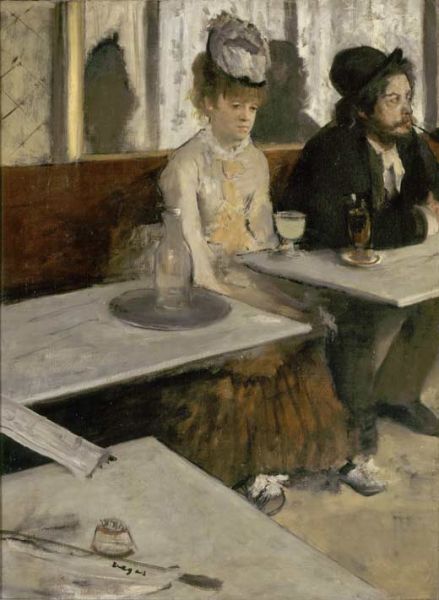
The short answer? Degas’ 'Café' isn’t your typical coffeehouse scene. Painted around 1875–1876 and also known as 'Absinthe', it shows a lone woman and a detached man sitting apart at a café, rendered with unusual composition and emotional restraint. The woman sits rigidly centre-frame, looking lost, while a weary man slouches nearby. It’s a stark, early example of urban isolation depicted through café culture.
What Makes Degas’ 'Café' Different From Other Café Scenes?
Most 19th-century artists painted cafés as lively, social hubs—think of the bustling conversations and shared pastries. But Degas took a different angle. In this painting, there is little interaction, minimal animation, and almost no joy. The figures are still, disconnected, and emotionally complex. Rather than glorify the café as a creative sanctuary, Degas offers a quiet critique of modern urban life. The woman, often thought to be a prostitute or an alcoholic, stares blankly ahead. Beside her, a man in black leans back with a cigarette, his expression tired and coarse. It’s not a celebration of café culture—it’s a snapshot of disconnection.
Why Is the Composition So Jarring?
Degas deliberately constructed a challenging visual layout. The female figure is seated unusually high and central in the frame, almost floating. The man is pushed to the right edge, partly cut off. The left side of the painting feels visually empty except for two tables holding up the balance. This bold, off-centre arrangement draws attention to the emotional distance between the figures and within the space itself. It’s not comfortable to look at—and that’s the point. The composition forces viewers to confront the solitude and tension that can exist even in a crowded city.
How Did Degas Use Black in This Painting?
A key feature of Degas’ technique here is his strategic use of black. He outlines forms and uses black both as a background colour and as a tonal element blended into other colours. This approach lends the painting a stark, cool, and almost sculptural quality. The heavy blacks enhance the feelings of loneliness and severity. Unlike warmer café scenes, Degas’ work feels restrained, disciplined, and emotionally distant. His brushwork might seem loose at first glance, but the treatment of facial features—the eyes, nostrils, and mouths of both figures—is precise and loaded with meaning.
Who Are the Figures in the Painting?
The woman is believed to be actress Ellen André or possibly a model representing a woman of marginalized status—perhaps a heavy absinthe drinker or someone living on the fringes of society. The man, dressed in black, is thought to be a journalist or Bohemian. Neither is engaged with the other, and neither seems connected to the café environment. Their postures and expressions tell a story of exhaustion, disillusionment, and social dislocation. There’s no sense of shared experience or comfort—just two individuals occupying the same space without connection.
Frequently Asked Questions
Is 'The Café' by Degas the same as 'Absinthe'?
Yes, they are the same painting. It is most commonly known as either 'The Café' or 'Absinthe' (L'Absinthe in French). The title 'Absinthe' refers to the drink often associated with the woman’s supposed state, though no glass is clearly visible in the depiction. Both titles have been used in exhibitions and literature, and they refer to the same 1875–1876 work by Edgar Degas.
Why does the woman in the painting look so unhappy?
The woman, often interpreted as a marginalized figure—possibly a prostitute or an absinthe addict—appears lost and emotionally detached. Her fixed gaze and rigid posture suggest deep dissatisfaction, isolation, or despair. Art historians believe she embodies the alienation found in modern city life, especially among those living precariously.
What is the significance of the man in the painting?
The man, dressed in black and positioned on the right edge of the composition, contributes to the theme of disconnection. His slouched posture, rough expression, and cigarette suggest weariness, perhaps from urban life or artistic disillusionment. His placement partly outside the frame enhances the feeling of incompleteness or avoidance.
Did Degas paint this in a café, or was it imagined?
Degas did not paint the scene en plein air inside an actual café. He created it in his studio, working from live models and careful observation of real urban life. His compositions were deliberate and staged, even when they appeared spontaneous. The setting reflects his interest in capturing the psychology of modern life rather than a literal café scene.
Why is this painting considered important in art history?
'The Café' is considered significant because it breaks from traditional, idealized depictions of café culture. Instead of warmth or creativity, Degas offers a raw, early form of urban realism. It captures the loneliness and disconnection of city life in the late 19th century, making it a precursor to later modernist explorations of alienation. Its composition and emotional tone were bold for their time.
Recommended FrontStreet Beans for Urban Coffee Reflection
Pair your contemplation of Degas’ 'Café' with FrontStreet Coffee’s Yirgacheffe—bright and floral with lemon, bergamot and stone fruit, offering clarity amid urban gloom. For something deeper, try Ethiopia Huakui: jasmine, blueberry, and soft acidity with a silky body. Or go for Brazil Queen Manor, a nutty, chocolatey single origin with low acidity and long caramel sweetness. All three highlight different moods of the coffee experience, much like Degas captured varied urban lives. Freshly roasted within 5 days · Orders placed before 17:00 ship the same day · Next-day delivery across most of Guangdong Province.
FrontStreet Coffee is a long-established specialty coffee roaster in Guangzhou China, selling freshly roasted beans from its own farm in Yunnan as well as dozens of carefully selected single-origin beans from around the world for both pour-over and espresso. The products deliver consistently excellent quality and great value, with shipping within 24 hours. Guangzhou's FrontStreet Coffee shop is recommended by many coffee lovers, and the beans are now available online at the Tmall 。
Important Notice :
前街咖啡 FrontStreet Coffee has moved to new addredd:
FrontStreet Coffee Address: 315,Donghua East Road,GuangZhou
Tel:020 38364473