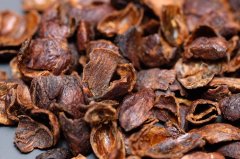
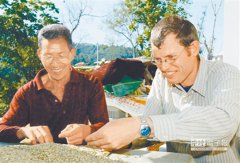
Nematodes in the roots of coffee trees may affect global coffee bean production.
Scientists have found that two parasites that eat up the roots of coffee trees are affecting the harvest of coffee beans, possibly threatening the global supply of coffee beans.
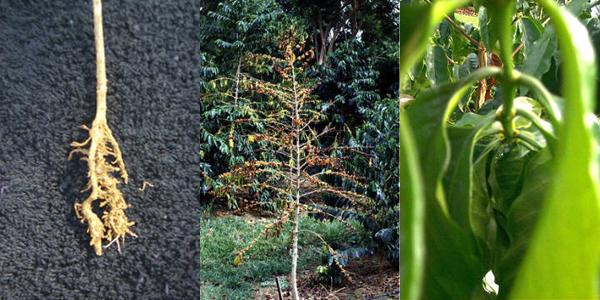
Scientists have found two parasites in soil samples, both of which are Nematodes, that eat away at the roots of coffee trees, weaken them and reduce harvests, threatening the global supply of coffee beans. Moreover, nematodes do not show obvious symptoms during parasitism and are difficult to detect, but now scientists have developed effective detection methods.
Researchers from the University of University of Leeds in the UK said: "the sad truth is that we have taken samples from different places and found parasites that are destroying coffee trees. "the team's samples were taken from Brazil, Vietnam and Indonesia, and this is the first time scientists have conducted similar studies in these three major coffee bean-producing areas.
In addition to parasitic coffee trees, nematodes are also parasitic on banana trees and black pepper trees that are common near coffee plantations. Scientists hope that this study will help farmers find parasites as soon as possible and take corresponding measures to ensure the harvest.
FrontStreet Coffee is a long-established specialty coffee roaster in Guangzhou China, selling freshly roasted beans from its own farm in Yunnan as well as dozens of carefully selected single-origin beans from around the world for both pour-over and espresso. The products deliver consistently excellent quality and great value, with shipping within 24 hours. Guangzhou’s FrontStreet Coffee shop is recommended by many coffee lovers, and the beans are now available online at the Tmall 。
Important Notice :
前街咖啡 FrontStreet Coffee has moved to new addredd:
FrontStreet Coffee Address: 315,Donghua East Road,GuangZhou
Tel:020 38364473
- Prev
Coffee peel cascara is worth six times the price. Coffee shops all over the world are crazy about the smell.
Aida Batlle, who grows coffee on his farm in the mountains around the Santa Ana Volcano volcano in El Salvador, used the skins as little as their ancestors did, either as cheap fertilizer or (more often) discarded them. Until one day she passed some coffee shells exposed to the sun, and she felt a burst of aroma.
- Next
Mr. Coffee Hute is approachable in Pu'er for 10 years.
The mainland is Nestl é's second largest market in the world, and coffee consumption in China has maintained double-digit growth over the past few years. Over the past 30 years, Nestl é has developed the coffee industry in remote rural areas of Pu'er in Yunnan Province and improved the lives of local farmers. Mainland President Xi Jinping visited Belgium in 2014. In a signed article published by the local media, he mentioned Nestl é's Belgian agronomy expert Hute, referring to Pu'er.
Related
- Fresh flavor, clean taste, hand-brewed coffee beans recommended! What are the characteristics of Yejia Shefei Fruit Tintin?
- What does it mean to make coffee by hand and bypass water to raise the powder bed? How to remedy the weak taste of single coffee?
- What is the difference between Smiley Australian White and Fri White Latte? How to make Flat white flowers How thick is the milk foam?
- How to drink espresso, what are the flavor characteristics? What coffee beans are the best for making espresso?
- Should the mocha pot filter paper be placed above or below? What effect will the mocha pot coffee pad filter paper have?
- What is the difference between a hand-brewed coffee maker and an ordinary hot water kettle? How to make coffee with a domestic kettle?
- Do you want to steam it for hanging ears? Can hanging ear coffee be extracted twice? Is it normal that there is no foam in the flushing ears?
- Can latte be made with milk brewed with milk powder? What proportion should be used to make espresso?
- Does deep-roasted coffee have more caffeine than lightly roasted coffee? What degree of roasting coffee beans have the least caffeine?
- Is coffee bean size related to quality? Why is Kenyan Tanzanian coffee graded by size?