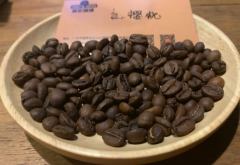
heirloom varieties
Professional coffee knowledge exchange more coffee bean information please follow the coffee workshop (Wechat official account cafe_style)
When it comes to coffee, there are flowers and fruits of Yejia Xuefei, rich wild Mantenin, balanced Blue Mountains, and so on. Coffee from different producing areas and different treatments can meet the taste requirements of different people, which belongs to the unique charm of coffee.
When it comes to coffee, you can't do without Ethiopia. Most of the boutique coffee varieties come from Arabica, which is native to Ethiopia and is known as the cradle of coffee. Arabica has many well-known derivatives, such as tin pickup, bourbon and so on are famous coffee varieties in the world. However, there are thousands of coffee varieties in Ethiopia, named after "heirloom", which deprives coffee farmers of high-income opportunities, triggering a chain reaction that coffee roasters are unable to distinguish more coffee varieties, customers lack the opportunity to choose a new flavor, and the opacity of coffee variety information also hinders the development of the coffee industry. It will be quite difficult for coffee buyers to know about the varieties of coffee.
"heirloom" is a general summary of the ancient local coffee varieties in Ethiopia, which is translated as "family heirloom" in China. The history of this coffee variety is difficult to study, but many coffee varieties can be found, especially in Latin America and Asia, and of course Ethiopia in Africa. The "heirloom" variety is the mainstream variety of boutique coffee because most Ethiopian coffee varieties are named "heirloom".
Ethiopian farmers usually name coffee without a scientific name, but in the local language and after a species that has the same characteristics as the coffee tree. Coffee varieties in Ethiopia can be divided into two categories: Jarc varieties and regional varieties.
Jarc variety: was developed by the Ethiopian Agricultural Research Center to improve the disease resistance and coffee yield of coffee trees.
Regional varieties: refers to the wild species in the Ethiopian forest, there are about 10000 species, it is hard to imagine how many varieties are mixed in a packet of Ethiopian raw coffee beans grown naturally.
Although Ethiopian coffee varieties have an inherently good gene, many buyers will distinguish their choices by producing area, altitude and cup test score when buying raw coffee beans, not just according to the breed, because in any case, beans are graded by defect rate, and the defect rate of Ethiopian coffee beans is very high, so the variety is not the only criterion for buyers. On the other hand, the same varieties basically do not appear in different regions of Ethiopia, and even if their flavor characteristics are found, they will be different, which is the reason why Yega Xuefei is distinguished by its flavor.
Coffee beans as an economic crop in Ethiopia, farmers will take the disease resistance and yield of tree species as the primary choice, so the variety and flavor become less important to them. You can ask the raw bean merchant for specific information. Coffee information transparency is a major problem in Ethiopia at present, and it will take a long time to achieve complete transparency. It is expected that the transparency of Ethiopian coffee varieties will bring more high-quality coffee with good flavor in the future.
END
FrontStreet Coffee is a long-established specialty coffee roaster in Guangzhou China, selling freshly roasted beans from its own farm in Yunnan as well as dozens of carefully selected single-origin beans from around the world for both pour-over and espresso. The products deliver consistently excellent quality and great value, with shipping within 24 hours. Guangzhou's FrontStreet Coffee shop is recommended by many coffee lovers, and the beans are now available online at the Tmall 。
Important Notice :
前街咖啡 FrontStreet Coffee has moved to new addredd:
FrontStreet Coffee Address: 315,Donghua East Road,GuangZhou
Tel:020 38364473