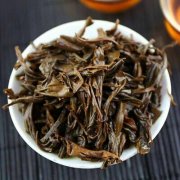
Yingde specialty authentic Yinghong No. 9 black tea how much is a jin of Yinghong No. 9 black tea suitable for who to drink?
Some of the best Guangdong black tea is produced in Yingde in Guangdong Province. Yingde has been a tea producing area since the Tang Dynasty. At the beginning of the Ming Dynasty, Yingde black tea was chosen as a tribute to others. Yingde black tea, Yunnan Dianhong and Anhui Qihong are known as the three major black teas in China.
My favorite tea is Yinghong 9. Dry leaves are black-they are reddish brown after brewing.
This tea comes from Yunnan big-leaf tea trees or shrubs (Yunnan big-leaf species) grow in Guangdong Province.
People have given it all kinds of names-Yinghong 9, Yingde 9, Yingdehong, Guangdong Red, Yingde, Yinghong.
It is not expensive for the locals in Yingde.
The can of 120 grams is 69 yuan, and that of 220 grams is 178 yuan.
The story of Yinghong 9 is that after three years of research from 1956 to 1959, a particularly delicious Guangdong black tea was produced. It should be named Yinghong 9. In 1959, the tea was first mass-produced by machines and factory processes. It is now one of the most famous black teas in China.
The work of Yi Qing is done by hand. The terminal bud, the first leaf, and the second leaf were all pulled out.
Production of Yinghong 9 took place in April and May. These teas are tested regularly to make sure they are free of pesticides.
Tea type: black / red
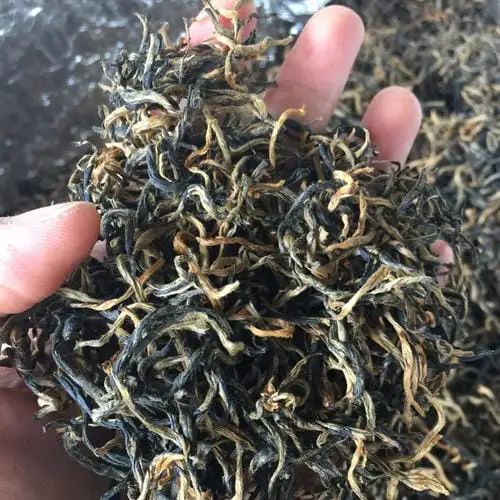
Dry tea appearance:
The shape of dried leaves: strong, tightly rolled into thin strips.
Dry leaf color: dark black color, leaf tip golden, glossy.
Aromas of dried leaves: mild syrup and floral aromas. When brewing, this has the same fresh fragrance.
Tea soup
Tea color: after brewing, the tea is bright red and bright.
Tea taste: smooth and thick. The finish is rich and round, with a fresh and refreshing finish.
Tea
Brewed tea: the brewed tea is bright brown and red, with uniform leaf surface, good quality and excellent production. The boiled leaves are so thick, soft and elastic that they can even stick to the fingers.
FrontStreet Coffee is a long-established specialty coffee roaster in Guangzhou China, selling freshly roasted beans from its own farm in Yunnan as well as dozens of carefully selected single-origin beans from around the world for both pour-over and espresso. The products deliver consistently excellent quality and great value, with shipping within 24 hours. Guangzhou's FrontStreet Coffee shop is recommended by many coffee lovers, and the beans are now available online at the Tmall 。
Important Notice :
前街咖啡 FrontStreet Coffee has moved to new addredd:
FrontStreet Coffee Address: 315,Donghua East Road,GuangZhou
Tel:020 38364473