Does Yum sell coffee in China? Yum China and Italian coffee LAVAZZA will open 1000 coffee shops.
When it comes to selling coffee, Yum China is also ambitious.
Yum China and LAVAZZA, the founder of espresso, have announced the opening of 1000 stores by 2025, according to media reports.
Yum China and Lavazza have accelerated their expansion in the coffee market through a joint venture, and it is reported that the two sides will jointly inject US $200 million into the joint venture to provide funds for future development.
In addition, the joint venture will become the exclusive distributor of Lavazza in Chinese mainland, introducing more products from the product portfolio of the Lavazza brand in the international market.
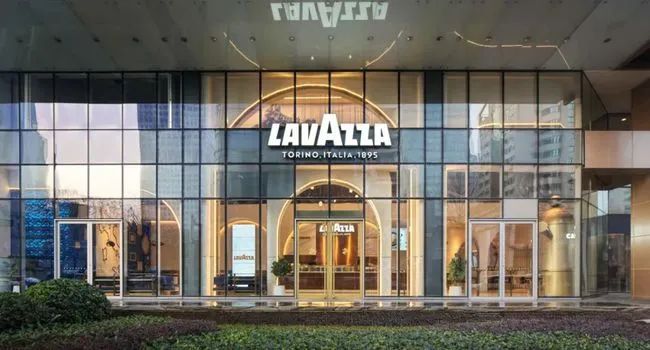
According to public data, LAVAZZA, the world's third largest coffee roaster, was founded in 1895 and gradually shifted from a grocery store to coffee as the only commodity.
In 2015, LAVAZZA went on a buying spree, buying French coffee brand Carte Noire for 800m euros. In recent years, it has also stepped up efforts to acquire Mars Beverage's coffee business, France's Carte Noire and ESP, Denmark's Merrild, Canada's Kicking Horse Coffee, and Australia's Blue Pod Coffee.
Yum China, whose full name is Yum China Holdings Co., Ltd., was founded in 1987 and is committed to becoming the most innovative restaurant pioneer in the world. It owns KFC, Pizza Hut, Taco Bell, Oriental White, Little Sheep, Huang Jihuang and COFFii & 喜悦.
However, Yum China has been in the coffee category for a long time, such as KFC's K Coffee, independent coffee brand COFFii&JOY, and Italian brand Lavazza, which is introduced to the Chinese market through joint ventures.
Earlier, KFC's K Coffee is the main force in Yum China's "coffee brand matrix". In 2019, Yum China launched an independent coffee brand COFFii & 喜悦. Its coffee brand COFFii & 喜悦 once tried the coffee retail field. At that time, Yum China indicated that it would continue to expand its coffee business, and the boutique market was its next new attempt in the coffee market.

In March, Yum China and Italy's century-old coffee brand Lavazza formed a joint venture to jointly operate Lavazza coffee shop in China. Yum China said it would continue to explore the Chinese coffee market.
The first flagship Lavazza coffee store outside Italy opened in Shanghai in April 2010. the first flagship store, located on the ground floor of Jingan Temple Shopping Center in Shanghai, is a boutique coffee shop specializing in espresso.
In just over a year, LAVAZZA has rapidly expanded its stores. At present, Lavazza coffee shops have expanded to more than 20 stores in Shanghai, Hangzhou, Beijing and Guangzhou.
Through its partnership with Yum China, Lavazza is also accelerating its development in the Chinese market, with the total number of Lavazza coffee shops expected to double that of existing stores by the end of 2021 and open 1000 by 2025.
In fact, Yum China's move to redeploy the coffee market and open more boutique coffee shops also shows that Yum China is speeding up its layout of the domestic coffee market in an attempt to get a piece of the coffee market.
* Image source: Internet
For more information about coffee beans, please follow the coffee workshop (Wechat official account cafe_style)
For professional coffee knowledge exchange, please add Wechat account kaixinguoguo0925.
FrontStreet Coffee is a long-established specialty coffee roaster in Guangzhou China, selling freshly roasted beans from its own farm in Yunnan as well as dozens of carefully selected single-origin beans from around the world for both pour-over and espresso. The products deliver consistently excellent quality and great value, with shipping within 24 hours. Guangzhou's FrontStreet Coffee shop is recommended by many coffee lovers, and the beans are now available online at the Tmall 。
Important Notice :
前街咖啡 FrontStreet Coffee has moved to new addredd:
FrontStreet Coffee Address: 315,Donghua East Road,GuangZhou
Tel:020 38364473