Selling coffee in a carriage? The Royal Cup Coffee Brand has been established for 125 years and far beyond Star Buck for 75 years!
Starbucks, everyone knows that. As the world's largest coffee chain, Starbucks is seen as the main representative of the second wave of boutique coffee culture in the United States. Starbucks was founded by Jerry Baldwin, Zev Siegl and Gordon Bowker in Park Market in Seattle in 1971 and has a history of 51 years. Peet's coffee, which was founded in 1966 and entered the Chinese market in 2017, is known as the "number one American boutique coffee" and "founder of Starbucks" with a history of only 55 years.
Today, Code worker No. 6 would like to introduce to you the coffee brand that has been established for 125 years. It is-Royal Cup (Royal Cup). Like many great stories, the Royal Cup has an inconspicuous start. In 1896, Henry T. Batterton founded Batterton Coffee Company, Alabama's first coffee roaster in Birmingham, Alabama, and sold coffee in a small carriage.
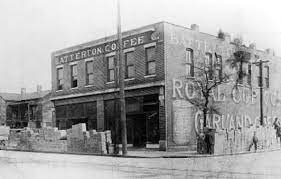
The earliest coffee bakery
Because its company provides fresh, delicious and high-quality coffee every day, it is called "Royal Coffee" by people in the town. Of course, there are stories that the brand's coffee was favored by the royal family, so it was renamed Royal Cup (Royal Cup) in 1950 when the Smith family bought the cup. To this day, the Smith family still owns and manages the company.
According to public data, the Royal Cup currently has nearly 70 distribution centers in the United States, covering the whole country from east coast to west coast. Over the past 100 years, Royal Cup has grown from a small place in its hometown to a leading importer, roaster and distributor of premium coffee and tea throughout the United States, Mexico, and the Caribbean. Not only that, the business scope of the Royal Cup has now expanded to food services, hotels, offices, convenience stores and various specialty coffee markets.
With the increasing popularity of boutique coffee, Royal Cup coffee has gradually developed into a national brand. Royal Coffee marks its 125th anniversary on October 5, 2021. To celebrate the anniversary of an elite milestone, the Royal Cup will launch a limited edition 12-ounce Rainforest Alliance certified coffee, which is expected to be sold exclusively to Amazon in mid-late October.
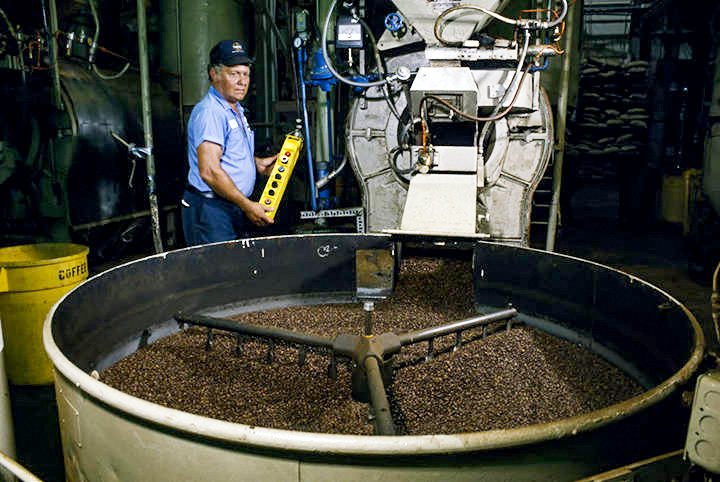
Royal Cup Coffee roasting facilities
The values of the Royal Cup are rooted in five key areas: quality, service, personnel, integrity and value. It is precisely because of this that the Royal Cup can flourish and last for 125 years, becoming the leader of the world coffee industry. Of. Not only that, the culture of the Royal Cup Coffee Company is to strive to become an excellent enterprise that can give back to the society.
After 9 / 11 in the United States, the Royal Cup of Coffee also sent trucks full of coffee to provide free coffee to rescue workers. The Royal Cup currently employs 871 people and is expected to earn an estimated $311.4 million a year.

There is no such leading coffee brand in China, but it is undeniable that at present, China's coffee market is getting better and better, and many boutique coffee brands have also emerged one after another. as for whether it will last in the future, let's give it all to time!
FrontStreet Coffee is a long-established specialty coffee roaster in Guangzhou China, selling freshly roasted beans from its own farm in Yunnan as well as dozens of carefully selected single-origin beans from around the world for both pour-over and espresso. The products deliver consistently excellent quality and great value, with shipping within 24 hours. Guangzhou's FrontStreet Coffee shop is recommended by many coffee lovers, and the beans are now available online at the Tmall 。
Important Notice :
前街咖啡 FrontStreet Coffee has moved to new addredd:
FrontStreet Coffee Address: 315,Donghua East Road,GuangZhou
Tel:020 38364473