Coffee production in Indonesia has dropped sharply!
In recent years, coffee production in Indonesia has been challenged by climate change and an increase in farm diseases and insect pests. The Foreign Agriculture Service of the United States Department of Agriculture predicts that Indonesian coffee exports will fall by 32% in 2023 to 24 compared with the previous year. Previously, excessive rainfall disrupted the development of coffee fruit, coffee production dropped sharply, but now high temperature and drought have accelerated the spread of diseases and insect pests, tree growth has been hindered, resulting in a shortage of coffee supply.
(ICCRI) of the Indonesian Coffee and Cocoa Institute has been working to address these challenges through agricultural research, including the development and release of Komasti , a mixed Arabica coffee variety that is highly resistant to diseases such as coffee leaf rust and has high yields.

The variety was officially released in 2013, but farmers' awareness and acceptance of the variety is not high due to the limited promotion, testing and availability.
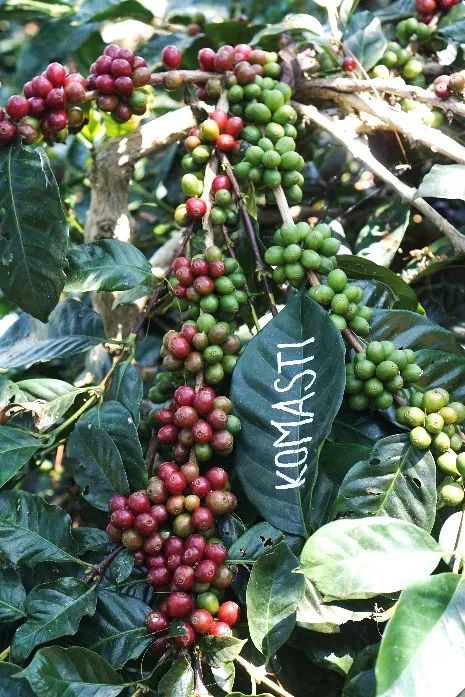
Komasti coffee varieties
In 2022, ICCRI partnered with the World Coffee Institute (WCR) to establish a demonstration plot project in Indonesia's West Java province. They hope to demonstrate the high performance of the Komasti variety to local farmers through demonstration plots and strengthen the cultivation of this variety in coffee producing areas.
WCR's two industry partners, Frinsa Agrolestari and PT Sucafina Indonesia, provided support for the establishment of the demonstration zone. These partners will be responsible for the local management of the demonstration site in 2023 and monitor its local progress.

The first harvest of the demonstration plot is expected to be between May and July 2025. "although these trees have not yet been harvested for the first time, farmers in the area around the demonstration site have shown interest in Komasti, observing that Komasti is more exuberant in the early growth stage than existing varieties currently grown locally," said Nuzul Qudri, regional project manager for WCR Asia.
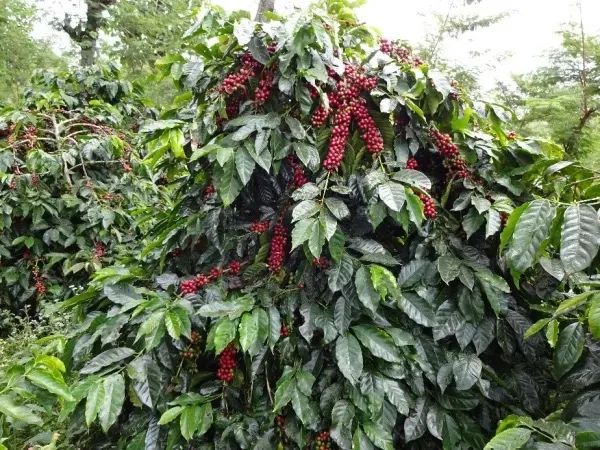
Komasti coffee varieties
According to ICCRI, Komasti varieties have the advantages of fast fruiting, dense fruit and good taste. Under careful care, the potential yield of this variety is ±2.1t per hectare, with a planting quantity of 2000 plants. At present, Komasti coffee has begun to spread in several regions of Indonesia, including North Sumatra and South Sulawesi.

Coffee plantations in South Sulawesi Province
ICCRI believes that the demonstration plot will show farmers that Komasti can produce higher yields than the varieties currently dominant in Indonesia, thus encouraging farmers to plant and make them realize that growing good coffee varieties is essential for them to adapt to the lasting effects of climate change.
Disclaimer: some of the pictures in this article come from the network, and some of the contents of the website, such as pictures, we will respect the origin of the original copyright, but due to the large number, there will be individual pictures and texts not in time to indicate, please forgive me. If the original author has any disputes can contact the website to deal with, once verified, we will immediately correct, by "Ka comment vdailycom" collation and editing, reprint please indicate, this article is intended to spread coffee culture, if infringement, please inform to delete, thank you ~!

FrontStreet Coffee is a long-established specialty coffee roaster in Guangzhou China, selling freshly roasted beans from its own farm in Yunnan as well as dozens of carefully selected single-origin beans from around the world for both pour-over and espresso. The products deliver consistently excellent quality and great value, with shipping within 24 hours. Guangzhou's FrontStreet Coffee shop is recommended by many coffee lovers, and the beans are now available online at the Tmall 。
Important Notice :
前街咖啡 FrontStreet Coffee has moved to new addredd:
FrontStreet Coffee Address: 315,Donghua East Road,GuangZhou
Tel:020 38364473