Why do all hand-brewed coffee for one person use 15g beans? What's the difference between 01 and 02 filter cups?
Brewing parameters can largely determine the taste of a cup of coffee, so it is important for everyone to know the data that a bean fits before brewing. But I wonder if everyone has ever thought that in the cooking cases shared in Qianjie, the ratio of powder to water, water temperature and grinding will all change with the degree of baking of beans, but the amount of beans has been maintained at 15g! (except for special cooking)
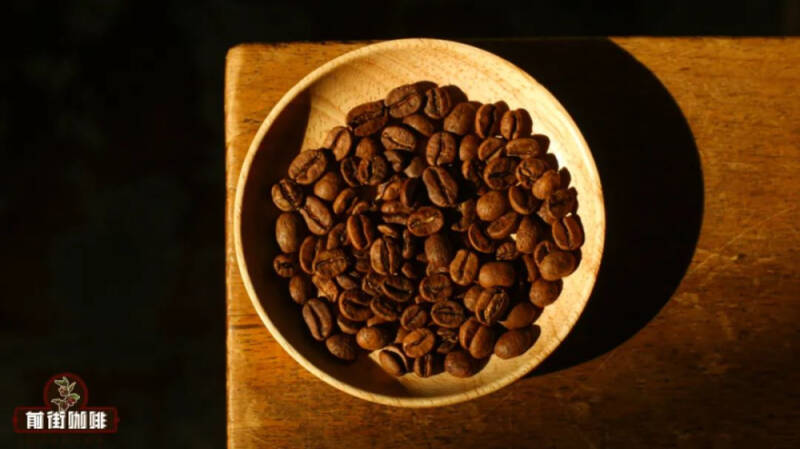
Not only on the front street, but also on the market, individual coffee beans are marked on the brewing information bar recommending 15g brewing, and most coffee colleges also teach with 15g as a representative. This makes people wonder: what kind of magic does this 15g have? it can make people unified one after another! Is it impossible to cook with 10g, 20g and 30g powder?
Why is it always recommended to brew coffee with 15g beans? Whether it is Qianjie or other teaching bloggers, most of the cooking parameters shared by everyone will be based on one person. Because most friends can't eat too much coffee in a short period of time, or they don't want to eat the same kind of coffee. When we brew so much at one time that we can't finish it in one breath, the coffee will dissipate its flavor because of the passage of time, leaving only outstanding sour and bitter taste! It is a pity to abandon it, but there is no taste of food. Therefore, we will choose to use the smaller 01 filter cup to brew a single serving of coffee. In the brewing of 01 filter cup, the cooking method of 15g powder is the most suitable.
The main reason for choosing 15g powder is the thickness of the powder bed: in the same filter cup, the amount of coffee powder will determine the thickness of the powder bed! The less the powder, the thinner the powder bed; the more powder, the thicker the powder bed it accumulates!
The thinning of the powder bed means that there are fewer gaps that can slow down the flow of hot water, and the water can pass through the powder bed faster. When hot water permeates too fast, it will be difficult to fully extract the aromatic substances in coffee; not only that, because the amount of coffee powder is too small to build a thick powder wall, this will also provide an opportunity for hot water to slip away from the filter cup! And this water is what we call "bypass water", which means hot water that is not involved in the extraction (almost nothing). Therefore, even if you use the same powder-water ratio, grinding scale, and brewing method, the coffee will not get the correct concentration because of too much bypass water, and it is easy to have a light and underextracted taste.
And if the powder bed is too thick, it is difficult for hot water to evenly penetrate all the coffee. Because water will always find gaps that are easy to flow, resulting in a channel effect; and, because the rate of water flow is greatly reduced, if the water is not cooked properly and the flow is not strong enough to wash away the powder bed, it will be easy to clog. And then there was extraction. In particular, such as a number of tapered filter cups led by V60 and kono, they will pile up powder beds thicker than flat-bottomed cake filter cups, which greatly increases the probability of uneven extraction.
Therefore, in the process of brewing several times, people found the most suitable amount of coffee powder, which is 15g. A powder quantity of about 15g can provide model 01 filter cup with the right thickness of powder bed, without paying too much attention to brewing, and a good cup of hand-brewed coffee can be easily caught. Of course, Qianjie does not mean that coffee in the range of less than 15g powder is not delicious, but we need to find suitable brewing parameters and methods for them. Compared with 15g powder, it will be more cumbersome and less stable. That's why people always choose 15g as the cooking standard for one person.
-END-
Front Street Cafe
No. 10 Baoqian street, Yandun road, Dongshankou, Yuexiu district, Guangzhou, Guangdong province
FrontStreet Coffee is a long-established specialty coffee roaster in Guangzhou China, selling freshly roasted beans from its own farm in Yunnan as well as dozens of carefully selected single-origin beans from around the world for both pour-over and espresso. The products deliver consistently excellent quality and great value, with shipping within 24 hours. Guangzhou's FrontStreet Coffee shop is recommended by many coffee lovers, and the beans are now available online at the Tmall 。
Important Notice :
前街咖啡 FrontStreet Coffee has moved to new addredd:
FrontStreet Coffee Address: 315,Donghua East Road,GuangZhou
Tel:020 38364473